
What Does One More Death or One Less Death Make Us Feel?
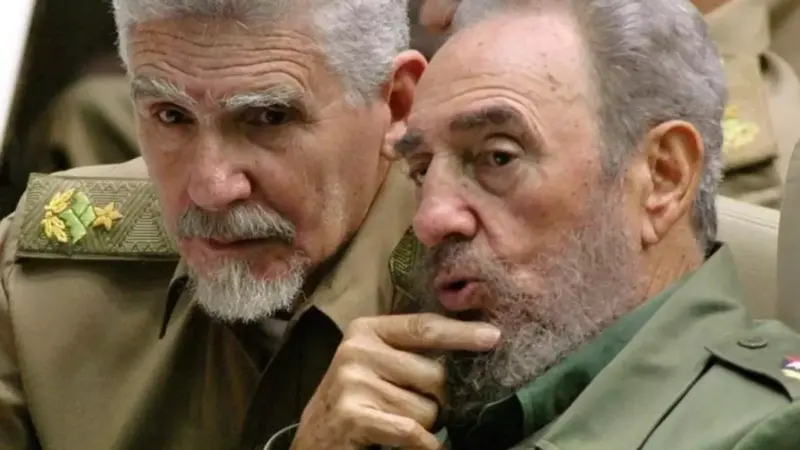
HAVANA TIMES — I learn that Commander Ramiro Valdés Menéndez has just died. And I remember something we used to say all the time whenever someone expressed a wish that we knew the system would not make easy, at best—or simply would not allow, at worst.
And what we would say jokingly was: “For that to happen, there’ll have to be a lot of deaths and funerals.” We said it so naturally, even humorously, that it sounded more like a blessing than the bad news it really was.
As if a deeply resentful God, with wounded pride, had heard us and responded with what we are now living through.
It hurts my self-esteem to realize that I did not have the political capacity to help transform the Party-State-Government-Criminal System I inherited. Since the day I was born, I have suffered under this totalitarian regime in every aspect of my life (not even the religious sphere or my emotional life escaped it—none of them did). According to my historian friends, it was modeled after the Soviet system. Stalin’s system.
When Fidel Castro died in 2016, I was 34 years old. I felt joy. The Leyva family in Holguin celebrated and were jailed for it. I understood them, and I would gladly have joined them if I had found out in time. But Cuba continued living the same economic and social nightmare.
A cousin came to my house, and I told him, “We’re still living through the same disaster.” He replied, “Which should make you understand that the blame doesn’t belong solely to the Commander-in-Chief.” I never forgot that response. What I allow myself to believe—and even to feel—is that I too bear responsibility; I am an accomplice, consciously or unconsciously. And it seems to me that almost all Cubans are.
We have watched generals, leaders, fighters, pillars of the Revolution die one after another, and that feeling—with all its justified frustration—remains there, in our comings and goings, even in our breathing, asking us what is wrong with us that we have not achieved the change we hoped for.
Out of helplessness, and for a thousand other reasons, our comedians ask another question during their performances: “How much longer?” Everyone who can laughs, beer in hand, lights a cigarette, and plans the departure of their daughters, grandchildren, or themselves. Those who can.
At 94 years old, one of the Moncada attackers, one of the pillars of the political apparatus that has managed to politically subjugate the Island, Ramiro Valdes Menendez, has died. Another death that no longer makes me feel anything. Perhaps because I woke up today less sensitive to certain matters.
But I cannot fail to recognize that a painful chapter of the country where I live is coming to an end. And out of consideration for myself, to support myself, I tell myself that the next chapter should not be worse. To be more optimistic, I want to tell myself that it will not be the same either.
I would like to build a truly different life, both personally and collectively. First, with a democratic system, with the right to dissent and the right to be oneself, with opportunities for everyone regardless of religious beliefs, gender, or political positions, and where justice prevails because women and men are educated to uphold it.
Read more from the diary of Lien Estrada here on Havana Times.