
Latin America: The Dangerous Revision of Historical Memory
The rise of the far right and what it means
By Victoria Dannemann (DW / El Mostrador)
HAVANA TIMES – The possibility of pardons for criminals from Chile’s dictatorship, together with the revision of historical memory and the dismantling of programs across the region, is fueling a debate that could reopen wounds from the past.
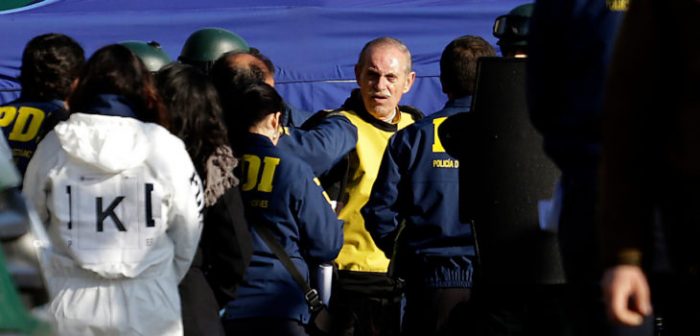
Sentenced to more than a thousand years in prison in more than 80 rulings upheld by Chile’s Supreme Court, 80-year-old former military officer Miguel Krassnoff has been imprisoned since 2005 for kidnapping, torture, and forced disappearance during the dictatorship. In his writings, he shows no remorse, “I need neither forgiveness nor favors,” he recently said in a letter and continues to justify the repression carried out by Augusto Pinochet’s regime.
Krassnoff is one of those convicted of human rights violations whose cases could be considered for a pardon currently being evaluated by Chilean President Jose Antonio Kast. The far-right president and defender of the dictatorship has said he will examine the cases one by one on humanitarian grounds. The possibility has generated strong opposition among victims’ relatives and human rights organizations.
Like Krassnoff, most of those convicted of crimes against humanity in Chile “were tried for many cases, in many proceedings,” Elizabeth Lira of the Human Rights Center at Chile’s Alberto Hurtado University (UAH) told DW. The UAH psychology scholar says that “it is highly problematic for the concepts of institutional order and security when a country’s civilized provisions for prosecuting those responsible for atrocious crimes are overridden by a political decision of the executive branch.”
“From a historical perspective and with an eye toward the future, I think it sends a terrible signal to suggest that crimes against humanity can be pardoned, because that also runs counter to the state’s commitment to provide guarantees of non-repetition,” Lira warns.
In Argentina, perpetrators such as Alfredo Astiz, sentenced to life imprisonment for crimes against humanity committed at the ESMA detention center, continue serving their sentences in prison. (2011 photo)
“Measures of impunity as sweeping as a pardon carry a major political cost for governments, even right-wing ones. The trials in Chile and Argentina, despite their difficulties, are well-established processes,” Veronica Torras, director of Memoria Abierta, an alliance of Argentine human rights organizations, told DW. Likewise, when it comes to pardons or other benefits not provided for by law, “there is unanimous opposition,” adds Torras, who is also vice president of Argentina’s Center for Legal and Social Studies.
Rainer Huhle of the Nuremberg Human Rights Center believes that the possibility of pardoning someone convicted of crimes against humanity requires reciprocity: “That is, there must be something in return that the victims can expect: a confession by the convicted person that what he did was a crime, an acknowledgment of guilt, an apology, and an effort to make amends. And the minimum form of reparation is to tell the truth about what he did and reveal the whereabouts of the disappeared,” he told DW. “Otherwise, these are ostensibly humanitarian acts, but with a strong flavor of impunity,” he emphasizes.
As for the possibility of reduced sentences, Huhle says a process is required, as occurred in Colombia: “If we think about the Special Jurisdiction for Peace, sentences were substantially reduced, but in exchange for a strong commitment to acknowledging the truth and apologizing. Without that, releasing the highest-ranking criminals seems unacceptable to me.”
House Arrest: Humanitarian Measure or Path to Impunity?
Meanwhile, a bill promoted by right-wing senators in Chile could grant house arrest, under certain conditions, to people suffering from serious health problems and those over the age of 70. Its aims would be, on the one hand, humanitarian and, on the other, to ease prison overcrowding. Critics of the reform argue that it would benefit criminals from the dictatorship.
In general, existing laws provide that a seriously ill person who needs medical treatment with constant assistance can be transferred to another facility or confined at home. “That is normal in every country. One wonders why a new law is needed for that,” Huhle questions. “If the benefit of leaving prison is based on a health problem properly certified by independent doctors, then it is a humanitarian measure and I would not call it a measure of impunity. The important thing is to make sure that this is the sole reason, because we have seen that illnesses can also be faked. All Chileans remember very well Pinochet’s arrival in Chile, when he cast aside his walking stick,” he adds.
As for allowing house arrest after a certain age, “that is something that must be examined very carefully, because age alone is not an illness and in itself cannot justify the release of someone convicted of crimes against humanity,” Huhle observes.
The situation is different in some countries where this provision for the entire prison population is already incorporated into law. In Argentina, when granting the benefit on the basis of age, judges must consider factors in each case such as the risk of flight and obstruction of the judicial investigation, Torras explains. In recent years, the trend has been to approve applications from those convicted of human rights violations. “They have been denied in certain specific, emblematic cases involving perpetrators whose crimes became deeply etched in public opinion because of the nature of the offense and their subsequent conduct. Today, nearly 90% of those convicted of crimes against humanity in Argentina enjoy the benefit of house arrest. Human rights organizations have not taken a unanimous position on this,” Torras says.
Another consideration, Lira warns, is that in Chile many prisoners convicted of human rights violations “are not in a position to return to their own families, because their families have left them or do not want to take responsibility for them. The only alternative the state has is to keep them imprisoned or under other forms of confinement.” This poses both a risk and a challenge.
Historical Memory Under Debate
The controversy is not limited to Chile. Amid the wave of right-wing governments in Latin America, disputes are emerging over the reinterpretation of historical memory and the legal consequences of past crimes. Governments have adopted a strategy of reducing funding for public policies and thereby dismantling programs. There are also efforts to revise museum narratives, and even Holocaust-style deniers of past state crimes have been appointed to key positions, with the aim of reshaping narratives about the recent past.
The Place of Memory in Lima preserves the memory of Peru’s internal armed conflict between 1980 and 2000. Its narrative and its future have become the subject of political dispute.
“A dramatic situation is unfolding in Peru, where there is an effort to change the narrative of the Place of Memory, which was a very important achievement for victims of state crimes during the internal war and the Fujimori dictatorship. There is now an openly opposing discourse that seeks to deny these crimes while recognizing only those committed by the insurgency. There is an anti-culture of historical memory,” Huhle warns.
Lira warns that “when the agreed-upon mechanisms for resolving conflict and creating conditions for peace are eroded, along with the political capacity of institutions to recover memory, there is a very serious risk that forms of violence thought to have been overcome will reemerge.” In that regard, she views with concern the reduction in funding for Colombia’s peace process and for memory policies in Argentina. In Chile, meanwhile, the budget for the National Search Plan for the disappeared was cut, and the expropriation of the former Colonia Dignidad — where a memorial site was expected to be established — was halted.
“I feel tremendous despair about all of this, because it is as though the people governing today were profoundly ignorant of history, or had decided to ignore the consequences of disregarding that history because of their own political positions,” the Chilean scholar laments.
If Flavio Bolsonaro wins Brazil’s elections in October 2026, the right would hold sway throughout Latin America. According to experts, this could deepen disputes over narratives of the past, including approaches that are openly denialist or that glorify authoritarian regimes of the past.
Torras believes the impact will not necessarily be entirely negative: “Often, when governments adopt such reactionary positions on these issues, strong resistance movements emerge within society.” The director of Memoria Abierta warns that “if Flavio Bolsonaro wins in Brazil next month, it would be the first time in 50 years that the entire Latin American region would be under the hegemony of the far right. We have not experienced a situation like that since the period when we had dictatorships and authoritarian governments.” In that context, disputes over historical narratives could intensify, including openly denialist approaches or those that glorify authoritarian regimes of the past.
In this scenario, the greatest impact will be seen in public policies that depend on the executive branch. In the judicial sphere, meanwhile, the advance of revisionism should be more limited, Torras estimates, because it entails a greater risk of international scrutiny and reputational damage for these governments.
Published in Spanish by El Mostrador and translated and posted in English by Havana Times.