
Book Review of Reinaldo Arenas’ “Viaje a la Havana”
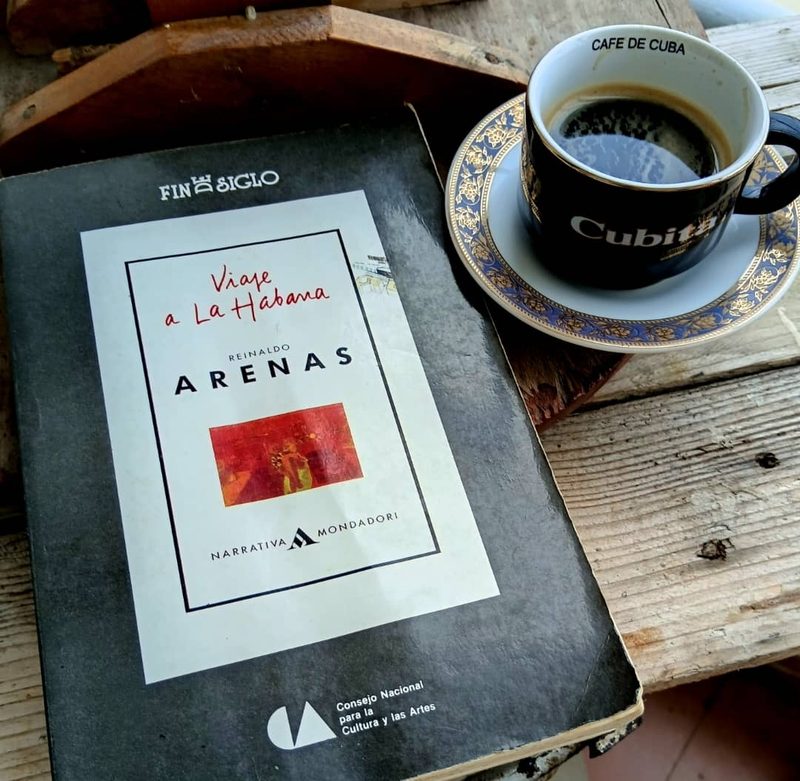
HAVANA TIMES – Some books recount a journey. Others succeed in taking the reader along with them. Viaje a La Habana* by Reinaldo Arenas belongs to that latter group. Published in 1990 and subtitled “Novel in three journeys,” the work brings together three different tales: Que trine Eva [“Let Eva sing”]; Mona;and Viaje a la Havana [“Journey to Havana”]. The three parts can be read independently, but when viewed as parts of a single journey they acquire a new dimension.
Arenas was born in the community of Aguas Claras, in Holguín, Cuba, in 1943, but he moved to Havana at a very young age. There he worked at the Jose Marti National Library and began a literary career that would lead him to publish, among other works, Celestino antes del alba [originally published in 1967, reissued in English in 1988 as “Singing from the Well”].
In 1980, he left Cuba as part of the Mariel exodus and eventually settled in New York. By the time he wrote much of Viaje a La Habana, he carried with him that experience of displacement, but also an increasingly intense connection to the memory of the city he left behind. He died in New York in December 1990.
This biography doesn’t provide any real explanation of the novel. Instead, in a sense, Arena’s life is embedded within the book. He divides himself among his characters – their voices, and their obsessions; he transforms recognizable experiences into fantastical, grotesque, or deliberately exaggerated situations. Reality never appears intact – it’s distorted, until it takes on another truth.
Perhaps therein lies the book’s greatest audacity: Arenas can exaggerate, invent, and carry
a situation to the point of absurdity and yet evoke a sensation of truth difficult to ignore.
In the first book, Que trine Eva, Eva and Ricardo cross Cuba to the island’s extreme eastern tip. Their obsession with fabrics and creating extravagant garments converts their trip into a kind of flight within the bounds of Cuban geography itself. There’s still no ocean separating the characters from their country – rather, the flight occurs within.
At this point an element appears which will run through the entire novel: the desire to be someone else, to invent some form of existence of one’s own, even if doing so means stretching reality to its limits.
Arenas’ storytelling moves forward through excess. Humor, sensuality, absurdity, and the grotesque are not mere embellishments. They allow him to look directly at something that, if told in a conventional way, might lose its power. There is a revealing quality to this distortion, as if reality, taken to the extreme, ultimately discloses more of its essence.
In “Mona,” the journey shifts to new territory. Exile appears, and with it, a paradox: leaving one place does not necessarily mean finding another. The character may be far from Cuba and yet continue to inhabit a state of rootlessness. Geographical distance does not resolve inner distance.
Arenas then introduces fantastic, gothic, and humorous elements, and once again breaks down the boundaries between the real and the imagined. The experience of exile becomes a new form of estrangement. It’s not merely a matter of having left a city, but of not knowing at all where the place one has arrived at begins.
It’s here that the book takes on one of its most intimate dimensions. Journeys are not merely movements through space. They are shifts in identity.
Body, desire, and sexuality are all part of this search. Arenas’ characters are trying to escape from the ways that others define or confine them. Desire is linked to the possibility of being, of choosing, of reinventing oneself. It is not a matter of reducing the novel to a story about homosexuality, but rather of understanding how the body becomes one of the arenas where freedom is challenged.
This brings us to the third part, Viaje a la Habana, which depicts the final and possibly most painful movement: the return. Because returning doesn’t mean recovering what’s been lost.
The character who returns is trying to reconnect with a city that exists in his memory. The Havana he seeks is not merely a physical city: it’s the sum of the years he has lived, of the people no longer there, of his youth, of his desires, and of a version of himself that he left behind. The real city and the city of his memory no longer coincide.
At that point, the novel ceases to be merely a story about leaving and returning. It becomes a reflection on the impossibility of returning to the exact same place from which one departed. Because we, too, change while we are away. And when we return, even if the streets remain, we are no longer the people who once walked them.
The very structure of the book reflects that sensation. Arenas shifts narrators, tones, styles, and even the narrative distance from his characters. Que trine Eva and Mona are narrated in the first person, while Viaje a La Habana introduces a third-person narrator alongside other voices, including a letter. The novel moves from one voice to another like someone shifting territories.
This stylistic movement matters. Arenas doesn’t construct a stable narrative because neither is the world he is describing. Identities shift, memory contradicts itself, the past reappears transformed, and reality blends with invention.
That’s why reading it creates the sensation of constant motion. No sooner does a scene seem to find its place then the temperature changes: the narrative moves from humor to horror, from sensuality to the absurd, from the intimate to the wildly excessive. Arenas takes the reader by the hand and carries them with him, without offering time to adapt.
But beneath all that mobility runs a quieter current: memory.
The three journeys can be understood as different ways of approaching something that is no longer there. First, the attempt to escape without completely leaving the territory. Next, the discovery that exile doesn’t guarantee a sense of belonging either. Finally, the endeavor to return, finding that the place one wanted to return to can only be reclaimed through memory and writing.
Maybe that’s why Viaje a la Havana leaves a sense of farewell. Not because Arenas simply writes about a lost city, but because the novel seems to understand that time, too, can become a form of exile.
But when reality no longer allows a return, literature remains.
And that’s where Arenas finds an extraordinary possibility: he can return to Havana as many times as he wants, but each return will necessarily be different. The city reappears transformed into memory, exaggeration, desire, nightmare, humor, and words.
The journey ends, then, where it began: in the need to move on. Except that, in the end, we realize that the destination was never exactly Havana. It was what Havana signified.
Perhaps that is the most beautiful and most bitter paradox of the book: Arenas manages to return to a city that no longer exists, precisely because he transforms it into literature.
*Unfortunately the book is not available in English , though it is sometimes referred to in literary biographies and scholarly notes by the translated title Trip to Havana.