
Street Corner Garbage Wars Divide Havana Neighborhoods
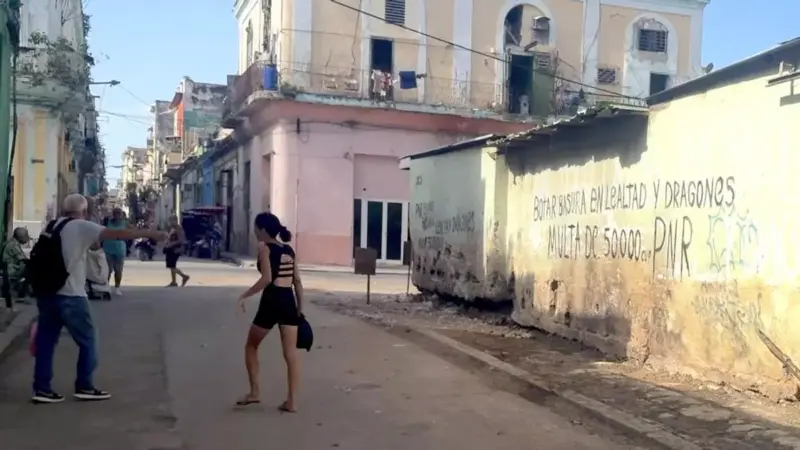
Some neighborhoods have hired private security guards, while on the unguarded streets giant piles of garbage grow, impeding the passage of vehicles.
HAVANA TIMES – At the corner of San Martín and Escobar, in Central Habana, anyone who dares to throw even a small piece of paper onto the street may find themselves in trouble. After months of living with a garbage dump large enough to obstruct traffic, residents cleaned everything up, posted warning signs, and hired local guards to prevent anyone from dumping any more trash there.
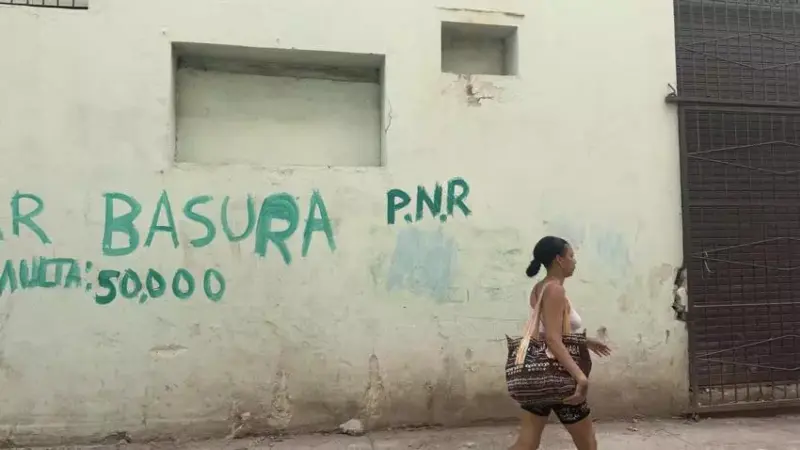
Prominent signs are posted on the walls: “No littering. 50,000-peso fine.” The signs bear the signature of the National Police and add that trash must be taken to the intersection of Lealtad and Dragones.
In the face of the ongoing shortage of fuel for the trucks responsible for cleaning the city, residents have had to step up themselves to solve the serious public health problem posed by garbage dumps on their street.
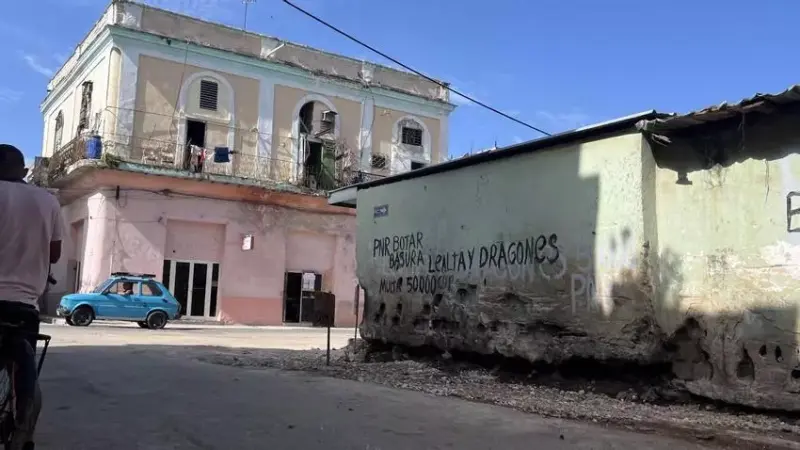
The corner of Lealtad and Dragones mentioned on the sign is a few blocks away, next to the Zanja police station, and already houses one of the largest garbage dumps in the area. The accumulation of trash there covers practically an entire block, rising over six and a half feet high in some places. In front of the Dragón Chino restaurant, the volume of trash has blocked the road, and the smell forces pedestrians to wear face masks.
At the intersection of San Martín and Escobar, reporters for 14ymedio witnessed a heated argument between residents and a woman who was attempting to flout the new rules for the corner. The woman had gone to dump an old pot in the spot where she usually threw out her trash. The neighbors confronted her. One of them held her by the arm, while threatening to notify the district chief and have her reported to the police. The argument escalated for several minutes; the woman even threatened to hit the neighbor with the disputed cauldron, until she gave up and went to throw out the trash elsewhere.
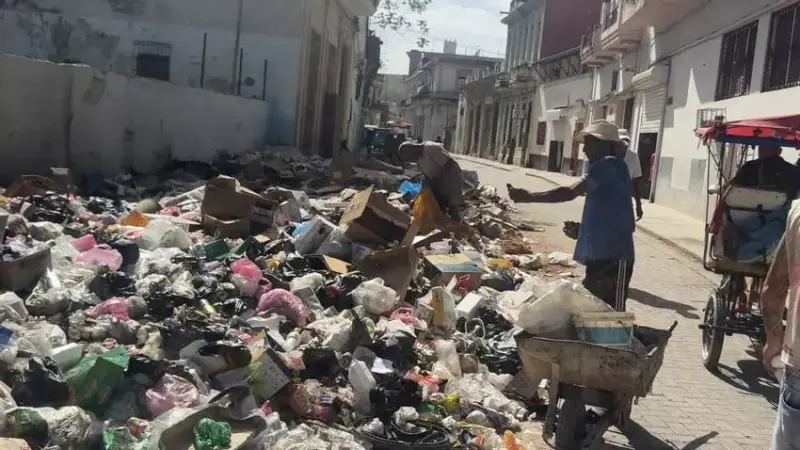
“We had to take matters into our own hands, because nobody was doing anything,” explained a neighbor, still worked up from the argument. A pedicab driver, who happened to be passing by at that moment, defended the offender: “What’s the big deal? If the government won’t do anything…”
The trash problem is pitting neighbors against one another. Every street corner tries to protect itself on its own. Those that manage to stay clean merely shift the problem onto the blocks nearby. Some residents hire guards and put up signs threatening fines. At one corner, there’s even a sign announcing that security cameras are in place.
Faced with months of accumulated trash, residents and the Sanitation Office itself began burning the piles, despite all the toxic consequences that entails for the population. “Now, we’ve entered a new phase,” a neighborhood resident sums up: “It’s the war of the street corners.”
Images captured by this newspaper demonstrate this reality, now an everyday occurrence in Central Havana. Each community has begun to devise its own ways of surviving the trash. Streets that don’t hire watchmen have turned into gigantic dumps, where, in addition, it’s common to see elderly people searching for food amidst the waste.
Enrique de la Osa recently shared images on Facebook of the corner of San Martín and Escobar before the cleanup organized by the neighbors. The photographs show a dense mass of garbage that had accumulated over weeks, with fire and smoke billowing from the pile, while neighbors try to go about their daily lives around it.
Today, that corner is clean, but the trash hasn’t disappeared—it has simply piled up somewhere else. Just like the country’s structural problem, which shifts but isn’t resolved, and grows larger every day.
First published in Spanish by 14ymedio and translated and posted in English by Havana Times.