
When Ideology Yields to Empty Pockets
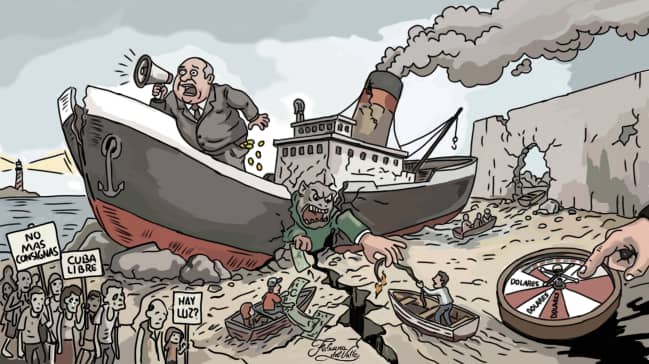
HAVANA TIMES – The history of this country since 1959 has shown that even the most rigid dogmas become flexible when people’s pockets are empty. For decades, Cuba’s official narrative rested on the absolute control of the State, claiming that this was the only path to social justice. Any hint of a free market was branded as ideological betrayal.
But overnight, the very authorities who persecuted private initiative have suddenly discovered the virtues of direct imports and independent commercial activity. I don’t see this as a surreal change in mindset. To me, it is simply a reflection of raw survival.
This sudden enthusiasm for market dynamics has emerged in a context of complete suffocation. State coffers are empty, basic infrastructure has been dismantled, and the external subsidies that once kept the system alive have evaporated.
Meanwhile, people no longer hide what they think. Protests amid the widespread blackouts have transformed fear into open demands. The old slogans have lost their value; rhetoric does not fill the refrigerator or turn on the lights.
The most ironic part is that, by allowing this opening, the authorities themselves are dismantling the argument of an all-encompassing external siege. For more than half a century, every internal dysfunction—from medicine shortages to urban decay—was automatically blamed on international sanctions. What a perfect excuse for avoiding accountability!
The government itself is tearing down that myth by authorizing new economic actors to operate, import, and negotiate outside the State’s control. If the external embargo truly were an impenetrable wall, these commercial openings would be impossible. By allowing this change only when the noose has tightened around its neck, the government demonstrates that the chains holding back local development were always forged within the offices of its own bureaucracy.
For those who view these reforms with nostalgia or optimism, there is a giant red warning light on the stage. Any investment under the current rules would be like building on quicksand.
Today, they are rolling out the red carpet for small businesses and foreign currency because they are desperate and need to attract liquidity. In this way, they can avoid having to declare total bankruptcy.
This remains a totalitarian environment, where the rules of the game can change as easily as a ministerial decree is signed. Nothing prevents the authorities from once again criminalizing accumulated wealth and confiscating what people have built once the ruling elite regains a measure of stability. This strategy has already been seen before.
You cannot save a structure that is falling apart by allowing only small oases of freedom while the rest of the institutional framework remains designed for control. Cuba’s crisis will not be solved with temporary import permits or conditional business licenses. Putting makeup on this disaster without touching the pillars of political power is a futile endeavor.
I am convinced that the island’s development will not begin when the regime decides to give its citizens a little breathing room, but when its citizens decide they no longer wish to depend on the breathing room the regime chooses to provide.