
Nicaragua, a Tragedy and Some Lessons
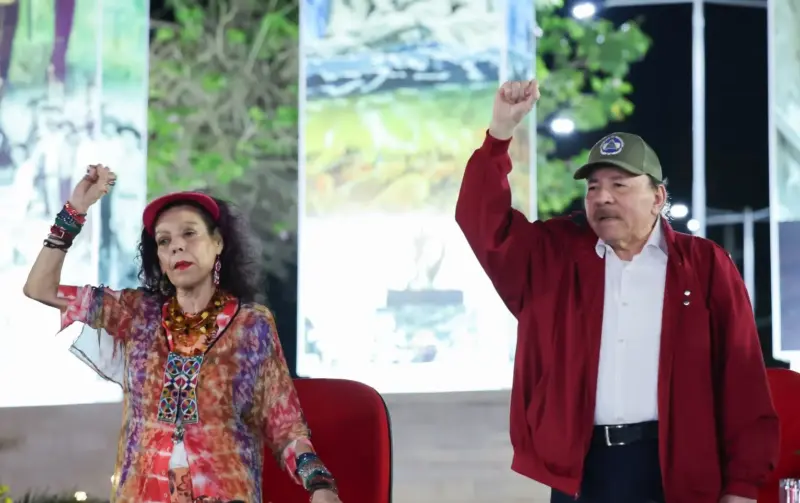
The opposition in exile knows that recovering democracy requires more than international support: it also needs unity among allies and former adversaries.
By Antonia Urrejola Noguera (Confidencial)
HAVANA TIMES – In 2018, Nicaraguans took to the streets to protest a reform of the country’s pension system. The Ortega-Murillo regime responded with violent repression and an escalating authoritarian crackdown. The challenges facing the opposition in exile as it seeks to restore democracy are important not only for Nicaraguans—they also illustrate some essential aspects of democracy on a global scale.
The Inter-American Commission on Human Rights (IACHR) has documented at least 355 deaths, 3,200 arbitrary detentions, enforced disappearances, the closure of approximately 5,400 civil society organizations, the systematic persecution of political opponents, and the stripping of nationality from 452 people declared “traitors to the homeland.” The OAS Group of Independent Experts (GIEI) and the UN Group of Human Rights Experts on Nicaragua (GHREN) have concluded that these abuses constitute crimes against humanity that must be investigated and punished.
The repression has not stopped. A tragic example is the death, on May 30, of Brooklyn Rivera, a member of parliament and historic Miskitu leader, after 32 months of enforced disappearance. Meanwhile, the June 2025 assassination in San Jose, Costa Rica, of Roberto Samcam, an opposition figure and retired army major, demonstrated the reach of Nicaragua’s transnational network of repression. This network had not only been denounced by Samcam himself, but has also been documented by the GHREN.
The deterioration of democracy is equally evident. Impunity prevails thanks to the government’s total control over all branches and institutions of the state, the manipulated perpetuation of the Ortega-Murillo family in power through, among other means, the 2021 elections—widely regarded as illegitimate by both the opposition and the international community—and a constitutional reform in 2025 that further consolidated the family’s authoritarian regime.
Nicaragua’s situation is a tragedy, but it also offers some lessons worth remembering.
The opposition in exile seems to understand that international action alone will not be enough to restore democracy. It needs unity—and that unity must include both allies and former adversaries. Such unity, which requires people with often opposing viewpoints to work together, must rest on a shared foundation if it is to be strong and lasting. That is why it is essential to make explicit that respect for democracy and human rights must serve as the common basis for opposition to barbarism and authoritarianism.
This is necessary not only to forge unity among the diverse sectors of the opposition, but also to help ensure that any future democratic transition does not become vulnerable to new authoritarian projects. Nicaraguans know all too well, from their own history, what happens when political transitions lack this fundamental pillar, and they should avoid falling into the same trap again.
The broader regional reality highlights another important lesson: promoting lasting agreements on democracy and human rights among political adversaries should be the foundation for ensuring that every election does not place the basic principles of our shared civic life at risk.
Published in Spanish by Confidencial and translated and posted in English by Havana Times.
Read more from Nicaragua here on Havana Times.