
A Survivor
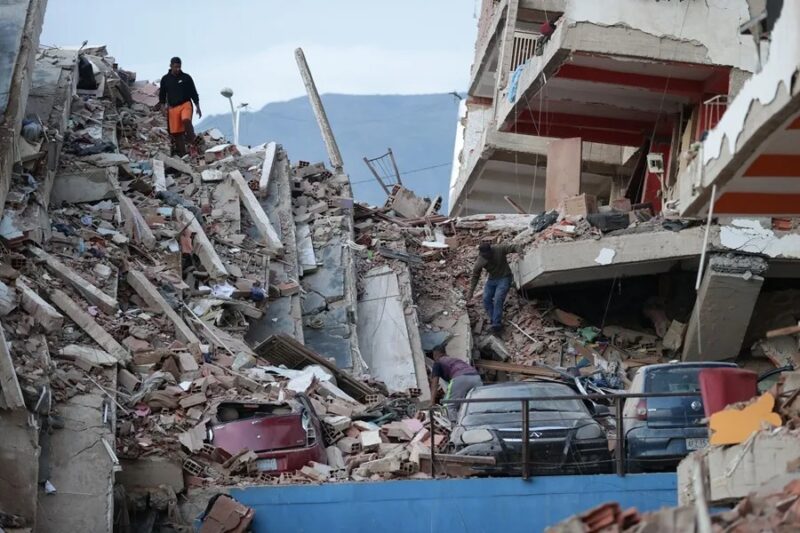
HAVANA TIMES — A survivor, his face covered in dust, his wounds only partially cleaned, speaks into a cellphone camera:
“Please, come down here now. There are too many people trapped under the rubble.”
A man of about 30, exhausted and wearing the distant look of someone overcome by grief, answers the questions of the person recording the video. His wife and two children are still beneath the debris. He heard them screaming. He tried to rescue them, but the weight of the concrete structures was greater than the strength of his bare hands. He no longer hears his children’s cries. They are 5 and 9 years old.
The owner of a small neighborhood grocery store hands out soft drinks to a group of people sitting in the street. He is an elderly man who says very little—only what is necessary.
A four- or five-year-old boy, at a medical assistance center, manages to give his full name, along with the names of his father and mother. But then he immediately corrects himself when referring to his mother: “Her name was…”
More than one hundred people who had just been deported from the United States and were waiting to be transferred to Caracas died almost to the last person before they could embrace their families after years of separation.
A group of firefighters and rescue workers joke with a woman whose head is sticking out from a mountain of rubble.
“Don’t worry, ma’am, we’re going to get you out. Trust us.”
The woman jokes that she’s worried about how she looks, and they reply:
“Don’t worry—you look beautiful. And I love those nails.”
The other firefighters tease the one who complimented her, reminding him that her husband is standing right there. But she smiles calmly and says not to worry, that her husband isn’t jealous—and neither is she.
Forty-eight hours after the earthquake
The Caracas–La Guaira highway is clogged with trucks and long lines of motorcyclists heading toward the coastal state carrying water and emergency supplies for the victims and the rescue crews.
Children, women, men, dogs, and cats emerge from the concrete ruins, lifted and embraced by the hands and arms of rescuers, as though the earth itself were giving them a second chance to be born. They see daylight again. They breathe fresh air. And I can’t stop thinking of childbirth… and of a kind of pact between the earth—which three days ago showed its most terrifying face—and those who are being reborn from the rubble.
But the joy of these rescues is not enough. Only after 48 hours did the interim president announce that the armed forces would be sent to Vargas State.
There have already been at least a couple of incidents of looting, some involving uniformed personnel. Yet the only uniformed people seen helping rescue victims have been firefighters and a few police officers. The National Guard has been absent. The State has been absent from La Guaira for 48 hours.
And it has not only displayed its customary inefficiency—it has also tried, in several places, to shut down the donation collection centers where civil society has been organizing relief efforts.
The pain leaves me struggling to breathe at times. I find it difficult to pull myself away from my phone or computer, where I follow, through social media, everything happening in Caracas, Vargas, and the other states affected by the double earthquake.
The helplessness I feel—knowing I am more than eight hours away, without the resources or the training to go and help—fills me with guilt.
I wonder whether those who govern feel the same guilt when they see hospitals without supplies and in poor condition, fire departments and civil defense teams without the tools they need to do their jobs, and the near-total absence of effectiveness, organizational capacity, and empathy for those who are suffering.
Incredibly sad and heartbreaking….