
Will Cubans Trigger a Process of Transculturation in Brazil?
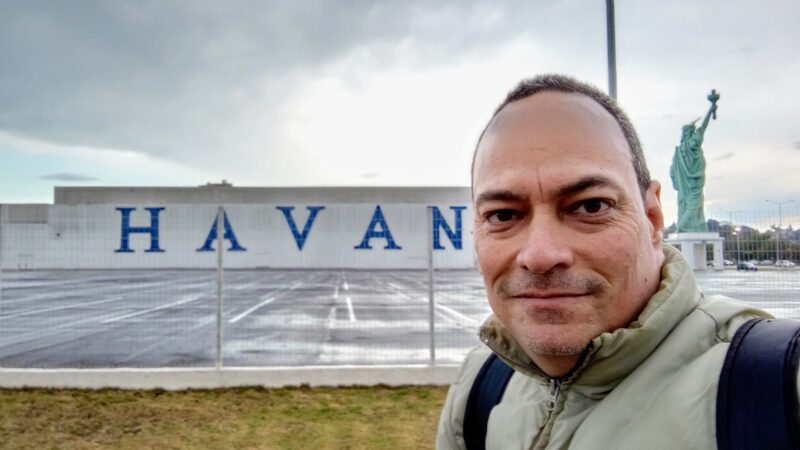
HAVANA TIMES – Three and a half years ago, when I arrived in this country—specifically in the Europeanized city of Curitiba—I felt like an isolated molecule in an ocean of Brazilians.
My tendency toward introversion, combined with the fact that I was the only Cuban for miles around, only heightened that feeling.
However, for a little over a year now, largely because of Donald Trump’s immigration policy, the Cuban exodus, once focused on the United States, has found another destination in the southern part of the continent.
In 2025, more than 40,000 Cubans applied for refugee status in Brazil, and during the first three months of this year alone, more than 13,000 applications had already been filed. The flow has not stopped, and the state of Paraná is now home to around 11,000 of those recent arrivals.
Eleven thousand people represent a presence that cannot be ignored. When enough individuals from a different culture remain in a territory for a significant period of time, they inevitably have a cultural impact.
Musically speaking, for example, Curitiba has traditionally been dominated by sertanejo, rock, and Brazilian popular music styles such as funk carioca and Brazilian trap. Yet Caribbean genres such as merengue, salsa, and reggaeton are steadily gaining ground.
The same is true of Cuban reparto, although for now it seems to be listened to mainly by my fellow Cubans.
In the environment around me, Cubans are becoming increasingly common. Many of them have that kind of contagious personality. They influence Brazilians—especially those who are not from Curitiba—because Curitibanos tend to have a rather reserved character.
Brazilians are beginning to feel comfortable with Spanish. They are learning words. They greet and say goodbye in our language. They thank you in Spanish and study the language seriously.
A year and a half is not the kind of “significant” period needed to give rise to transculturation, but what about one generation—or two, or three? If we made up less than 1% of the population, we would simply be assimilated into the local culture, adopting its customs and traditions. But what if our numbers reached 180,000?
If Cubans continue arriving in this city at the same pace we did in 2025, it would take about 25 years for us to make up more than 10% of the city’s total population.
Truthfully, there is nothing guaranteed given the political reality on the Island. Various internal and external factors could produce very different scenarios, in which the Cuban people either continue—or no longer have—the need to emigrate.
It is also true that other doors could open, including those of the United States, bringing the migration flow toward the capital of Paraná to an end. So, in answer to the question posed in the title of this article, I believe that transculturation, in the strict sense of the term, is quite unlikely.
A new cultural identity that fully integrates both Curitiban and Cuban traditions is unlikely to emerge on a large scale. On an individual level, however, some very interesting combinations could develop. My daughter, who is Cuban at home but will grow up immersed in this culture, may well become a kind of Cuban-Brazilian hybrid.
I believe it is important to point out that Curitiba has already undergone transculturation.
With its cosmopolitan character, shaped by waves of immigrants from many different countries throughout its history—from the first Polish and German settlers to us, the Cubans—it is a metaphorical pot in which they cook their barreado, just as we once cooked our ajiaco.
Read more from the diary of Osmel Almaguer here on Havana Times.