
Cuba Is Left Almost Without Internet Again
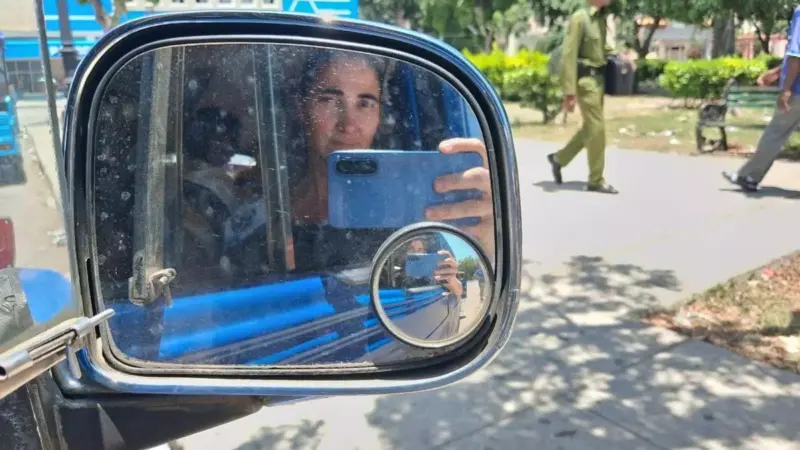
Wi-Fi hotspots are disappearing, mobile coverage is failing, and customers are chasing a signal that is becoming increasingly scarce.
HAVANA TIMES – The park at Galiano and San Rafael Streets is packed this Monday with people staring at the screens of their cell phones.
“I got lucky,” I say with relief after passing through several Wi-Fi zones where neither a signal nor even an antenna remains. But the joy is short-lived on this island of the disconnected, and a young woman explains that there is no longer any wireless internet service installed on that central corner.
“We’re here chasing the 4G phone signal because there’s almost no coverage in Centro Habana,” she said.
Without saying a word, without prior announcements or public explanations, the state telecommunications monopoly, Etecsa, has gradually dismantled the parks that, for many Cubans, were the first places where they encountered the World Wide Web.
“People come early because it seems there’s a tower nearby that’s still working,” the woman adds, cutting the conversation short so as not to waste a single second of connectivity.
The Internet has once again become a scarce and hard-to-obtain commodity, so every moment when messages begin downloading, web pages start opening, and the sound of notifications returns to our phones must be used to the fullest.
The scene reminds me of 20 years ago, when the only internet cafés in Havana accepted only foreign customers. In one of them, located in the Capitol building, pretending to be a tourist, I published the first post on my blog Generation Y. But now, even a foreign passport is no help. Once travelers leave their hotels, they are just as disconnected as we are. Their phones, equipped with the Cuban SIM cards sold to them at the airport or in an Etecsa office, also remain silent for most of the day.
I decide to walk up Galiano Street while thinking about how many days it has been since I last read anything on social media. I have gradually given up my profiles on X, Facebook, and LinkedIn, which I can only access in the early hours of the morning to upload my podcast, reply to a few comments, and occasionally wish a friend a happy birthday.
I look at the people sitting under the arcades along the central avenue, selling trinkets, begging for alms, or sliding a finger across their phone screens in a futile attempt to refresh a frozen web page.
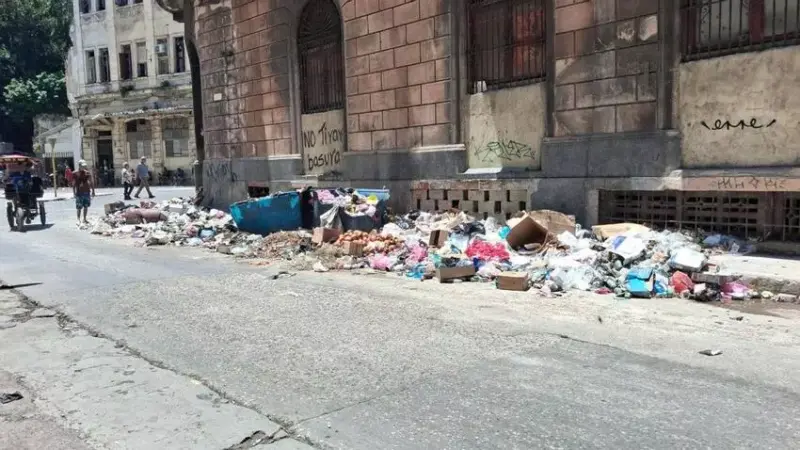
At Reina Street I manage to catch a motorized tricycle. The back is packed with passengers, but the driver hands me a helmet so I can sit beside him. Necessity creates extra space in these vehicles.
“If they let me, I’d build a second deck to carry more people,” he jokes.
An old Ford serving as a private taxi blasts its horn beside us. The rivalry between the classic almendrones and the newly arrived tricycles is obvious. The drivers of the old cars accuse the tricycles of constantly cutting into traffic. The tricycle drivers insist that the antique cars, dating from early last century, barrel through the city arrogantly because “they’re tougher than a battle tank and can crush these sardine cans into powder.”
I avoid taking sides. I belong to the team of the walkers, who try to go everywhere on foot, and when exhaustion or urgency catches up with me, I feel equally blessed whether I can flag down a 1950s Chevrolet or an electric motorcycle with such a narrow seat that I have to cling completely to the driver to avoid falling off.
Eventually I get off in front of Carlos III Plaza. I loved this place as a child. There was a display window with mannequins showing the inside of the human body: models of livers, lungs, and a plaster face that was half normal and half stripped of skin.
All those objects belonged to a state enterprise that, on the upper floors of the Plaza, produced teaching materials for medical schools and for biology classrooms in secondary schools and pre-university institutes.
I loved standing there staring at them while my mother hurried me inside the building to buy sweet potatoes or an unripe papaya, which was about the only thing sold outside the ration book in those years.
Then came the 1990s and the market was dollarized. The shopping center was given the name of a King of Spain, like the street that runs in front of its entrance, although years earlier the authorities had renamed the avenue after Salvador Allende.
Today, when I enter the Plaza, the heat of an air conditioner running on low hits me. The store has once again been dollarized, but there is very little to buy. The smell of dampness and mold is everywhere.
The grocery section has only a handful of products, and the sporting goods store displays just one bicycle. Looking at the housewares department, one might think Cubans need nothing but curtains and pillowcases. As for the frozen food section, the freezers are completely empty.
Out of habit, I continue climbing the spiral ramp that I loved running up as a child. The phone signal inside the Plaza is minimal, and as for mobile data, it is completely dead.
At the top, I come face to face with a mural of Raul Castro. He is clasping his hands together in a gesture of victory. An employee waters the plants beside a sign bearing a slogan that says everyone should devote themselves “with modesty and without fanfare” to the position assigned to them.
I leave the shopping center with an empty bag.
I manage to climb into an intense blue almendrón. Beside me sits an elderly man with a cane carrying a huge plastic water jug.
“We haven’t had a single drop of water in my neighborhood for almost 20 days,” the man explains apologetically, unable to keep the container from resting partly on one of my legs.
A passing tricycle cuts in front of our car. The driver’s curse echoes through the vehicle.
Every time we stop at a traffic light, several passengers automatically swipe their thumbs across their phone screens to see whether any signal has come through.
But not a single notification sounds.
First published in Spanish by 14ymedio and translated and posted in English by Havana Times.