
Have Cubans Forgotten July 11th?
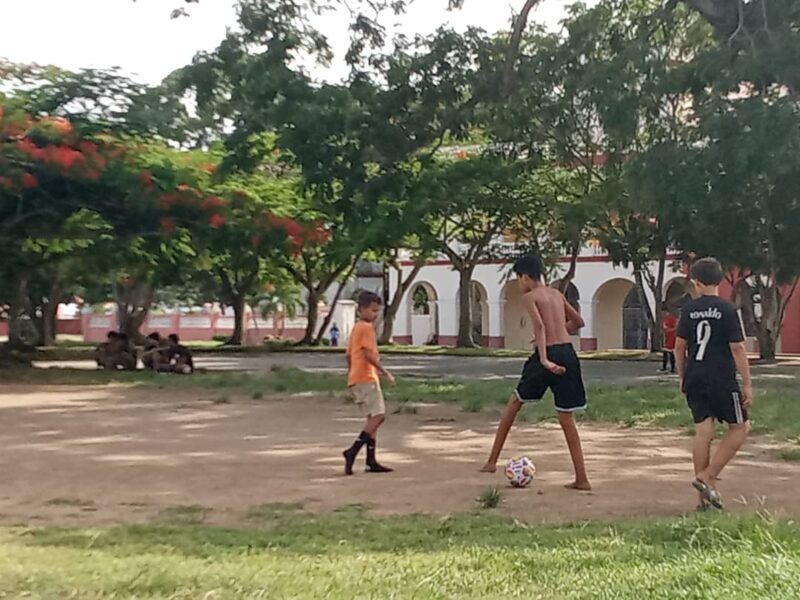
HAVANA TIMES – On Saturday afternoon, only a group of lanky youngsters enlivened the area around the Provincial Government headquarters in Camagüey with their shouts. They had gathered to play soccer on an improvised field next to the building’s parking lot. The bare dirt, worn free of grass by the constant passage of players, showed that these matches are a regular occurrence there.
There was practically no one else around. In the distance, a security guard nodded off while sitting beside one of the entrances to the government complex. There was no visible security deployment of the kind one might have expected on July 11—the fifth anniversary of the largest demonstrations Cuba had seen in more than half a century. Those same demonstrations had attempted to reach that very building in Camagüey, failing only because of the repression carried out by the police and government supporters.
In Camagüey, July 11 was shaped by geography. The historic center, whose working-class neighborhoods gave birth to the protests that summer afternoon in 2021, lies west of the Hatibonico River, the largest waterway crossing the city. But the seats of administrative and political power stand on the river’s eastern bank.
Looking back at the local history of July 11, 2021, it is possible to identify the exact moment when the afternoon ceased to be peaceful and became a full-scale confrontation. It happened when the demonstrators tried to cross the Triana and Fairgrounds bridges and discovered that the authorities had already blocked them with trucks and heavily armed police units. A video from that day shows dozens of people hurling stones at the forces blocking the Triana Bridge.
For a moment, it seemed the demonstrators might break through and reach the provincial government headquarters, but that hope gradually faded as night fell.
The following day, protests were repeated only in a few specific places, such as the Havana neighborhood of La Güinera. In Camagüey, no one protested again. In the meantime, the Communist Party set up checkpoints to restrict access to the Plaza de la Revolucion area, where the government headquarters are located. Those roadblocks remained in place for weeks, until the situation in the country returned to a certain degree of normality.
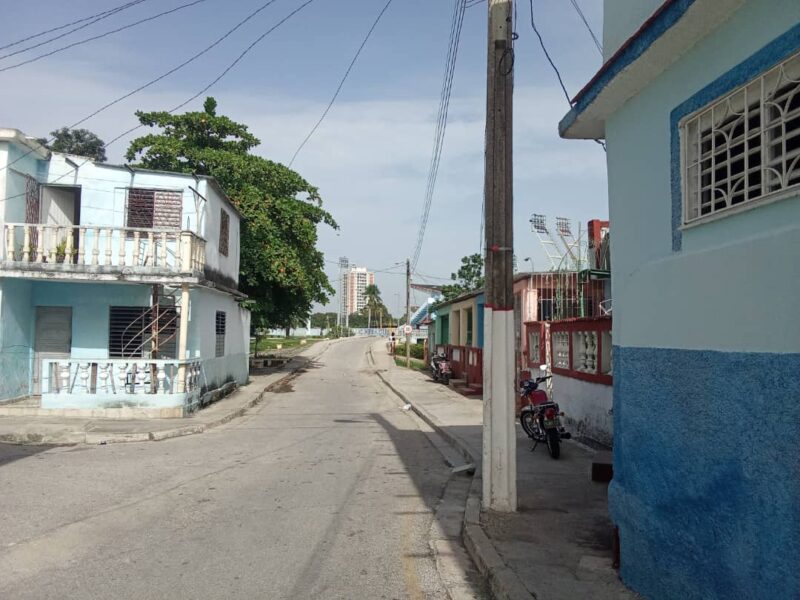
In the following years, the access points to the Plaza were once again guarded during each July 11 anniversary, although each year with less formality and fewer police officers. That continued until this year, when not even a single patrol car was assigned to guard the building that the demonstrators had once hoped to reach.
What’s more, later that evening, as I crossed the city on personal errands, I encountered only a handful of police officers on duty. Nearly all of them were gathered at Plaza del Gallo, a square in the historic center where hundreds of young people were watching a World Cup soccer match on a giant screen. Bars and other private businesses were also making the most of the crowd, serving customers eager to watch Messi in one of his final appearances wearing the Argentine jersey.
Days earlier, an acquaintance had predicted exactly this scenario.
“You’ll see—nothing will happen that day. If the blackouts are really bad, at most there might be some protest in a neighborhood somewhere, or maybe a Lady in White gets arrested. Adults in Cuba don’t even have time to think anymore, caught up in the daily battle that life has become. And the kids—the young people—only think about leaving the country. To do that, they can’t be ‘regulated’ from traveling or end up with a criminal record. These people (the authorities) have us exactly where they want us.”
The facts seemed to bear out his opinion. Even accounting for the dramatic effects of the pandemic, Cuba in 2021 outperformed Cuba in 2026 by a wide margin on virtually every indicator. Back then, blackouts here rarely lasted more than 12 hours a day, the US dollar was worth fifteen times less against the peso, and the ration book still guaranteed basic hygiene products and foods such as rice and bread rolls.
Five years later, inequality and poverty have become the norm in Cuban society. While millions struggle just to feed themselves, an elite composed in equal parts of high-ranking officials and repatriated émigrés import luxury SUVs and vacation at hotels where a single night’s stay costs the equivalent of several years’ pension for the average retiree.
Another acquaintance wrote to me on the anniversary:
“And add to that all the young people who left during these years. You can take part in all the rallies you want in Miami, but the demonstration that can really change things is the one that happens in Cuba. But millions of Cubans are no longer there to make it happen. Worse still, now we’re helping sustain the system by sending remittances and care packages to our families.”
He was one of the many who unsuccessfully tried to cross the Triana Bridge on that July 11. But by nightfall, when his fellow marchers began heading home, he realized “this thing wasn’t going to be brought down by anyone. Cubans have an enormous capacity to normalize things, to survive even under the worst circumstances,” he explained.
He probably saw that reality firsthand again this Saturday afternoon, watching that group of children playing in front of the building that so many people had once hoped to reach. Aside from the kids—and me—no one else seemed interested in being there the afternoon of July 11, 2026.