
In Venezuela, There’s a Day for Everything
HAVANA TIMES – I make myself a little coffee and some toast with butter and sit down to have breakfast before heading out with the gas cylinder.
As I eat and swallow, swallow and chew, chew and sip, I check my WhatsApp messages. Just then, my aunt writes to me from Cuba because the electricity came back on at six in the morning, and she jumped out of bed to charge everything in her house that runs on batteries, while also doing some laundry and putting some beans on to soften.
“What are you doing awake so early, girl?”
She knows I don’t like getting up early. I prefer the afternoon and evening. In the morning, I have to wait about three hours after waking up before I feel like I’m really awake. But today I have no choice. It’s “Gas Day.”
“Gas Day? Are you guys like us? Do they only give you gas one day? Well, actually, they don’t give us gas on any particular day. Here we use small cylinders, but if you can’t come up $30 for the kid, you’re out of luck. How does this Gas Day thing work for you?”
I explain that, a few weeks beforehand, the Communal Council in the area where I live lets us know that we can pay for the gas. You go onto the gas company’s website, pay online, and wait until they call you.
The day before, the woman in charge of the Communal Council sends a text message telling us when to bring our cylinders to the Community Center.
Since I don’t live in the capital, things can be a little different.
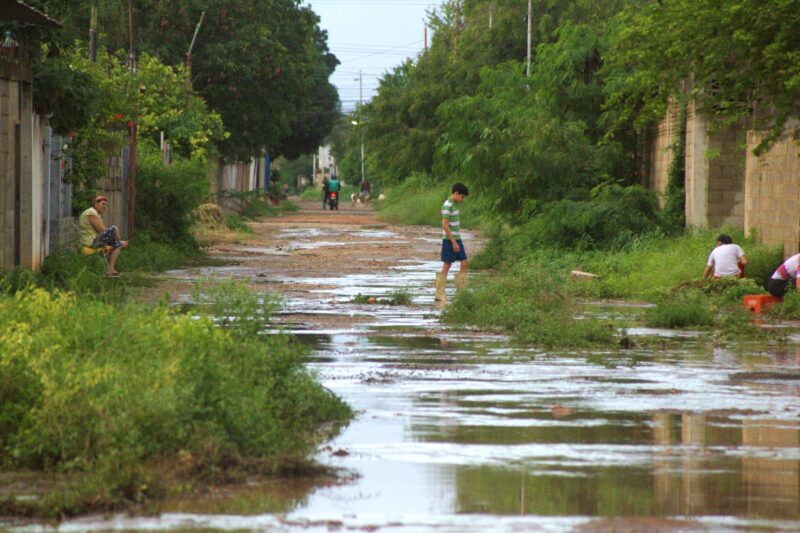
For example, we’ve had several days of rain. Pulling a shopping cart with the gas cylinder in it all the way to the Community Center is a little difficult: most of the streets around here aren’t paved. Once you’ve managed to make it through the mud, you have to wait in line to hand over the cylinder. Then you have to stay alert all day for the notice telling you that you can go pick it up. Then it’s back in line again, except this time the trip home is heavier, obviously.
The difference is that it costs me about $3. If I want to avoid hauling the weight, I can pay a motorcycle taxi $1.
That’s what I’m going to do today.
On the other end, my aunt sends me a teary-eyed emoji.
Then another with dollar signs for eyes.
“I wish we had a Gas Day like that here.”
I think about the streets of Havana, overflowing with garbage, and I’m not sure whether to tell her that here Thursdays are Garbage Day. In other words, once a week the sanitation truck comes by and picks up the garbage we leave on certain streets in the community.
Until a couple of years ago, we couldn’t even dream of someone coming to collect the garbage. We either burned it—which is easier here than in the city because we live on the rural outskirts—or hauled it to a more central area, far from home.
On that day, you also have to stay alert because the garbage truck doesn’t have a fixed schedule. Sometimes it doesn’t come on Thursday but on Friday instead.
I tell her we also have Water Day. (Usually at night or in the early morning hours.)
When I moved here from Caracas, I learned to live without that basic service. Now we’ve managed to get one Water Day. On that day, water runs through the pipes of every house for two hours. We fill our tanks, clean our porches, and water the plants if it’s the dry season—which is almost always around here. Now I can even afford the luxury of taking a shower before going to bed instead of having to carry water and ration it more carefully.
“Oh, a shower! I don’t even know how long it’s been since I’ve been able to bathe without rushing,” said my aunt. “ You know how things are here. They cut the electricity and we’re left without water. When the electricity comes back, the last thing you think about is taking a shower. You do that at the end, after we’ve stored up water, which is never enough because we don’t have anywhere to store enough of it, and then you get in the shower afraid you’ll be left covered in soap and in the dark. I’m so jealous of you having a day for everything! At least you have that, girl!”
I feel sorry for my aunt and for my entire family in Cuba. And I feel ashamed that what feels like such a burden to me is, for her, a dream right now. My four hours of blackouts every day are the reverse for Cubans on the island: four hours of electricity—and that’s on a very lucky day.
The thing is, the less we “have,” the more grateful we become for that “little bit,” that handout the government gives us, as if, instead of devoting ourselves to working, studying, or resting, we should have to dedicate each day of the week to “figuring out” how to get a basic service.
And in Cuba’s case, they don’t even have that. For now, every day of the week in Cuba is devoted simply to surviving.