
The Man Who Waits for the Red Light
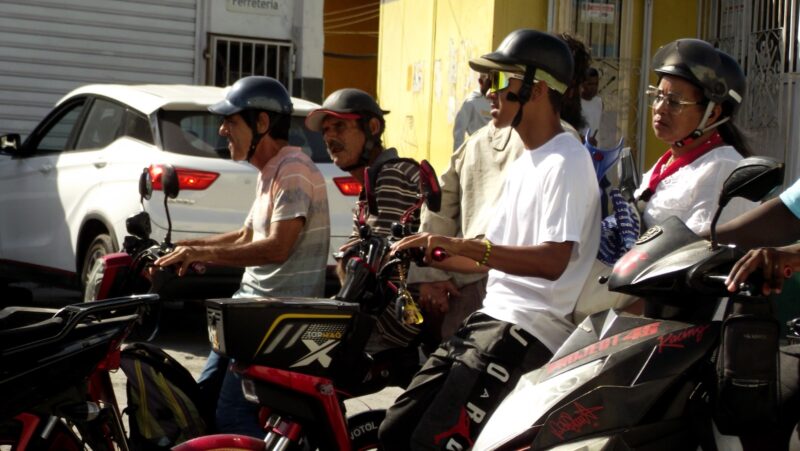
HAVANA TIMES – The red light brings the line of cars to a stop at the corner of 100th and 51st Streets, in Havana’s Marianao municipality. This is the moment he waits for. As soon as traffic comes to a standstill, he walks between the vehicles with his hand outstretched. He doesn’t knock on windows or pursue those who look away. He goes from one window to another with the calm of someone who knows by heart how long a traffic light lasts. While the cars wait, electric motorcycles continue weaving through whatever spaces they can find, and pedestrians cross the avenue. When the light changes, he returns to the sidewalk. He knows that in a few minutes he will have another opportunity.
He doesn’t run. He doesn’t raise his voice. Nor does he insist when someone shakes their head or pretends not to see him. He looks first at people’s faces and then at their hands. In just a few seconds, he tries to guess who will roll down the window, who will hand him some money, and who will simply move on. When the light changes, he steps aside without hurrying. He knows that opportunity is over and that the next one will come soon enough.
The green light sets the avenue in motion again. The old US American cars pull away in clouds of exhaust, electric motorcycles weave ahead between the cars, and pedestrians quicken their pace to reach the other sidewalk. Once again, he remains at the edge of the corner, watching the traffic disappear until another opportunity comes.
Those who regularly pass through the area recognize him without needing to know who he is. Some nod to him, others roll down their windows before he reaches them, and many prefer to stare straight ahead. Over time, his figure has become part of the landscape at 100th and 51st, as familiar as the ebb and flow of traffic or the avenue’s constant hum.
He knows that corner the way someone knows a road traveled for years. He knows which vehicles tend to stop closest to the sidewalk, which drivers roll down their windows without his having to insist, and which keep their eyes fixed straight ahead until the light changes. He doesn’t expect miracles. He looks for those brief moments when he can approach, extend his hand, and return before the street regains its speed.
Some days he manages to collect a little money, while on others the hours pass with hardly anyone stopping to help. But the routine remains the same. He returns to the same spot and repeats the same movement again and again. At that corner, the possibility of getting something appears and disappears as quickly as the traffic changes.
The corner of 100th and 51st never stops. The old US American cars continue to defy the passage of time, electric motorcycles make their way between vehicles, and buses pass by packed with passengers looking out at the street through the windows. On the sidewalks, vendors and passersby carry on with their own urgent concerns: selling something, finding what they need, reaching some destination before the day is over.
Amid that constant movement, he occupies only a few seconds of people’s attention. For many, he is just another figure amid the traffic; for others, someone they recognize every day even though they know nothing about his story.
His presence is not an isolated phenomenon. In different parts of Havana, other people have also found ways to earn some income on the streets: selling something, offering a service, or asking passersby for help. These scenes have become increasingly common and speak of a city where many people are trying to get through each day with whatever resources they have at hand.
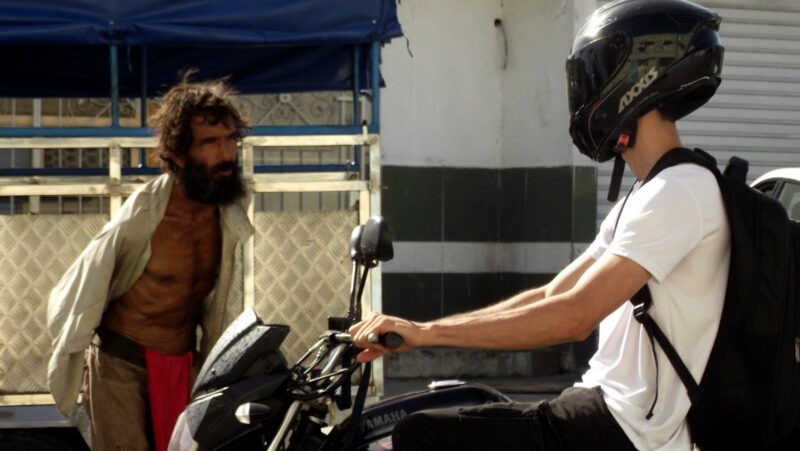
But at 100th and 51st, the scene has one particular feature: he has no merchandise to sell and no service to offer. All he has is the possibility of asking for help from those who pass through that intersection.
Little is known about him. His story remains hidden behind that outstretched hand appearing between the cars. Those who pass by can imagine many reasons, but only he knows the path that brought him there. The street reveals only one part of it: a man seeking help while life continues around him.
When the day ends, he gathers what he has managed to collect and walks away from the avenue. Tomorrow he will return to the same corner, as he has done so many times before. The cars will continue to pass, and the city will carry on with its rhythm.
But one question remains that no traffic light can answer: how many stories like his pass before our eyes without us ever getting to know them?
Read more from Safie M. González’s diary here at Havana Times.