
Corrupted Officials Won’t Restore Venezuela’s Institutions
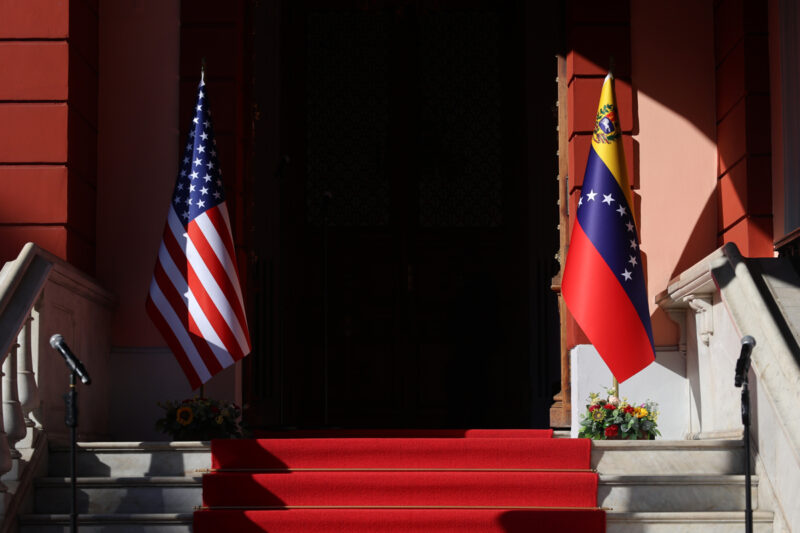
The majority of Venezuelans want honorable officials who respect the Constitution to head the five branches of government.
By Antonia Muñoz (Efecto Cocuyo)
HAVANA TIMES – Jorge Rodríguez, President of the National Assembly (AN) and brother of the interim president, stated (more or less in these words) that he had no time to think about reorganizing the National Electoral Council (CNE) or the Supreme Court of Justice (TSJ) because he was too occupied with the tragedy caused by the earthquakes of June 24, 2026.
He also quipped, “If you know how to count, don’t count on me.” Likewise, with his usual cynicism, and speaking as though he were the greatest champion of the Venezuelan people, he implied that thinking about appointing a new CNE and TSJ at this moment would be like “insulting” Venezuelans who had directly suffered the consequences of the earthquake.
Anyone who doesn’t know him might believe him! If he truly cares so much about Venezuelans, why did the government that he, his sister, and others are usurping take more than 48 hours to arrive at the areas hardest hit by the earthquakes, and much longer to provide any meaningful assistance?
Such is the inefficiency of that group of usurpers that the government overseeing them arrived before they did! Were they waiting for orders from their US American bosses and their Marines before taking action? The President of the National Assembly is right about one thing: neither he nor his team can be counted on, because the majority of Venezuelans want the five branches of national government—the Executive, the National Assembly, the CNE, the TSJ, and the Citizen’s Branch—to be led by honorable, honest, balanced, tolerant officials who respect the Constitution and the nation’s laws. In other words, we want the public institutions—beginning with the CNE and the TSJ—to be headed by Venezuelans committed to justice, peace, and democracy.
That said, it is important for them to know that all Venezuelans grieve the loss of so many lives. We grieve that so many people have lost not only their loved ones but also their homes and belongings. Therefore, thinking of the earthquake victims and the rest of the country, we are also pained that the interim government intends to use this tragedy as an excuse to continue ruining our lives—and let it be clear, I am not referring only to economic ruin.
For this reason, most Venezuelans are fully capable of demanding changes in government, and that cannot happen unless the Electoral Branch and the Supreme Court are changed first, so that transparent, free, and credible elections can be held within a reasonable period of time.
They Finally Took Off Their Masks
That was the day Nicolás Maduro fulfilled his threat to remain in power by force. That was the day they crossed the line from authoritarianism to outright dictatorship. After receiving overwhelming rejection from the Venezuelan people (67%), they decided that Elvis Amoroso, president of the CNE, would appear on the night of July 28, 2024, with fabricated vote totals and declare Maduro the winner. The following day, Monday, July 29, he formally proclaimed Maduro president-elect.
Knowing they could not present the voting precinct results that supposedly gave Maduro victory, they resorted to the trick they always keep ready: they had Maduro petition the Electoral Chamber of the Supreme Court to ratify his “victory.” The Electoral Chamber then staged that spectacle of so-called experts reviewing tally sheets that, obviously, were not the CNE’s official records. All of this was done to certify Maduro’s alleged victory with 51.20% of the vote.
After the first act of the play staged by the Electoral Chamber, the Constitutional Chamber entered the scene and confirmed the supposed victory. As everyone knows, a ruling by the Constitutional Chamber is treated as though it were beyond appeal, almost as if it were sacred scripture. However, former presidential candidate Enrique Marquez, backed by constitutional lawyers, knew that the Chamber’s decision could in fact be appealed, and he did so.
Unfortunately, he paid for that “audacity” with a year in prison. That is why we need public institutions led by honest Venezuelans with both legal expertise and moral integrity, enabling them to uphold and enforce the Constitution. Who could seriously believe that those who have systematically violated the Constitution for years would appoint officials who are not completely loyal to them?
Universities Must Provide Greater Leadership
We know perfectly well that the Constitutional Chamber will not correct any dispute arising from decisions made by the Executive Branch, the Electoral Branch, the Electoral Chamber, or any other public institution, because, like the rest of the country’s institutions, it is subordinate to the Executive.
With that in mind, I respectfully call on the academic community, professional associations, and, of course, citizens who understand the tragedy of ungovernability Venezuela is experiencing, to speak out and stand up to the usurping government, which, in its determination to remain in power, is turning us into a colony.
At the same time, we must put aside our differences and recognize that, for now, the only requirements in this struggle are respect for the Constitution and love for the free and sovereign homeland bequeathed to us by our Liberators. It should not be that anyone believes that because the current government has plundered and morally and materially ruined the country, the solution is to become a United States colony. Having diplomatic and commercial relations with the United States is one thing; allowing it to control our country’s resources and determine its destiny is something entirely different.
The law schools and faculties of legal studies throughout Venezuela—both the autonomous public universities and the private institutions that have not bowed to political pressure—led by their deans, must continue speaking out regarding the correct interpretation of the Constitution of the Bolivarian Republic of Venezuela.
In this regard, I’m pleased to see Dr. Juan Carlos Apitz, Dean of the Faculty of Legal and Political Sciences at the Central University of Venezuela (UCV), explain the proper interpretation of Articles 233 and 234 of the Constitution, which address what should happen in the event of the temporary or permanent absence of the head of state.
Dr. Apitz also firmly rejected the invented concept of “forced absence,” a term that does not exist in the Constitution. I also find it encouraging to see the firm stance taken by former Supreme Court justices Cecilia Sosa and Blanca Marmol de León.
However, we were left waiting for similar statements from legal scholars at the Universities of Zulia, Carabobo, Los Andes, and the Andres Bello Catholic University. Faced with the loss of the Republic, universities, professional associations, and conscientious citizens can neither remain silent nor afford to do so. What lies ahead is no trivial matter. We are at risk of losing nothing less than our freedom, our independence, and our democracy.
First published in Spanish by Efecto Cocuyo and translated and posted in English by Havana Times.