
When Darkness Also Crosses the Ocean
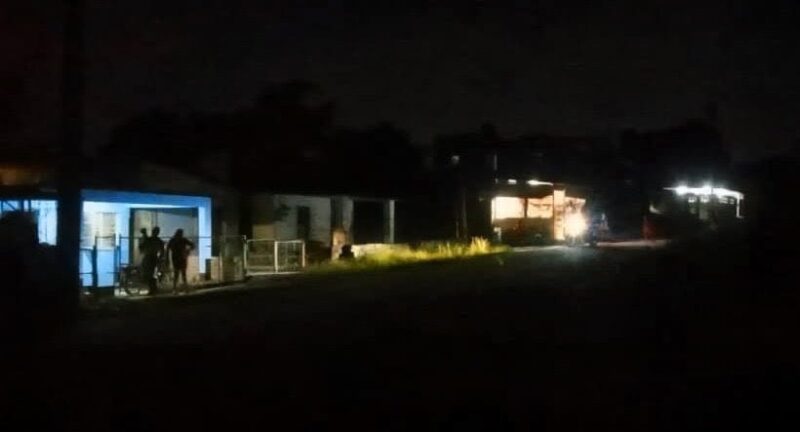
HAVANA TIMES – In Cuba, no one asks anymore: “Is the electricity on?” The more frequent question is “What time did it go out?”; or with a little more optimism: “How long did it stay on this time?” My teenage daughters are more familiar with the blackout schedule than with their school calendar.
There are blackouts that aren’t measured in hours. They’re measured by the silences. By the video calls that freeze, and the messages that never show as read. By mothers who learn to calculate their peace of mind according to how long the telephone has sat there without ringing.
My two teenage daughters live on the Island. There’s an ocean between us, but the distance hurts much more when the electricity disappears.
Incredibly, they’re already specialists in survival cooking. If tomorrow NASA needs someone capable of preparing a complete meal using charcoal and a half-bent pot, as well as adapting to two hours of electricity a day, or at times in the week, they can send for them with no fear of disappointment.
It’s strange how life takes it twists and turns: when they were little girls, I wouldn’t let them come near a stove for fear of an accident; and today a charcoal fire is Plan B in a country where Plan B’s stopped being the exception a long time ago.
I remember how charcoal fires used to be an element in our New Year’s Eve parties, to roast the delicious and crispy pork. Those New Year’s Eves that we all looked forward to, where families got together and smoothed over all our old quarrels. They were days to party and celebrate all we had lived through.
When the power goes out, it’s not just the light bulbs that go dark—along with them, the desire to play evaporates from our children, who are “the hope of the world,” as well as their desire to study so they can become better every day.
Refrigerators and freezers also shut down. Food can no longer be preserved and ends up in the trash before it can be eaten.
The leaders tell the population to resist. Resistance!!!
And they repeat it, as if the word itself were enough. What no one ever quite explains is resistance against what: Resistance against hunger, darkness, uncertainty, or the habit of having to reinvent ourselves every day?
We Cubans have already earned a Master’s, a doctorate, and a post-doctorate in resistance. The only thing they haven’t told us is when graduation will be.
We come up with recipes without ingredients, solutions without resources, and in the end, miraculously and ironically, we end up laughing at our own misfortunes.
In Cuba, we’re used to making jokes about everything. That way of being—so uniquely ours—doesn’t turn on the lights or get the refrigerators running, but sometimes it keeps something more important from going out: the desire to keep moving forward, to keep calling out the absurdities, and to question the policies that destabilize us, affecting above all the pockets of the average Cuban. The one who works for the government and has no relatives abroad to send remittances.
Our sense of humor is unbeatable. Not because our needs are few, but because, when the darkness drags on too long, our laughter ends up being the only light no one can extinguish.
Read more from the Diary of Dany Cesario here on Havana Times.