
The Language of Flowers and a Street Flower Vendor
HAVANA TIMES — There are voices that end up becoming part of a city’s landscape.
On some afternoons in my neighborhood, his voice arrives before he does. It can be heard from far off, blending with the familiar sounds of Havana. It has a strange ability to announce a pause amid the bustle. You don’t need to see him to know he’s coming.
Then his flower cart appears.
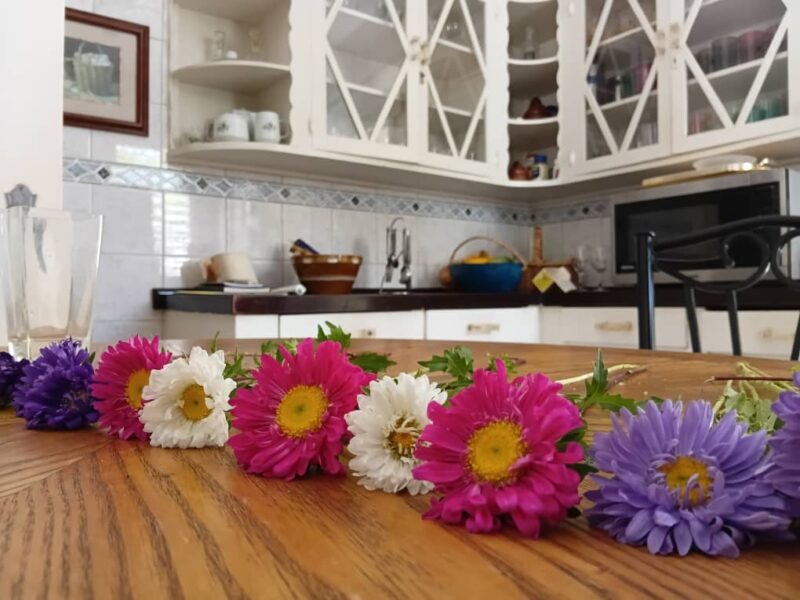
He moves slowly down the street, pushing a small explosion of color on wheels: flowers that have first passed through his hands, traveled with him beneath the sun, and are waiting to find a place in
someone’s home.
I’ve never had the feeling that he’s in a hurry.
Perhaps that’s one of the reasons his presence has endured. While so many street vendors hurry through the streets trying to outrun the day, he keeps his own pace. He doesn’t chase after customers or interrupt anyone’s path. His call simply lets people know he’s there.
Since I was a child, I remember seeing him pass by.
My mother used to buy flowers from him, and I would watch without imagining that one day those
moments would become some of my clearest memories. It was part of the neighborhood routine, one of those small rituals that seem unimportant while they’re happening but reveal their true value over time.
The flowers would come into our home and be set in a simple place: a glass vase on the table, a corner
brightened for a few days. Back then, I didn’t realize those bouquets contained more than just beauty – they were a way of caring for the space where we lived, of bringing a little harmony into the daily routine.
Flowers have always had that power.
They have accompanied celebrations and farewells, births and absences. In Cuba, they are also part of many everyday moments. They are found in homes, in family memories, and in the hands of people trying to express something that words alone cannot.
Anyone who sells flowers learns, over the years, that no one is buying just a flower. They are buying a message.
One person is looking for a bouquet to brighten someone’s day; another to accompany a loss; another simply needs to bring something beautiful home. The flower seller understands that silent language.
He knows how to read what lies behind each choice.
One of the times when I bought flowers from him, something happened that I still remember vividly.
Before saying goodbye, I offered him a glass of water.
It wasn’t something I had planned. It was simply a natural reaction after seeing him there, knowing he’d spent so many hours walking the streets beneath the sun.
His surprise caught me off guard. As he drank, he told me that no one had ever offered him water during his workday before. It wasn’t a complaint. He said it with the simplicity of someone sharing a fact that even he found strange.
Then he spoke about his long walks, the miles he covers pushing his cart, and the hours he spends trying
to sell his flowers. There was no bitterness in his words, only a serene description of a life built on hard work.
I had paused for a few minutes to offer him a glass of water. Without intending to, he was revealing to me a story that usually remains hidden behind his trade.
Before I left, he picked up a flower and gave it to me. It wasn’t part of the bouquet I had bought,
it was a response. A glass of water in return for a flower – one small interchange between two people who barely knew each other.
Since then, whenever I hear his familiar call, I don’t think only of the man who sells flowers. I think about
everything that endures while so many other trades disappear: a familiar voice, a neighborhood
tradition, an unhurried way of connecting with others.
Perhaps that is the true language of flowers. Not the one written in books, but the one created between those who offer them and those who receive them.
Because flowers last only a few days. But there are encounters that remain with us much longer.
Read more from the diary of Safie M. Gonzalez here on Havana Times.
Excellent story. Thank you.