
Nicaragua: The Lesson of Playing with the Word ‘Dictatorship’
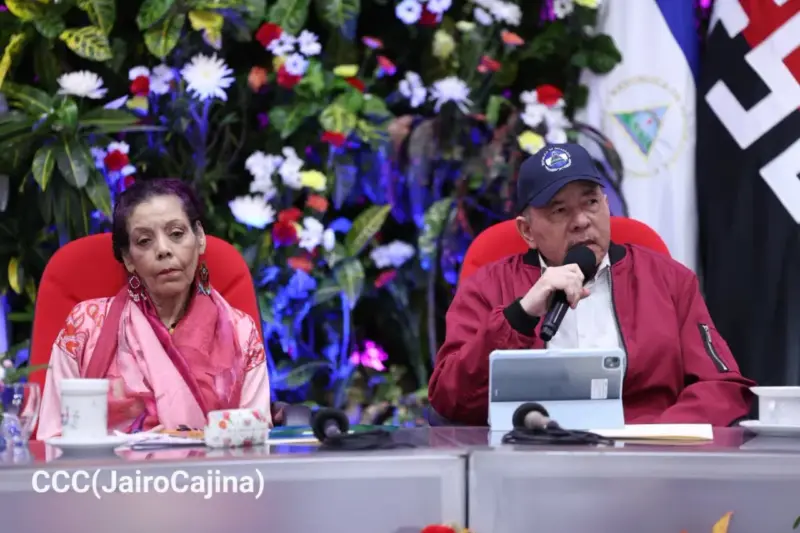
Costa Rica must not turn its back on a people suffering imprisonment, nor trivialize the language with which tyrannies begin.
Editorial by La Nación of Costa Rica (Confidencial)
HAVANA TIMES – Nicaragua is the most painful proof of why no democratic leader should play with the word “dictatorship,” promise to “take over” the judiciary, place themselves above magistrates, judges, prosecutors, or lawmakers, or vilify journalists who expose abuses and corruption in power.
Daniel Ortega began dismantling democracy with a war of words: he divided Nicaraguans, sowed hatred among fellow citizens, and launched carefully crafted campaigns to discredit institutions. His goal was to accustom the public to despising limits on power until the concentration of all authority appeared not as an abuse, but as a supposed act of national rescue or “recovery.”
On July 19, 2026, during the commemoration of the 47th anniversary of the revolution that overthrew the Somoza dictatorship in 1979, Ortega announced that there would “never again be presidential elections” in Nicaragua. His words expose him as the true coup plotter, someone who betrayed the people he had promised to free from oppression. His announcement strips Nicaraguans of their right to choose their leaders and completes a dynastic project alongside his wife and co-president, Rosario Murillo, or ensures its continuation through successors chosen by the two of them.
Lawmakers in the National Assembly, subordinate to the ruling couple, are preparing to approve another constitutional reform in September that would extend the presidential term from six to seven years, renewable indefinitely, and bar from elections anyone the regime labels as “coup plotters” or “traitors to the homeland.”
The irony is that authoritarians never look in the mirror. Ortega did not destroy democracy overnight. After returning to the presidency in 2007 through democratic elections, he began the slow takeover of the state.
He subordinated the judiciary, took control of the National Assembly, corrupted the military, and captured the electoral tribunal. He eliminated presidential term limits, persecuted the press, shut down civil society organizations, crushed protests, jailed political opponents on fabricated charges, and expelled from the country while stripping the nationality of hundreds of opposition figures, religious leaders, journalists, and intellectuals. Every critical voice was silenced.
In 2021, he staged a sham election after imprisoning his main rivals and awarded himself reelection with 75% of the vote.
Following that fraudulent election, he made Murillo co-president, extended the presidential term from five to six years, and postponed elections that had been scheduled for late 2026 until November 2027.
Ortega and Murillo appear to have embraced the cynical phrase attributed to Anastasio Somoza García: “I own only one estate, and it’s called Nicaragua.” They govern the country as though it were family property and its people as subjects. The fortune of the so-called “president of the poor” has reached $2.5 billion, according to investigations by La Prensa. Meanwhile, the regime has not published poverty statistics since 2016.
What the regime does produce daily are insults aimed at its critics. “Terrorists,” “traitors,” “imperialists,” and “sons of bitches” are all part of the dictatorship’s vocabulary, used to invent coups and conspiracies in order to keep the country under permanent threat. These imaginary enemies serve to justify repression, because no one can organize without being detected by the state’s intelligence apparatus.
Costa Rica responded appropriately to Ortega’s announcement by reaffirming its commitment to free elections in Nicaragua. Now that condemnation must become an active foreign policy. Given its history, geographic proximity, and the presence of hundreds of thousands of Nicaraguans within its borders, the country has a responsibility to promote action at the Organization of American States (OAS) and the United Nations, and to refuse to normalize a dynastic succession disguised as constitutional reform.
It also has a valuable opportunity to promote a regional response through the Central American Integration System (SICA), which, beginning August 9, will be headed by Costa Rican diplomat Lina Ajoy.
Accordingly, President Laura Fernández’s government should use SICA’s mechanisms to promote consultations, official statements, and joint actions in defense of the Nicaraguan people’s right to freely elect and replace their leaders. It would be contradictory for the regional organization to remain silent. If it does not act when the peace, freedom, and democracy that have justified its existence since 1993 are under threat, then what is its purpose?
Costa Rica’s responsibility, therefore, is twofold: not to turn its back on a people suffering imprisonment, exile, fear, family separation, and the loss of fundamental freedoms, and not to trivialize within its own borders the language with which tyrannies begin. Behind every dictatorship are human beings stripped of their voice, their freedom, and even their homeland. That is why speaking about dictatorship must never become a game.
Published in Spanish by Confidencial and translated and posted in English by Havana Times.