
Blackouts Push Cubans to the Limits of Their Endurance
without refrigerators or transformers
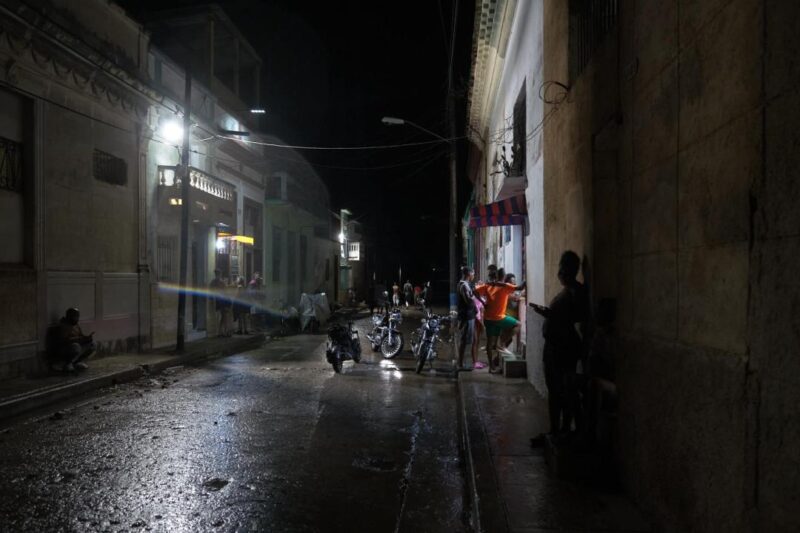
HAVANA TIMES — A couple of weeks ago, Víctor started turning off his cell phone at night and on Sundays.
“My family and close friends have my wife’s number, and they know they can reach me through her. But as far as everyone else is concerned, I simply don’t exist during those hours,” he told me the day I met him at the home of some neighbors whose refrigerator he had come to repair.
Without such a drastic measure, he said, he would never have any time to rest.
For more than twenty years, Víctor worked at various healthcare facilities in the city of Camagüey, earning a reputation as a refrigeration mechanic that later—after becoming self-employed—guaranteed him a large clientele. But recently, the number of people requesting his services has become overwhelming.
“With so many blackouts, appliances suffer tremendous wear and break down constantly. And most families can’t even think about buying a new refrigerator or freezer. We mechanics simply can’t keep up. Before I decided to turn off my phone, people called me at all hours, sometimes very late at night. People become desperate in a situation like this. The refrigerator is the most important appliance in the house because it determines whether food can be preserved and whether families can store food they managed to buy a little more cheaply. Even during the longest blackouts, women have found ways to keep at least a little frost in the freezer,” he explained.
Living in Darkness
Cuba’s inland provinces have endured blackouts similar to those of the 1990s—during the country’s so-called Special Period—for about seven years now. Since late last year, the crisis has worsened and spread to Havana and the Isle of Youth following the interruption of fuel shipments from Venezuela and the oil blockade imposed by the US government.
In recent weeks, several collapses of the National Electric System have revealed just how much the country’s situation has deteriorated. The last two such events, which occurred in early August, followed a partial grid failure that had already left the western half of the country in darkness. On both occasions, restoring the electrical grid proved more difficult, and thousands of customers remained without service even after the emergency had officially been resolved. More than a week later, many are still in that situation.
One of them is María Antonia Borroto, a respected university professor in Camagüey who has spent days documenting on Facebook the ordeal of living without electricity because of a failed transformer.
At the time this article was written, she and her neighbors had gone ten days without electricity and without any official response about when service would be restored. In the absence of any state assistance, they had survived only through the support of the community, she explained.
“Neighbors from nearby blocks let us know when they have electricity, and we go there to charge our cell phones, fans, power banks, EcoFlows… basically anything rechargeable. These days I’ve felt almost like I did after Hurricane Ike,” she said, referring to the powerful 2008 storm that left half the country without electricity for up to a month.
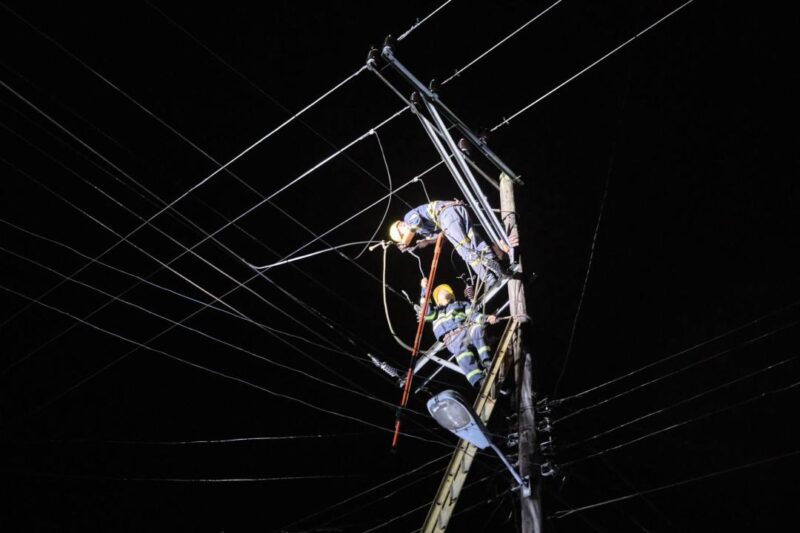
Transformer failures have become an increasingly serious and virtually unsolvable problem. At the end of July, the National Electric Utility reported that Havana alone experiences about 60 transformer failures every day—more than twice as many as a year ago. But because of the economic crisis, Cuba has spent years reducing imports of transformers and the components needed to repair them.
The problem is compounded by rising electricity demand, which in many areas already exceeds the capacity of the transformers serving them, causing overloads and even fires. This is partly a consequence of the growing number of electric vehicles and of the blackouts themselves: when power is restored, families typically plug in many appliances at once to make up for lost time, causing sudden spikes in electricity consumption that overload the grid. The theft of dielectric oil—which transformers use as a coolant but which can also lubricate internal combustion engines—is another reason so many transformers fail, leaving entire neighborhoods in the dark.
“After so many blackouts, we’ve had to get used to living one day at a time. Most families no longer buy a whole package of chicken, just a few pounds, and when they cook, they prepare only what they’ll eat that day—never more. Only people with solar panels dare store more than the bare minimum in the refrigerator. Who would risk it when you never know how long the electricity will stay on or when it will come back?” reflected Maricela Salcedo, a Camagüey resident in her early sixties who usually does the grocery shopping for her family.
A couple of months ago, she lost half a box of mincemeat and other food when the transformer on her block caught fire.
“We were without electricity for a week, and to make matters worse, the national grid also collapsed during those days, so neither neighbors nor relatives had electricity where we could store the food before it spoiled,” she recalled.
The cases of María Antonia and Maricela are not even the most extreme.
In some communities the situation is much worse
On Sunday, journalist and songwriter Fidel Díaz shared on Facebook the story of several communities in the municipality of Caimito, about 25 miles (40 kilometers) from Havana, that had gone 21 days without electricity after a bank of transformers exploded because its dielectric oil had been stolen.
“They should be executed,” Díaz declared, referring to those responsible for the theft, which he described as “sabotage in wartime.”
His opinion carries weight: Díaz is one of the scriptwriters for the television program La Pupila Asombrada, produced by Ideas Multimedios, the audiovisual production company of the Central Committee of the Communist Party. His social media post appeared to test public sentiment and perhaps prepare people for harsher penalties against that crime.
For their part, Cubans have become so sensitive to the issue that most of the comments on his post supported his position.
“We’re living through an extreme situation, and nobody knows how much longer we’ll be able to endure it,” said Víctor, who often breaks his promise not to sacrifice his free time to help desperate people who contact him.
“The other day I stayed at a woman’s house until three in the morning, waiting for the electricity to come back so I could finish recharging the refrigerant in her refrigerator. The poor woman didn’t know how to thank me when she saw it working again. But I had to insist that she always use a voltage protector because of the blackouts and transformer problems. Just as I was leaving, her voltage protector was glowing red, on the verge of tripping.”