
A Conversation with Author Kristen Millares Young
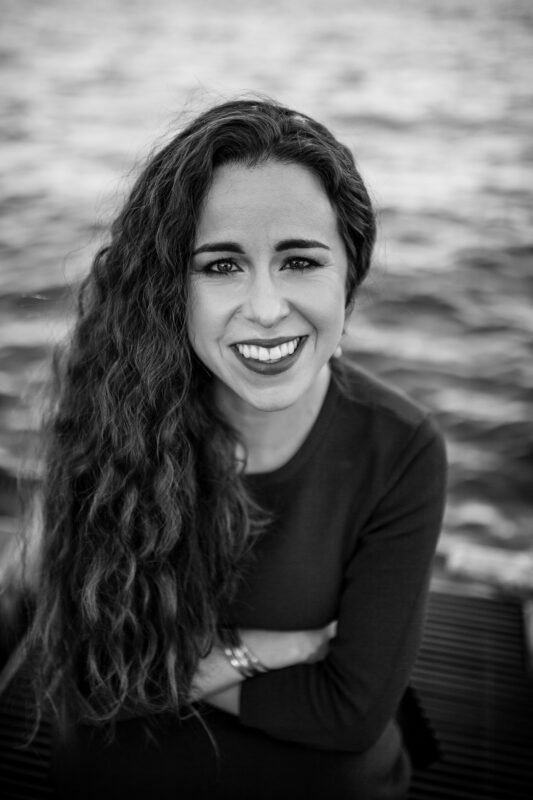
HAVANA TIMES – In Desire Lines, writer and journalist Kristen Millares Young traces the paths that carry families across borders, generations, and inherited silences. Moving through Cuba, Galicia, the United States, mythology, motherhood, illness, and estrangement, the memoir examines what happens when women depart from the lives prescribed for them, and what it can cost to choose self-determination over obedience. For Young, whose family journey runs from Galicia to Cuba and eventually to the United States, those departures are both deeply personal and part of a larger history of migration, memory, and reinvention.
Young spoke with Havana Times about the silences that shaped her family, the maternal power she discovered through the ancient goddess Cybele, the politics of writing about the female body, and the complicated freedom of estrangement. She is also working closely with Cuban translator Majel Reyes Quesada on a Spanish translation of Desire Lines, titled Senderos del deseo, for which they are seeking a publisher.
Selena Mercuri: The title Desire Lines refers to paths created when people depart from prescribed routes. When did that image become central to the memoir, and what kinds of inherited paths were you trying to leave behind?
Kristen Millares Young: A desire line is proof that people choose against the path that was planned for them. What moves me is that it’s collective. We may feel alone out there. We’re not.
My family’s desire lines run from Galicia to Cuba to Tampa to Seattle, where I now live. My abuelos sold their lab in Cueto, a Cuban town most know as being on the way to somewhere else—Llego a Cueto voy para Mayarí—and flew to New Jersey several years before Castro descended from the mountains. Abuela was proud that they took a plane, that they had jobs lined up and someone to speak for them. In our family, hierarchy reigned, even and perhaps most especially during the duress of migration.
As for what I was trying to leave: What I refused was upholding a silence to keep the family’s reputation intact. Abuela used to tell me to respect my elders, which was her code for keeping quiet. My mother asked for compliance in the name of love. The whole book is my refusal of those instructions.
You describe the book as an excavation of your matrilineage. What did you discover when you began examining the silences, estrangements, and stories passed between generations of women in your family?
KMY: That the silences were load-bearing. Silence is what organizes my family—like a black hole gathering a galaxy, the things we do not say hold us in our distanced constellation.
Manuela, my bisabuela, was impregnated by a man who would not marry her. She chose to serve the Father and left her daughter to an uncle. That daughter, my abuela, spent her life insisting her mother was a saint. When Abuela’s own father turned up in Cuba, blinded and in need, he told her he had lost his sight fighting against Franco. She took him into the household she had built without his help and nursed him until he died.
Decades later, on the backroads of Galicia, my cousin Manolo was driving, and Abuela repeated that story from the back seat. Manolo told us that her father had lost his sight digging a well with dynamite. Abuela absolutely refused to believe it. She defended a lie because it was her only inheritance.
In my family, estrangement is not a singular event. It is a method, passed down and refined. That was the hardest thing the excavation turned up.
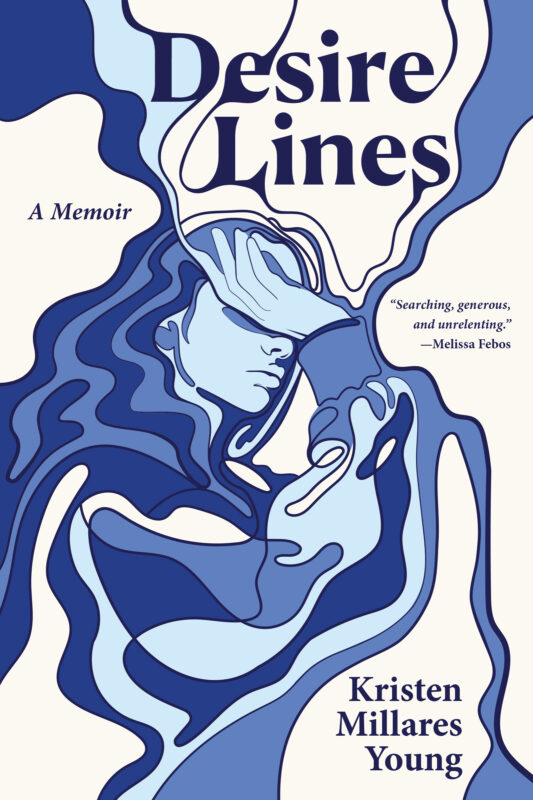
The memoir grew partly from your investigation of Cybele, a mother goddess whose influence was later obscured by the rise of the Virgin Mary. What drew you to Cybele, and what did her story allow you to reconsider about femininity and maternal power?
KMY: I learned about Cybele by accident. In 2014, my husband found a listing in a guidebook: Santa Eulalia de Bóveda, not far from my family’s ancestral village in Galicia. It is a sunken granite room with an empty pool at its center, made famous for its paintings: grapes and lotus flowers, roosters and ducks and peacocks. The site’s guide told us that bulls had been sacrificed on the floor above so their blood could rain through a lattice onto a Cybele worshipper below, and that villagers had destroyed frescoes of orgies with pickaxes before reporting the site to authorities in 1926.
I heard her name for the first time from him, though it would be years before I discovered the truth about that site.
What began to obsess me: the scale of her power was matched only by her subsequent demotion and erasure. Cybele began in Phrygia as Matar Kubileya, mother of the mountain, flanked by predatory birds. She was, and I mean this literally, a meteorite—a charred piece of the universe brought to Rome in 204 BCE, her fissures lined with silver by her worshippers.
What she led me to examine is how maternal power was never gentle nor meant to be. Motherhood is a source of control. Trying to defang a goddess by making her a mother is a laughable project. Maybe that’s why virginity was imposed on holy motherhood.
You blend memoir with mythology, historical research, and cultural critique. How did you decide when to remain within personal experience and when to widen the essay’s focus?
KMY: Personal material earns its place when it refuses to resolve. I widen when I reach the limit of what my own life can illuminate. The personal is structural, as Sara Ahmed says, and once you believe that, research becomes a way to locate feeling in history. If I cannot get an answer out of my experience, I go to the archive.
Research can do emotional work through echoes of meaning. When I write about how a Roman matron was asked to haul a grounded ship ashore to prove her chastity, I am also describing how my matriarchs had to perform purity to keep their seat at the family table.
The memoir addresses ovarian tumours, danger, motherhood, and the patriarchal forces that suppress women’s truths. How did you write about bodily vulnerability without allowing vulnerability to become the whole story?
KMY: By keeping the body at work. I am not only a patient in these pages. I am also the woman who nets spiny lobsters by hand, who confronts a reef shark, who labors a full day without medication, and does deadlifts before dawn with her best friend. The body that harbored a tumor is also the body that hunts and births and laughs.
If I may: My lyricism is a form of command over difficult material. And I stay analytic. The question of who holds final say over a woman’s body runs from a Seattle operating room to the state lines that women must now cross to access reproductive health care. That is why my body is in this book: to testify.
The book considers estrangement alongside self-determination. Can distance from family or inherited traditions sometimes become a necessary form of care or survival?
KMY: Yes. But I want to be careful because estrangement is not a good. It is a cost you accept in place of a worse pain. I was raised to view family as a moral absolute, so deciding to prioritize my own happiness was difficult. It took me a minute (read: four decades).
My parents cannot reconcile our facts; they prefer façades which foreclose true care. What surprised me was my body’s verdict. Though I have longed for their love all my life, separation brought my body real relief. That is data. But our distance was only survivable for me because of my chosen family: my husband, our kids, our neighbors and best friends. Leaving is not enough. You have to make somewhere to arrive.
I should add that diaspora already does this to a family. Distance can be care, and it can also be inherited damage wearing the costume of freedom. Learning to tell them apart has been the work of my midlife.
The memoir seeks to reclaim the divine feminine, a phrase that can carry many religious, spiritual, and cultural meanings. What does the divine feminine mean within Desire Lines?
KMY: Though I was raised in a Catholic household with many icons of the Virgin Mary, even as a girl I could not follow a religion that builds itself on writing a woman’s body out of the making of her own child.
To me, the divine feminine is the body’s sacred intelligence, which Audre Lorde calls the erotic. As women, we are often taught to tune out our intuition so we can remain in relation to people and systems who do not value us as human beings. Learning to listen to your own deep knowing is a lifelong endeavor, one which literature can serve.
What do you hope readers will recognize about the unplanned paths they have created beside the lives that were prescribed for them?
KMY: I want people to stop reading their own deviations as personal failures. If they are that, it is only of obedience. A desire line is evidence: You have company. We may feel alone on our journeys, but we are not alone.
The powerful women that this book has already brought into my life make the hardship worthwhile, and I believe the same could be true for others who decide to forego silence as a condition of belonging.