
Venezuela: “The Rain Stopped but Everything is Still Wet”
Interview with Luz Mely Reyes, director of Efecto Cocuyo
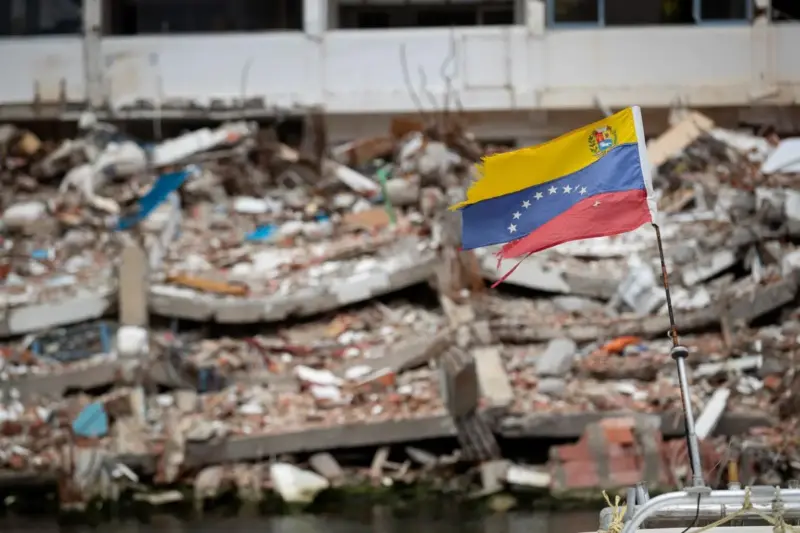
The director of Efecto Cocuyo describes, from Caracas, the ambivalence Venezuelans are living with under a dictatorship overseen by the United States.
By Carlos F. Chamorro (Confidencial)
HAVANA TIMES – “The rain has stopped in Venezuela, but everything is still wet.” With that ambivalent phrase, Venezuelan journalist Luz Mely Reyes, director of Efecto Cocuyo, sums up how Venezuelans are living under a dictatorship overseen by the United States, seven months after the military “extraction” of dictator Nicolas Maduro.
Luz Mely Reyes returned to her country two weeks ago after several years of forced absence and rediscovered a country dominated by ambiguity and conflicting emotions. She says there has been a slight opening for the press, but Internet blocks against media outlets and harassment of reporters continue; and many political prisoners have been released from prison, but 600 people remain imprisoned for political reasons.
Reyes notes there is a palpable fear of speaking openly in the streets, although people are no longer afraid of the paramilitary colectivos, while the repressive structures remain intact. She adds that there is an economy in which the better-off calculate all their expenses in foreign currency, but supermarket prices are higher than in the United States, while in the poorer neighborhoods survival is the overriding concern.
In a conversation on the program Esta Semana, broadcast on Youtube because of television censorship in Nicaragua, Reyes shared her first impressions as a reporter in a country where opposition leader Maria Corina Machado continues to rise in the polls despite being unable to return to the country, and where the population is somewhat optimistic that a dialogue between the Government and a sector of the opposition may produce some results—perhaps elections in late 2027 with a new Electoral Council—because people remain confident in the dialogue given that it was promoted by the United States.
After several years of being physically absent, you have returned to your country as a citizen and a journalist, seven months after the fall of Nicolas Maduro. What is the atmosphere like these days on the streets of Caracas, in the neighborhoods and markets, and also in political circles within the Government and the opposition?
I’m back in Caracas after a long time during which I couldn’t come to my country. I was able to enter, and so far I’ve been going around the neighborhoods and different areas, trying to understand what people are feeling. There are ambivalent feelings and emotions. On the one hand, there were the expectations created on January 3, but those have gradually settled down and diminished.
The Government’s disapproval ratings show up in the polls, but they also show up in everyday life, in what people say. And this became much more acute as a result of the Government’s handling of the two earthquakes that struck an area of the central coast on June 24.
As director of Efecto Cocuyo, are you and your journalists able to do your work freely? Are the blockages against online media outlets still in place?
The blockages against independent media outlets remain in place. There has been a slight opening, but as we speak, only a few hours have passed since the formal establishment of this negotiating table between a sector of the opposition and the dictatorship, and one of our reporters was detained. She was forced to hand over her cell phone, all the information on it was deleted, and she was threatened with being taken to Military Police headquarters, one of the police forces where some of the greatest numbers of torture cases have occurred. So yes, you can work—but only up to a point.
What has been the impact of the amnesty decreed by the Delcy Rodríguez regime? Have all the political prisoners been released? Are there still some—or many—behind bars? And are those who were released completely free?
There are limitations there as well. More than 600 people are still being held in prison for political reasons. Human rights organizations have widely denounced this. Among those deprived of their liberty who benefited from the Amnesty Law, many have not been granted full freedom, including several journalists who are still required to appear before a court.
According to official spokespersons, 12,000 people benefited from the Amnesty Law because they were facing judicial proceedings at different stages, which gives you an indication of the massive levels of repression that existed in the country. That mass repression has gradually been evolving into somewhat more selective repression. There are some prisoners who are clearly somebody’s prisoners, because they are not allowed to qualify for certain benefits.
How are people living with the aftermath of the tragedy caused by the two earthquakes that occurred almost simultaneously in northern Venezuela? Have the victims, missing persons and displaced people been counted? Is there any reconstruction strategy underway?
There was a ground zero, the hardest-hit area, located along the central coast about 20 to 25 minutes from Caracas, where the country’s main airport is located. More than 180 buildings collapsed there. The latest figures provided by the Government put the death toll at more than 6,000; they took quite a long time to update that figure. A census conducted by the regional government in that area reports approximately 1,500 missing people, while the initial estimate was that the death toll could possibly reach 10,000.
At this point, debris is already being removed in that area. Obviously, there is little possibility of finding survivors, although many people still hold out hope that someone will be found alive. What people are seeking now is the recovery of the bodies so they can bury them according to their beliefs.
In the capital, Caracas, in the eastern part of the city, in the middle-class municipality of Chacao, four buildings also collapsed. There were a number of deaths, but the municipal government’s response was different, and at this point it is assisting all those whose properties were affected by the two earthquakes so that they can repair their homes. Because there are also people who, although they did not lose their homes entirely, were left with badly damaged houses.
Who governs Venezuela today? President Delcy Rodríguez? US Secretary of State Marco Rubio? The military?
In Venezuela there is a troika overseen by the United States. That troika consists of Delcy Rodríguez in the Executive Branch; her brother Jorge Rodriguez, who functions more like a vice president—just as in Nicaragua they have a “co-president,” here it seems as though we have a “co-president,” because that is how he behaves—and Diosdado Cabello, who is the visible face of repression and who, of course, remains part of this troika under the oversight or control of the United States.
And how is this US oversight perceived in Venezuelans’ everyday lives? Do Venezuelans support this US oversight?
Expectations regarding this oversight have changed since January, when expectations were very high because people hoped there would be a major economic transformation in the country. However, in a recent poll we also saw that Donald Trump and Marco Rubio have fairly high approval ratings. And María Corina Machado has extremely high approval ratings, much higher than a month ago. It’s somewhat contradictory, because she continues to receive popular support. People still hope that, particularly with this negotiating table established on August 6, some kind of agreement can be reached that will allow an electoral process to take place and ultimately lead to a democratic transition in Venezuela.
Are the opinions reflected in the polls also being expressed openly by Venezuelans, or are people afraid to voice their views?
That has been my perception since I arrived: there is still a great deal of fear in Venezuela. There are places where people lower their voices when they criticize something, and some colleagues don’t dare send a voice message because the entire repressive apparatus is still active. The laws that led to the imprisonment of more than 2,000 people are still in force. That fear is still there.
I’ve heard people continue to repeat, almost as a way of processing their trauma, where they were on the day of the earthquake, what happened and how they felt. There is a widespread perception that the State did not respond appropriately to the victims and that many more deaths could have been prevented if both the Armed Forces and other Civil Protection agencies had responded immediately, within the first 48 hours after the earthquake.
Above all, there are major complaints about the economy. There are something like three different payment systems here, and I don’t understand them either. The economy was dollarized quite some time ago, but people refer to prices not in bolivars but in dollars. Then there is a euro exchange rate that I don’t understand and can’t explain. And ordinary people do not feel that their economic conditions have improved—quite the opposite.
I went to the supermarket and was genuinely astonished to see prices that you don’t see in the United States, much less in Europe. So you wonder how people manage their everyday lives.
You can see a great deal of inequality. There are very upscale places where people can operate in foreign currency, and then you go into the neighborhoods and working-class areas and realize that people are making an enormous effort simply to maintain a more or less normal daily life.
President Trump has celebrated his Government’s management of Venezuela’s oil resources and the subsequent allocation of funds to the Delcy Rodríguez Government. Has this had any impact on public services? Is there any outlook for small or large businesses, or for the investments that were supposedly going to be made in Venezuela?
As for the $13 billion that supposedly has come in during this period, there has been no accounting for it. Transparencia Venezuela is demanding accountability for those resources. The mechanism for allocating those funds is unknown—whether the money enters a US Treasury account and is then redistributed to the Delcy Rodríguez Government. There really isn’t any clear information.
Yes, there are expectations among small businesses that these resources might be injected into the economy. But I’ve met with small investors and entrepreneurs, and the entire legal framework provides no real assurance that an investment could not later be expropriated or affected by political maneuvering. There is a credibility problem: investors don’t trust the Government, but there is also no confidence that there will actually be a change of regime, a change of system. And that is reflected in the complaints about how long it is taking for those investments, which still have not fully materialized in Venezuela.
What level of support does President Delcy Rodríguez have within Chavismo? Under Nicolas Maduro’s dictatorship, it was always said that Chavismo was something like a corporation with different fiefdoms of power. Now, under this US oversight, what are Chavistas saying?
There’s a little of everything within Chavismo. The differences that we knew were there are now being expressed a bit more openly, because not everyone has access to this power structure. Delcy Rodríguez and Jorge Rodríguez were never really people from the party apparatus. The person who controlled the party machinery and its grassroots base was Diosdado Cabello, and he still does.
Delcy Rodríguez and Jorge were more like political operators—Delcy on the economic side, Jorge more on the political side—and that remains the case. They have an ability to identify what incentives certain sectors need, and they use those incentives to encourage those sectors to tone down their differences with the way the Government is operating. Last week there was a march by some of the more radical Chavista groups that now declare themselves opposed to Delcy Rodríguez and say hers is a dictatorship—the same people, incidentally, who supported human rights violations in Venezuela.
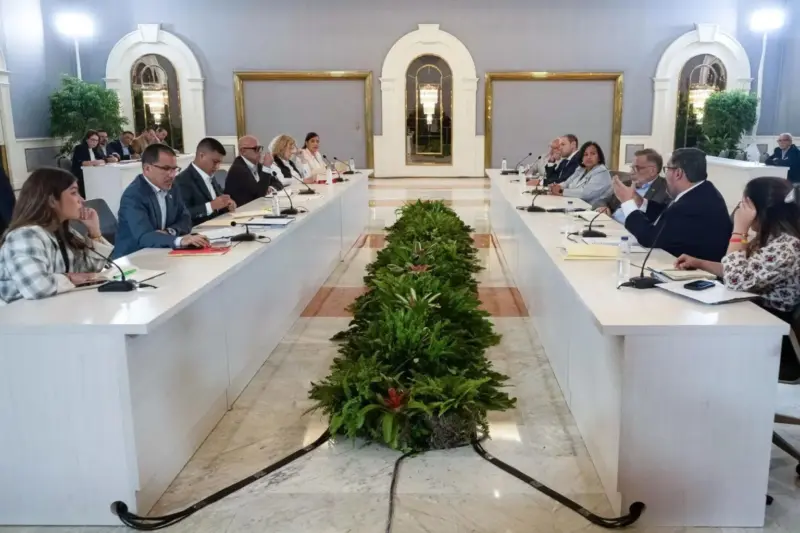
In the dialogue that began in recent days, promoted by the United States between the Government headed by Jorge Rodríguez and a political sector led by Dinora Figuera, president of the National Assembly elected in 2015, the absence of Edmundo González, who won the presidency in 2024, and María Corina Machado, who won the opposition primaries, is striking. How do Venezuelans view this dialogue, and what expectations do they have?
Here, too, there are conflicting feelings and emotions, because many people place great trust in the fact that the United States is involved, believing that this means some of the objectives will actually be achieved. The Government has an agenda in its usual style, trying to throw all the issues onto the table in order to drag things out.
For the opposition representatives sitting at that table, the timetable runs from now through December, with certain milestones that must be achieved. These include the appointment of a new Supreme Court of Justice—16 justices have to be appointed—and then the establishment of a new National Electoral Council in December. In theory, by then a National Electoral Council should be in place that could possibly design and issue a call for an electoral process.
So the possibility of elections being held in Venezuela during the remainder of this year has been ruled out. Is there any expectation that elections will be held in 2027, in 2028, or after 2028? And who will decide when elections are held in Venezuela?
There is a kind of consensus that an electoral process could possibly be held in the country toward the end of 2027, or sometime in the second half of that year. However, it is still not very clear what kind of process it would be. Some people talk about holding parliamentary elections first, so that all the country’s political tendencies would be represented in Parliament, thereby creating the political space for a transition involving a change of regime. Others talk about following the tradition of holding regional elections. Maria Corina Machado and the Plataforma Unitaria that supports her take the position that the first election held in Venezuela should be a presidential election.
Are Venezuelans waiting for the return of the leadership of María Corina Machado and Edmundo Gonzalez, or are there other opposition representatives currently participating in this dialogue or in this process?
In this dialogue, the leading voices are members of the Primero Justicia and Voluntad Popular parties who remain from the National Assembly elected in 2015. That was the first time the opposition won two-thirds of the legislative body, but the Government prevented it from carrying out its mandate.
María Corina Machado and Edmundo González Urrutia issued a statement saying that they would not participate in this negotiating table—to which they had not been invited—but that they would not obstruct it either, and that they would monitor it to see what verifiable milestones are achieved.
As for expectations, a recent Atlas Intel poll and another by Poder Estrategia clearly show that popular support for Maria Corina Machado continues to consolidate. It’s extraordinary because she has been outside the country for eight months now, but at the same time people do seem to be waiting for a genuine political change to take place in the country.
What do you expect, Luz Mely, as a citizen, as a Venezuelan and as a journalist, after once again walking the streets of your country this week?
You saved the most complicated question for last. I also have conflicting feelings. As a colleague who has spent a lot of time in politics told me, “The rain has stopped, but everything is still wet.” That’s the ambiguity we’re navigating, amid the uncertainty that comes from many things still not being very clear.
And one thing I’ve noticed is the capacity for survival among Venezuelans who remain in Venezuela. It’s incredible how people have tried to rebuild their lives, to create lives for themselves despite the State’s shortcomings, all the human rights violations, the economic crisis and the humanitarian emergency. People keep doing things, and I find that beautiful. But in contrast, I’ve also perceived something that never used to happen in Venezuela. We always had great expectations for the future, and what I sense now, especially among younger people, is resignation, a feeling that they lack the ability to shape their own future.
There was a huge migration of people from working-class sectors to other countries, and they discovered how difficult it was to integrate into those other societies. So people in working-class communities no longer have such strong expectations of leaving the country, but neither do they seem to expect that their living conditions will improve significantly in the coming years.
You said there is fear among different sectors of the population. What is happening with the repressive structures—the colectivos, the paramilitaries, and the repressive forces within the military and police—that have not been dismantled?
That also needs to be examined closely. For example, I was in downtown Caracas and saw these groups of armed civilians walking through the streets. The truth is, people don’t respect them very much anymore, because they threatened that there would be a Vietnam here, and now they too are being kept in check by “the oversight.” People have lost the fear that these groups once inspired.
But on the other hand, the entire repressive structure remains in place—the whole apparatus, including the legislative framework—which means that at any moment someone there can decide that you or somebody else should be imprisoned for saying something, for posting a tweet. That is all still there, including the repressive structure of the intelligence agencies. You can’t overcome that so easily. Those authoritarian habits remain firmly in place, and that is what makes so many people afraid.
First published in Spanish by Confidencial and translated and posted in English by Havana Times.