
The Grief of Exile: Loving from the Shadows
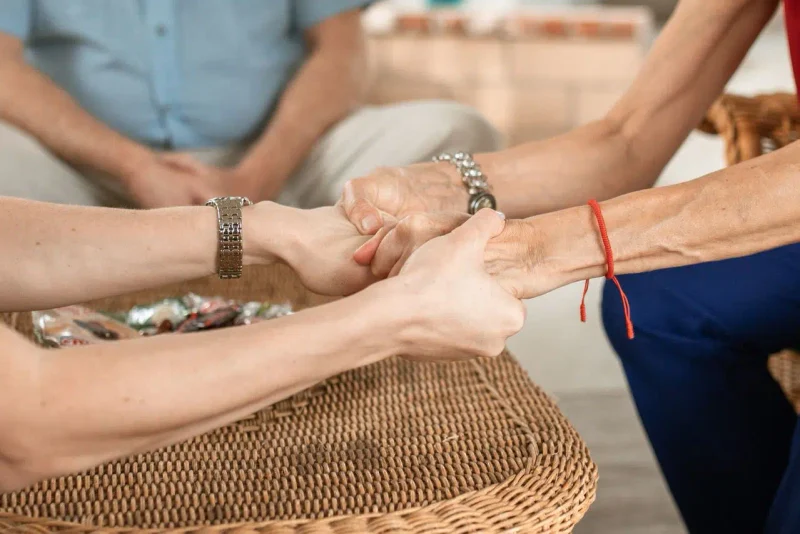
When I left Nicaragua, I felt relief. My first thought was for my freedom, the possibility of defending what I believe in. But leaving a country doesn’t necessarily free us from the grief that follows.
By Brisa Bucardo (Confidencial)
HAVANA TIMES – I’ve written before about the grief of leaving a land. About what it means to be distant from the territory that holds our memories, the places that know our names; from all that we recognize as ours. Over time, I’ve understood that the sorrows also pile up. Some begin when we cross a border, while others take months or years to reveal themselves. There are losses that we don’t even know we’re experiencing, until one day we manage to name them.
One of these is a mourning for those we love.
When I left Nicaragua, I felt relief. My first thought was for my freedom, the possibility of speaking without fear, continuing to defend what I believe in, and to follow a vision which, up until now, has never betrayed me. I told myself that all of that had to be worth it – that exile was worth it.
And being able to continue the struggle has indeed been worth it. I still believe that.
However, leaving a country doesn’t necessarily mean escaping all that pursues us.
Those of us living in certain situations of exile learn that borders can safeguard our bodies but not separate our lives from the violence we left behind. We leave but continue wondering what’s going on with those who stayed. And when violence touches the people we love in different ways, a contradiction arises that’s difficult to explain: the freedom we longed for so ardently begins to coexist with the guilt of exercising it.
And we begin to ask ourselves: Should I stop?
I’ve asked myself this many times.
I’ve never wanted to stop. I’ve never wanted to be silent. But there’s a difference between the rational knowledge that you’re not the one responsible for the violence and really convincing your body to believe it. When you feel that your words, your work, and even your very existence can have consequences for those you love, guilt finds places to settle in.
And so, without realizing it, I began to leave again. This time, not by crossing any borders – I left emotionally.
I distanced myself from the people I love most. I avoided close contact with them, listening to some voices, asking too many questions. For a long time, I thought that distancing myself could provide a means of protection. Later, so much time passed that I began to feel ashamed to approach them. How do you return after having been absent for so long? How can you explain that it was precisely because you loved so deeply that you ended up fleeing from the ones you love?
Not long ago, I was finally able to recognize that I had been merely postponing the grief. I had gone through deeply painful transformations in silence, and while I was trying to comprehend everything that had happened to me, time continued advancing on the other shore.
That’s one of the cruelest aspects of exile: the lives of those we love continue on without our presence.
Children grow. Their faces change, their voices, their way of speaking. People grow older. There are birthdays where we’re not present, embraces we can’t give, sorrows we can’t accompany, and the small everyday moments that disappear without even a farewell.
There are those who are growing up knowing us only as someone who exists among the shadows. And that, too, is a sorrow.
We don’t only miss the people we leave behind. We grieve the relations we would have built if we had been able to stay; grieve the versions of ourselves that others might have known; the conversations that will never occur. The everyday moments that were stolen from us. Exile even alters our way of loving.
For a long time, I confused distance with protection. I thought that the less I knew and the farther distant I remained, the less it would maybe hurt, and the better it could avoid damage. Until I understood something that I now repeat to myself: the shame was never ours.
It doesn’t belong to those who are far away, nor to those who remain.
One of the most perverse consequences of violence is making those of us who suffer it end up trying to manage our own absence. We hide, we distance ourselves, we carefully ration our emotions, and we feel guilt for the decisions we make in our attempt to survive.
I don’t want to continue handing over all that as well.
I’ve thought a lot lately about the red thread. That thread that is so often spoken to explain the love between two people destined to find each other. I imagine another thread: one that crosses borders and links my heart to the hearts of those I love.
A thread that extends out to those who watched me grow up, and to those who are growing up without me. To all my little ones. To those who will maybe read these words and recognize themselves without my having to name them.
I want them to know that what I did was never for lack of loving them.
Sometimes loving in silence is also an act of resistance. Loving from afar, holding onto names, protecting memories, learning to say certain things without saying them completely. But I’ve also understood that I don’t want to romanticize that silence. Because the silence that we sometimes feel is necessary to survive can also end up becoming another closed border. And we’ve had enough borders.
There are many griefs woven into exile. There’s the territory we may never be able to return to. There’s the identity we must reconstruct when we arrive at another place. There’s our lost professional life, our language, our community, our sense of belonging. And our mourning for the person we were before we left.
And there’s this too: the pain of loving people whose lives go on, while we try to survive far away.
Perhaps a part of healing that grief involves understanding that surviving shouldn’t mean disappearing as well. I’m still learning that.
I’ve gone through moments when existence weighs on me far too heavily; when it’s difficult to imagine a life beyond simply that of resisting. But l’ve understood lately that I don’t want to live simply waiting for time to pass. After everything they’ve stolen from us, it would also be a defeat to allow them to take from us the possibility of loving.
I’m not giving them that.
I don’t want them to take from me the love that I learned a long time ago could sustain us when everything else disappeared.
Because of all this, I want to return, although I still can’t go back to that territory.
Return to my feelings of love. Return to the voices I’ve been afraid to listen to for too long. Return to those I love and tell them, even if it be in these words, that distance never succeeded in rooting them out of my heart.
Perhaps one day, our exile will end. Perhaps some of its losses will accompany us always. I don’t know.
What I do know is that I want that thread to remain with me always. And I hope that someday, when I finally see those I love again after so many years, silences and transformations, I’ll be able to recognize them, and they recognize me.
That I’ll be able to embrace them, knowing we survived.
And above all, I hope I can do this without guilt, without shame, and without ever again feeling the need to duck my head.
First published in Spanish by Confidential and translated and posted in English by Havana Times.