
Nicaragua’s Dictatorship “Bans” Foreign Laws
but remains bound by dozens of International Agreements
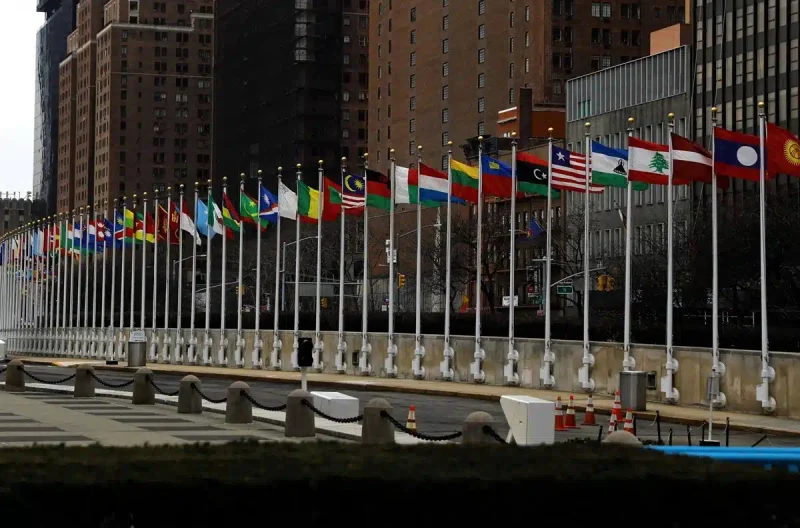
Despite the Ortega-Murillo regime’s attempt to further isolate itself, Nicaragua’s international obligatiByons and treaties remain in force.
HAVANA TIMES – With the approval of the constitutional reform pushed by Daniel Ortega and Rosario Murillo, the application of foreign laws will be “prohibited” in Nicaragua. However, the country will remain bound by dozens of international treaties, agreements, and conventions signed on behalf of the State. As a result, the constitutional amendment “has no practical effect” and is more of a “philosophical discourse” aimed at the regime’s base, according to legal experts.
The international commitments undertaken by the Nicaraguan State range from human rights conventions and environmental agreements to trade treaties. All of them are governed by their own rules, not by what the constitutions of member countries establish.
By becoming a party to an international treaty or convention, a country agrees to abide by its rules, and the only way to cease being bound by it is to follow the procedures established for withdrawing from that treaty. “The international obligation remains in force from the moment the country signed the various treaties,” warns human rights professor Uriel Pineda.
Despite these international obligations, Nicaragua does not comply with all the treaties and agreements it has signed and, worse still, applies them “at its convenience,” says Gonzalo Carrión, an attorney with the Nicaragua Nunca Más Human Rights Collective.
Human Rights and Humanitarian Law
In the areas of human rights and international humanitarian law, Nicaragua has signed the principal instruments of the United Nations and the Inter-American System. However, in recent years it withdrew from the Organization of American States (OAS) and the United Nations Human Rights Council (UNHRC).
Among the main instruments of the Inter-American System signed by Nicaragua is the OAS Charter, but the regime denounced the Charter in 2021, and the country formally left the regional organization in 2023. Nicaragua nevertheless remains bound by other Inter-American treaties, including:
- American Convention on Human Rights
- Inter-American Convention on the Prevention, Punishment, and Eradication of Violence against Women
- Inter-American Convention against Corruption
- American Treaty on Pacific Settlement
The country “remains bound by its human rights obligations” because “it has not initiated any process to denounce the American Convention,” Carrión warns. “Those obligations remain in force, which is why they continue to monitor Nicaragua,” he stresses.
Nicaragua’s position has been to “refuse to cooperate” with the bodies of the Inter-American System, as well as with the United Nations Group of Experts on Nicaragua, but “its international obligations remain in force,” Pineda emphasizes.
Within the United Nations system, Nicaragua has ratified the following conventions and treaties:
- Charter of the United Nations and Statute of the International Court of Justice
- Convention against Torture
- International Covenant on Civil and Political Rights
- Convention on the Elimination of All Forms of Discrimination against Women
- International Convention on the Elimination of All Forms of Racial Discrimination
- International Covenant on Economic, Social and Cultural Rights
- International Convention on the Protection of the Rights of All Migrant Workers and Members of Their Families
- Convention on the Rights of the Child
- Convention on the Rights of Persons with Disabilities
Although Nicaragua has not denounced the United Nations conventions, it does not respect them either, or does so only when convenient. “When resolutions or reports are issued by the UN Group of Experts, they [the regime] label them as coup plotters.” Yet the regime continues “to consistently invoke the ruling of the International Court of Justice that favors it,” Carrión criticizes.
With this rhetoric now being incorporated into the Constitution, the regime “is seeking respect [for the provision] in order to contain, within Nicaragua’s domestic framework, the effects of these adverse rulings,” Pineda says.
For Pineda, the constitutional reform “has no practical effect because it cannot be invoked against the actions it seeks to limit, whether those involve requests from the Argentine justice system, rulings against Nicaragua by the Inter-American Court, or the International Court of Justice.”
Environment and Biodiversity
In response to climate and environmental challenges, Nicaragua has signed various international agreements, treaties, and conventions aimed at protecting biodiversity, addressing climate change, and managing natural resources. These include the United Nations Framework Convention on Climate Change, along with the Kyoto Protocol, the Paris Agreement, and the Montreal Protocol, which focus on protecting the ozone layer.
Nicaragua has also signed the United Nations Convention to Combat Desertification; the Basel Convention, on the control of hazardous wastes; the Ramsar Convention, on the protection of wetlands; the Convention on Biological Diversity; and the Escazú Agreement on environmental rights in Latin America, among others.
The reform does not limit any of these international commitments, which is why Pineda emphasizes that “it is more philosophical than practical.” The amendment is “aimed at shaping the Nicaraguan public’s perception to reject any international ruling of this kind, but it has no practical effect because Nicaragua’s international commitments under international treaties remain in force,” he stresses.
Trade and Labor Standards
In the area of trade, Nicaragua has ratified the Agreement Establishing the World Trade Organization (WTO), the Agreement of the International Monetary Fund (IMF), the Convention on the Regime for Central American Integration Industries, and the Protocol to the General Treaty on Central American Economic Integration, among others.
Nicaragua has also ratified a total of 62 conventions of the International Labour Organization (ILO), of which 46 are currently in force, six have been denounced, and ten have been abrogated. None have been ratified in the past 12 months. Among the most notable are Convention No. 29 on forced labor, Convention No. 182 on the worst forms of child labor, and Convention No. 111 on discrimination in employment and occupation.
In addition, Nicaragua has signed several free trade agreements, including the Dominican Republic-Central America-United States Free Trade Agreement (DR-CAFTA), the Association Agreement between Central America and the European Union, and the Free Trade Agreement between Mexico and Central America.