
Nicaragua: The Nameless, the Forgotten, and Exclusion
In political discourse
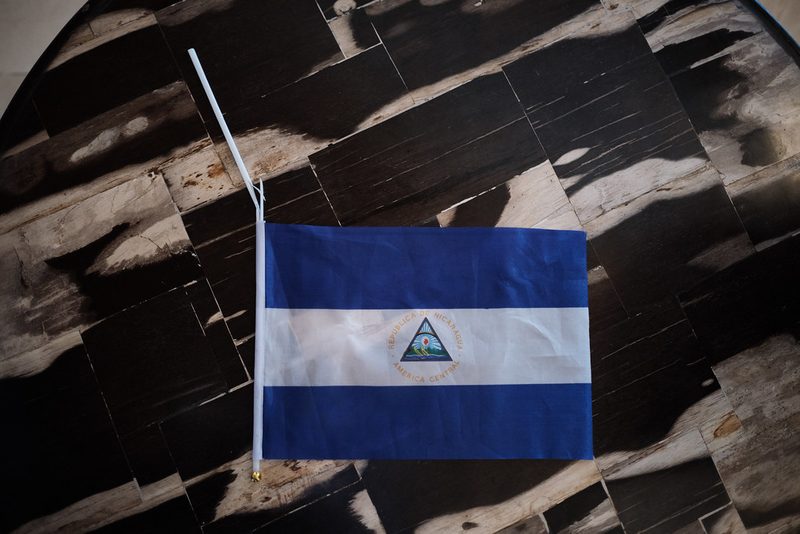
Nicaragua does not need a new group of chosen ones speaking on behalf of “the forgotten,” even if they are younger or have an appealing message.
By Brisa Bucardo (Confidencial)
HAVANA TIMES – Some time ago, I was invited to be part of a Nicaraguan political group in exile. I asked for three months to get to know it and decide whether I wanted to join. I also wanted to know whether, given my ethnic identity, I could put my trust in that initiative.
Less than a month had passed when, during an event, the person in charge publicly introduced me as part of his team. I corrected him on the spot. “I want to clarify that I’m not part of the team; we had agreed that I would take three months to decide.” Later, I was asked why I had corrected him publicly. I replied that if our agreement had not been respected in public, I had no reason to correct it in private.
It was one of my first “red flags.” You don’t have to wait until someone controls an institution or holds public office to see how they relate to power. Sometimes it is enough to see how they react when someone tells them no or sets boundaries.
Before this, I had asked what distinguished this group from others and what they had learned from previous attempts at organizing. Instead, I began repeatedly hearing that they were “the nameless,” “the forgotten,” while they disparaged other groups and their efforts. I remembered something I learned from Miskito elders: Those who speak badly of others to make themselves look good end up revealing more about themselves.
I have no problem questioning the privileges that exist among some political and social groups within the Nicaraguan opposition. It needs to be done. There are inequalities in access to resources and platforms. Young people have reasons to feel frustrated. A generation put their bodies on the line in 2018 and afterward faced persecution, imprisonment, exile, banishment, and hardship.
The problem begins when that very real exclusion feeds a narrative that divides people between those who have family names, resources, and power and those who supposedly never had anything. To politically construct “the forgotten,” you must identify those who forgot them. At that point, the criticism is no longer directed at specific organizations, leaders, or practices. Instead, people speak of “the opposition” as though it were a homogeneous bloc of privileged people.
That is not what it means to me. When I speak of the Nicaraguan opposition, I mean those of us who oppose the dictatorship. That includes political and social organizations, journalists, feminists, students, campesinos, Indigenous and Afro-descendant peoples, LGBTIQ+ people, workers, exiles, banished Nicaraguans, and people with no affiliation. I can be part of the opposition while questioning groups that are also part of that opposition. That does not make me any less of an opponent of the dictatorship.
I am uncomfortable with a political culture in which there seems to be very little space between being an ally and becoming an enemy. If you’re with me, you’re one of the good guys; if you question me, you start becoming inconvenient; if you don’t join, you have to be persuaded. A democratic culture should allow people to agree, disagree, collaborate without belonging, and say no without turning differences into hostility.
All of this affects me particularly because I am Indigenous. For decades, we have watched politicians come to our territories claiming that they represent us and that their project stands with Indigenous people. The names and slogans change, but our peoples know how easy it is to incorporate the word “Indigenous” into a political message and how difficult it is afterward to respect our autonomy.
That is why another situation during that experience stayed with me. Around the International Day of the World’s Indigenous Peoples, I was asked to contribute to a statement and participate in an interview. I first asked what their position was regarding our peoples. There practically wasn’t one. That troubled me. If you still don’t know enough about a struggle, why such urgency to incorporate it into your discourse?
There is a difference between approaching a struggle in order to listen and doing so because you need to incorporate it into your project. Having one Indigenous person does not amount to a serious policy toward our peoples; having a feminist does not make an organization feminist; nor does having an LGBTIQ+ person guarantee a commitment to their rights. Diversity can be genuine, but it can also become a nice photograph surrounding a leadership that concentrates decision-making power.
That is why I am less interested in hearing “there are many of us” than in knowing how that “us” actually works. Who makes the decisions, manages the resources, defines the positions, speaks for the group, and how much room there is to contradict the person in charge are more important questions. That is where diversity stops being a list of identities and either becomes—or fails to become—a political practice.
Some time after I distanced myself from that group, people I didn’t know began following me and writing to me on social media. In conversations with friends, I discovered that they had experienced similar approaches. Some people told them they had joined that group and tried to persuade them to do the same, with an insistence that reminded me of when we were sent out to sell raffle tickets at school and had to come back with every number sold.
I cannot say that these approaches were coordinated or related to my earlier experience. I have no proof, and I am not going to turn suspicions into facts. But I do recognize language that keeps recurring. People talk about the privileged, sellouts, those who received money, media outlets that don’t listen, and organizations that don’t give others a voice. Criticism is necessary, but when a project’s identity begins to be built around what it despises, it is worth asking what remains once the enemy is removed.
Some of these dynamics remind me of mechanisms found in sectarian religious groups. I think of the division between those who are inside and those who are outside, the sense of possessing a truth that others do not understand, and the tendency to treat questions as attacks. It is a powerful logic because it offers something more than politics: it offers belonging. To those who are frustrated, it offers an explanation; to those who feel excluded, it offers a place.
This is how “the chosen ones” can emerge—those who did not sell out, who did not receive anything, who came from below, and who are supposedly called upon to represent “the forgotten.” Being young, presenting yourself as new or progressive, or confronting elites does not guarantee a democratic relationship with power.
Our identities have political value, and precisely for that reason they can be instrumentalized. The problem arises when our names, stories, and pain are needed more than our ideas; when we are included to demonstrate representativeness, decisions continue to reflect a harmful and destructive political culture.
From my perspective as an Indigenous person, that boundary is clear. I do not want anyone turning my people’s pain into a political credential. We are not “the forgotten,” waiting for someone to come and rescue us. We have organizations, authorities, memory, political thought, and historical demands. We can speak for ourselves.
After so many years of confronting a dictatorship, we should look not only at what someone promises to do if they come to power. It also matters how they use the little power they already have, how they respond to being told no, how they react to criticism, how they speak about their adversaries, and how much room they give those they claim to represent to question them.
Nicaragua does not need new chosen ones speaking on behalf of “the forgotten,” even if they are younger, have an appealing message, or claim to come from below. Organizing from a position of exclusion in order to transform it is one thing. Turning the wounds, identities, and struggles of those who have been excluded into tools for building someone else’s power is something very different.
First published in Spanish by Confidencial and translated and posted in English by Havana Times.