
A Cult Film I Just Saw for a Second Time, 36 Years Later
HAVANA TIMES – I don’t remember exactly when my passion for movies began, but it was when I was quite young. I remember that during my university years, between 1990 and 1995, I would watch around 15 films during the roughly 10 days of the film festivals held every December in Havana. I saw extraordinary, brilliant films, the kind that take your breath away and remain etched in your memory for a lifetime.
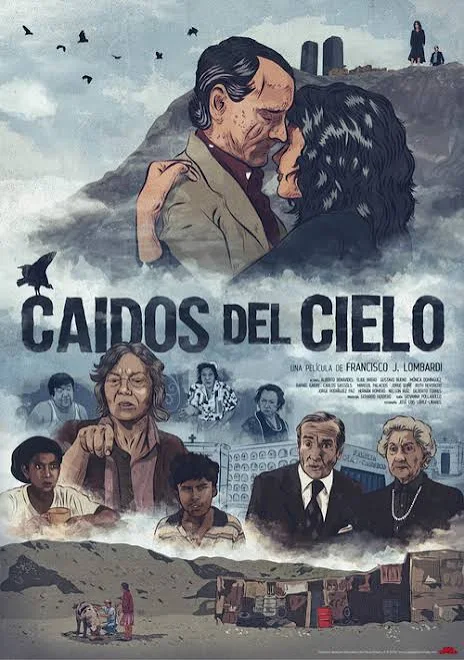
Among the filmmakers who most attracted me were Argentine director Eliseo Subiela and Peruvian director Francisco Lombardi. In fact, in December 1990, Lombardi presented Fallen from Heaven (Caídos del cielo), a cult film. Back in that now-distant year of 1990, when I was 18, I saw it and it made a powerful impression on me. I had never been able to see it again until a few days ago, when, taking advantage of the few hours of Wi-Fi access we have, I managed to download it.
Thirty-six years later, it affected me even more. I thoroughly enjoyed it. I watched it on my laptop during a hot, typical Havana blackout in the middle of the night, but with the welcome breeze of a rechargeable fan. I don’t know whether it’s a kind of spiritual selfishness or what, but I always enjoy a movie more when I watch it alone, without disturbances or outside noise.
Set in Lima in the late 1980s, the film masterfully interweaves three stories.
One involves an elderly couple who were once upper class but have since fallen on hard times. They now make a living by renting out a group of small houses in a poor neighborhood of Lima. Their sole ambition, to which they devote all their efforts, is to build a majestic mausoleum for themselves and their recently deceased son, whose remains rest in an ordinary cemetery niche.
The elderly couple cannot afford the mausoleum they envision, but they refuse to give up. They go to collect rent from a tenant who is behind on his payments, and he tells them he has no money, that his wife left him and took everything. But faced with the couple’s demands, he gives them an enormous breeding pig to help settle the debt.
They accept the pig, but since they have no idea what to do with it, they give it to a blind woman, a former servant of the family, who lives with her two grandchildren—both around 10 years old—in a shack next to a garbage dump. The old woman, who abuses the two children mercilessly, plans to fatten the pig a little more and then sell it, using the money to pay for an operation to restore her sight.
This story of the abusive and selfish old woman is based on the short story “The Featherless Buzzards” (“Los gallinazos sin plumas”) by Peruvian writer Julio Ramon Ribeyro.
Among the elderly couple’s tenants is Humberto, a radio announcer nearing 50 who is lonely and introverted because of a facial deformity caused by a household accident. Humberto meets Veronica, a depressed young woman on the verge of attempting suicide, and an intriguing relationship gradually develops between them.
I won’t say any more. I can only recommend that readers who enjoy good Latin American cinema download the film. You won’t regret it.
Director Francisco Lombardi makes us question why we focus so much on appearances, to the point of repressing ourselves and abandoning our principles simply to project an image that is not real. He explores how selfish and cruel we can be toward people who depend on us and on whom, paradoxically, we also depend. He also reflects on how much society discriminates against people because of their physical appearance; the bullying of those who are different; and the obsession with consumption as a sign of moving up the social ladder. Is the ability to consume directly proportional to happiness and social success? Lombardi’s film invites us to reflect on all of this and more.
Fallen from Heaven was honored in 1990 as best foreign film at the film festivals in Montreal, Canada, and Chicago, United States. It also received the Special Jury Prize at the Latin American Film Festival in Biarritz, France. In 1991, it won Spain’s Goya Award for Best Spanish-Language Foreign Film; and, as if that were not enough, it also received the Oscar for Best Foreign Language Film that same year. I could have sworn it also won an award at the Havana Film Festival, but I couldn’t find any reference to that online.
With excellent performances, very good cinematography, and a screenplay that leaves no room for doubt, watching this film can be a highly enjoyable and enriching experience for any movie lover.
Read more from the diary of Ernesto Gonzalez here on Havana Times.