
A Good Example of the Venezuelan Justice System
They were acquitted and released from prison, and 15 minutes later they were back in custody.
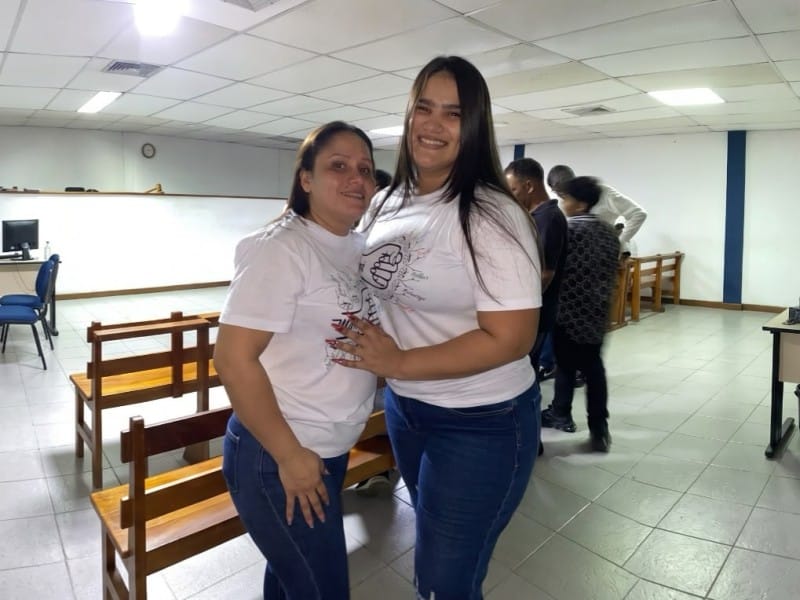
The re-arrest was carried out by the same commander of the detention center they had been released from.
By Reyaldo Mozo Zambrano (Efecto Cocuyo)
HAVANA TIMES – Rusmarelis Zacarías, 23, and Rosanis Medina, 40, were free for barely 15 minutes on September 3. A court acquitted them for lack of evidence at the conclusion of a trial they had faced for more than a year. But before their family had even finished leaving the Criminal Judicial Circuit courthouse in Tucupita, Delta Amacuro state, the commander of the detention center where they had been held showed up to take them back into custody.
Reicarys Medina, Rusmarelis’s mother and Rosanis’s sister, told Efecto Cocuyo by phone that the rearrest took place immediately after the official termination of their detention order. “My daughter and my sister were released on September 3 at three in the afternoon, and by 3:15 p.m. they had already been put back in jail,” she said.
Zacarías and Medina were arrested on August 24, 2025, in Barrancas del Orinoco, Sotillo municipality, Monagas state, by officers from the General Directorate of Military Counterintelligence (DGCIM).
The raid was carried out without the officers presenting a court order or explaining the reasons for the arrests at the premises where both women worked. Medina said the operation specifically targeted the area used by her relatives for their work.
“I never understood why they took them away. When they carried out the raid, they entered the house where they kept the things they used for work, because they are manicurists and decorators,” the relative explained.
From that point on, they were implicated in a case involving terrorism, drug trafficking and ammunition trafficking.
15 Days of Enforced Disappearance
Following the arrests, the family went two weeks without any information about the women’s whereabouts until they finally located them outside Monagas state. Zacarías’s mother described the logistical and geographical difficulties involved in following the case in another jurisdiction.
“I found them 15 days after they were taken away. I learned that they were in Tucupita, Delta Amacuro state, a place very far from where I live.”
On August 29, 2025, a hearing was held by video conference in which they were formally ordered to remain in custody.
The conditions of their detention worsened their health. The 23-year-old has lived with a heart valve prolapse since childhood, while Medina, who suffers from hypertension, had two strokes while in her cell.
Reicarys said the detention center authorities systematically denied them medical care throughout the entire process. “They were never transferred to a hospital, nothing. An authorization for a transfer never came. She had to endure that entire ordeal in there,” she explained.
In April 2026, the family was able to bring a private defense attorney into the case. Following that change, at the preliminary hearing on May 4, the charges were reduced from four offenses to two: criminal conspiracy and ammunition trafficking. The trial proceeded on that basis and concluded on September 3, 2026, when the court determined that there was insufficient evidence and issued an unconditional acquittal and release order, which was sent to the judicial circuit by fax.
The Operation That Sent Them Back to the Detention Center
Their detention following the acquittal occurred abruptly as the family was leaving the courthouse. Medina directly blamed Lieutenant Colonel Cesar Fernández García, commander of the unit where the women remain detained, for the operation.
“He told us he was going to take everyone back to the detention center because the release orders needed an original ink stamp, that what they had was a copy and they had to wait for Caracas to provide notification,” she said.
Minutes later, at the same location, the military officer abandoned the explanation about the administrative procedure and gave a different official version of what was happening. The young woman’s mother said the new justification was that the ruling had been annulled. “Afterward, he said no, that he had received an order saying the release orders had been annulled.”
After the commander took the women from the courthouse entrance back to the detention center, their relatives attempted to file a formal complaint about what had happened. Medina told Efecto Cocuyo that local authorities ignored their requests for help following the incident. “We went to the prosecutor’s office in Tucupita to try to file a complaint, but we couldn’t, and they wouldn’t see us at the judicial circuit either.”
The case is assigned to the Tenth Court of Caracas, where the private defense attorneys are pursuing legal remedies. They informed the family that the appeal filed by the Prosecutor’s Office against the acquittal does not suspend the immediate release order. This irregularity means the women remain illegally behind bars, a situation their attorneys clearly explained to Medina. She stressed that “even though the Prosecutor’s Office has appealed, they should be at home, free while awaiting the appeals process, because they supposedly have a release order based on an acquittal.”
They Are Listed as Political Prisoners
During the first few months, the women’s immediate family chose to remain silent because of direct pressure from state security forces. Their relative said the threats delayed their efforts to publicize the detentions. “They intimidated us. They told me not to post anything on social media, so we remained silent. I traveled to Caracas many times to submit documents, but they didn’t release them,” the mother said.
After exhausting institutional channels and as the women’s health deteriorated, the family spokesperson formally reported the case to non-governmental organizations this year. “We managed to bring the case to Foro Penal. Now they appear on a list of political prisoners from Monagas state.”
Their imprisonment has separated the women from their children. Zacarías is the mother of a 4-year-old girl, while Medina has two children, ages 15 and 7. Reicarys keeps precise track of the length of the family’s separation, noting that “it has already been one year and 17 days of this anguish.”
As of the publication of this article, both women remain detained at the same facility.
First published in Spanish by Efecto Cocuyo and translated and posted in English by Havana Times.