
The Crisis Fuels Illegal Gold Mining in Cuba
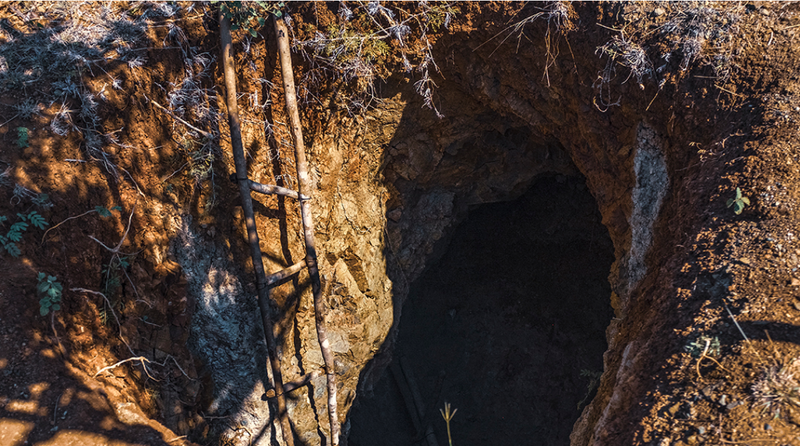
HAVANA TIMES – Nearly ten years after the first time he entered a mine shaft, Jesus still believes that one day he, too, will hit “the big one.” That hope is what drives him each morning to descend into the small mine where he works alongside three friends, whom he met precisely through the world of illegal gold mining.
The Cuban government explicitly prohibits this activity. Although in recent years other mining activities have been authorized for small-scale private operations (the extraction of construction materials, for example), gold prospecting remains a state monopoly. Gold is considered a strategic reserve and can only be mined under licenses that are generally reserved for foreign companies.
The most important deposit developed under this legislation is Golden Hill, whose facilities were built at the beginning of the 2010s in the municipality of Jobabo, Las Tunas Province, as a result of a cooperation agreement between Cuba and Venezuela. About 20 kilometers northwest of there is the area where Jesus and his companions “dig,” hoping to find a vein that will change their lives.
All it takes is one generous rock for the miracle to happen. In Guaimaro, the easternmost municipality in Camagüey Province, stories abound of miners—almost all under the age of 30—who, with the earnings from one lucky day, managed to buy motorcycles or houses, or even pay their way out of the country. In this region, once one of Cuba’s cattle-raising meccas, the sons and grandsons of former cowboys prefer to arm themselves with shovels, pickaxes, and sieves and head into the bush in search of gold rather than raise cows and calves that will never fully belong to them (the Ministry of Agriculture exercises strict control over cattle).
“It doesn’t have to be the biggest nugget in the world. Finding a rock with traces of gold, or even low-grade gold dust, is enough. A gram [of refined gold] sells for more than 60,000 pesos [over US $85], so almost anything turns a profit. A bad day for us is when we leave with less than 3,000 pesos (US $5+) each,” Jesus explained.
His three coworkers are from Guaimaro. Although originally from Guantanamo, he has lived there for three years. He came from neighboring Ciego de Avila Province, where he also worked in artisanal gold mining at the clandestine El Pilar mining camp in the municipality of Baragua. Jesús remembers the police operation he had to flee, in which he lost all the equipment from a mine that was beginning to produce results. Others were not so lucky: more than 300 people were detained in that raid, which preceded a visit by Minister of Energy and Mines Vicente La O Levy.
The official toured the area accompanied by geology and mining specialists who were updating the section on gold mining in Cuba’s portfolio of opportunities for foreign investment. Its most recent editions include around 50 such projects. Among them are copper and gold porphyry deposits in Ciego de Avila itself, the expansion of the Golden Hill complex to include copper mining, and a proposal to extract gold sulfides in the Florencia-Maclama area, on the border between Las Tunas and Camagüey.
In 2023, La O Levy called for “dialogue” with residents of Ciego de Avila and the other central-eastern provinces where illegal mining sites exist. The objective, he said, should be to “reduce these incidents” and safeguard mineral reserves for “their proper exploitation, with the aim of generating new and necessary income for the country.”
A Tropical “Gold Rush”
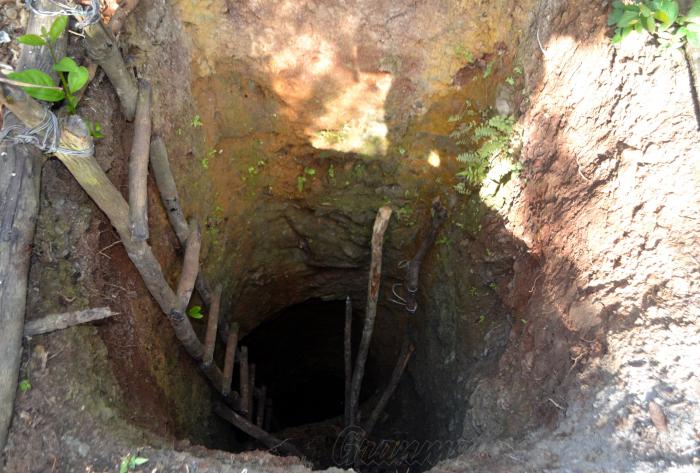
Because of the experience he accumulated in Ciego de Avila and other mining operations in eastern Cuba, Jesus has become something of a leader of the group. He was the one who chose the site where they would dig their test pit—near the Jobabo River, on the border with Las Tunas—and negotiated with the landowner over the rent they would pay to work there. They imposed only two conditions on him: he was not to clear the marabú thicket [a dense growth of thorny shrubs] covering the area, nor was he to visit the mine. “The brush works in our favor because it keeps outsiders from watching what we’re doing. For the same reason, I told the farmer not to worry, that every week I would bring the money to his house, and that’s what I’ve always done,” Jesús explained.
After years of trying to drive makeshift miners off their land, many farmers have opted to lease them plots under various payment arrangements. While some, like Jesús’s landlord, charge exclusively in cash, others prefer a share of the mine’s profits. Although these agreements are based solely on a handshake, they are rarely broken.
Crime poses a much more difficult problem. Because the activity is illegal, miners cannot turn to the police, a circumstance criminals exploit to rob and assault them. The situation has not reached the level seen in Ciego de Avila, where, according to Jesus, “people were even killed over robberies and debts,” but it has become troublesome enough that the miners have had to organize security shifts. Every night, either he or one of his companions sleeps at the mine to guard the tools and sacks of extracted material. At times when the threat of crime has intensified, they have even had to stay in pairs, armed with machetes and stones.
“In general, this gold business has brought Guaimaro more harm than good. The town has filled up with people from eastern Cuba, some of whom, as soon as they make a few pesos, head to the bars to get drunk and look for trouble. Fights and motorcycle races have become constant, and the police do nothing,” lamented Eloisa Rivero, an elderly Guaimaro resident who contrasts the current reality with that of the 1960s and 1970s, when the state operated a small gold deposit in the Flor de Maria area, south of the city. Dozens of homes for mine workers, a daycare center, and other infrastructure were left behind by that venture, which closed in the 1980s when the vein was exhausted.
Some illegal miners, like Jesús, insist that reserves must still remain there. Their speculation appears to be supported by the speed with which police respond to incursions into the area, expelling intruders and even sending repeat offenders to prison. But a local journalist pointed to another likely reason: Flor de Maria and several nearby areas contain wells that are essential to Guaimaro’s water supply system and to part of the municipality’s cattle-raising infrastructure. The worst thing that could happen, he said, would be for them to become contaminated by illegal mining.
That danger is not far-fetched. During the artisanal “enrichment” process, miners sift and wash the soil and rocks extracted from the mine, producing a muddy mixture to which they then add mercury—which they call azogue—so that it will “bind” the gold. Mercury’s high toxicity has made it a serious problem in several Latin American countries where illegal mining is widespread.
Jesus dismisses that danger as “a story they invented to scare people and turn them against the miners.” In his view, the artisanal mines will not shut down but will probably multiply. “Need is stronger than the police, and in Cuba we have more than enough need,” he reasoned.