
El Niño Puts Latin America’s Food Security to the Test
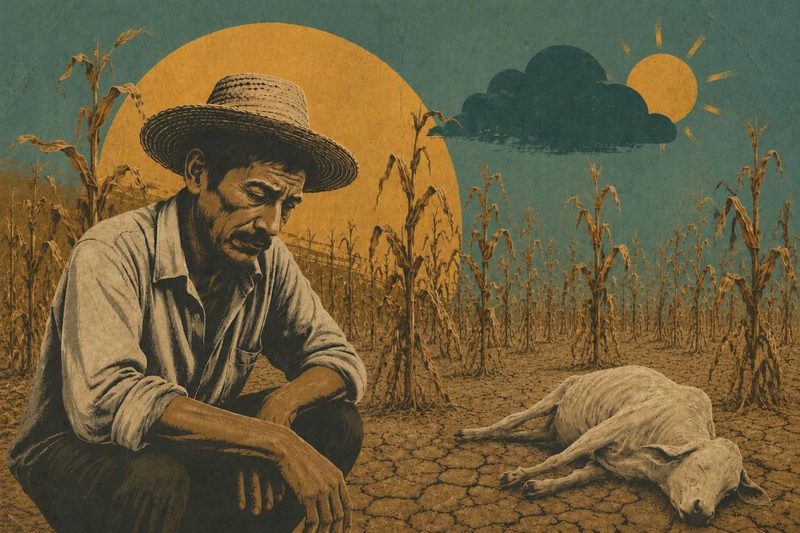
With floods, droughts, and wildfires, the El Niño phenomenon could affect Latin America this year as never before in history. How much is the subcontinent’s food security at risk? What can governments do to prevent it?
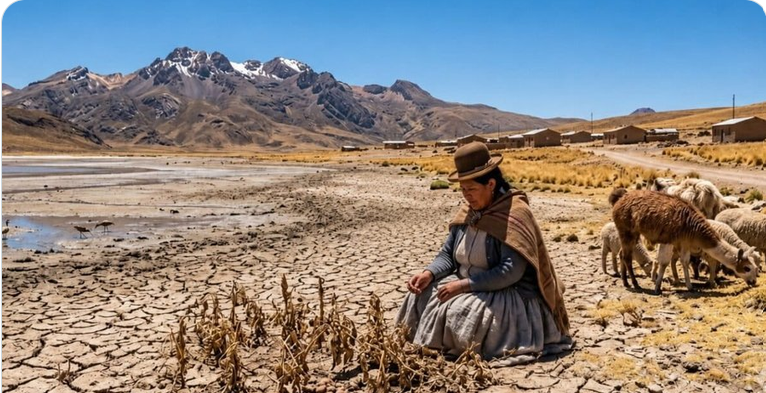
HAVANA TIMES – “We are sad, completely desperate. We have lost llamas, alpacas, sheep, and so far we haven’t even been able to count them all (…) This is how we support ourselves, put our children through school, and sell our products in the city.” The last heavy snowfall René Luna could remember caught him by surprise nearly 25 years ago, but never anything like this. A white blanket covered the landscape, burying hundreds of animals in his municipality in central Bolivia, which has now been declared a disaster zone.
According to experts, this situation is a consequence of the phenomenon scientifically known as the El Niño-Southern Oscillation (ENSO), which in Latin America causes extreme temperatures or a lack of precipitation in the middle of the rainy season. This also leads to crop losses in rural areas, where producers watch helplessly as months or even years of work are wiped out.
The livelihoods of Latin American families depend on hard work in the fields, distribution systems, and access to food. Unfortunately, that chain is becoming increasingly vulnerable because of climate events that disrupt it and worsen conditions in some subregions.
Five international organizations stated in the report “The State of Food Security and Nutrition in the World 2026” that “25.8% of the world’s population (around 2.1 billion people) experienced moderate or severe food insecurity in 2025,” meaning that at times these people were forced to consume lower-quality food or smaller quantities. Paradoxically, the data revealed a decline in hunger for the third consecutive year, showing that improvements are possible, but remain fragile and uneven.
Lena Savelli, regional director of the World Food Programme (WFP), told CONNECTAS that to understand this phenomenon in relation to food security, three factors must be taken into account: first, conditions in the countryside; second, prices and availability in the market; and third, families’ purchasing power and diets. In this context, rural communities and small-scale producers will be the first to feel the effects of this vulnerability.
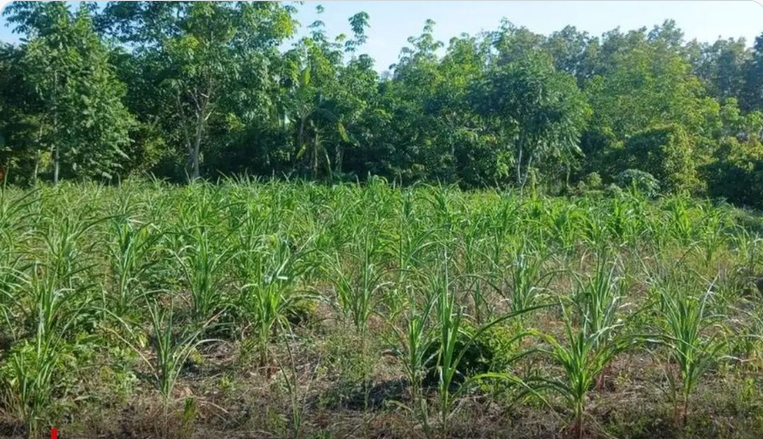
“What we are likely to see over the coming months is that droughts or extreme rainfall (…) will reduce yields of key crops such as corn, beans, rice, and even cocoa and coffee, shrinking supplies and driving up prices in markets and stores (…) This means food will become more expensive and less varied, especially for those who already have low incomes. Families may find that their basic food basket becomes more expensive and shopping becomes more difficult.”
However, Latin America and the Caribbean face a paradox, Savelli says: “It is an exporting region, but at the same time it has the highest cost in the world for a healthy diet. Almost five dollars—$4.91 exactly—per person per day. And people in this region do not have that kind of income to feed their families; millions cannot afford to eat well. That is why we have the double burden of hunger as well as obesity, which impacts the economy.”
According to WFP monitoring, several countries have already declared emergencies, and El Niño is expected to intensify during the second half of the year. In El Salvador, for example, the Association of Small and Medium-Sized Agricultural Producers reported that 6.9 million quintals of corn, beans, and sorghum—100% of the crops planted in August and September—could be at risk because of drought.
According to Jhenifer Mojica, an agricultural expert and former Colombian ambassador to the FAO, “Family farming by peasants, Indigenous peoples, and local communities provides a large share of our food, but there is little awareness of just how dependent we are on them. Eighty percent of our countries’ food security depends on these small-scale producers.”
“A producer on their own can hardly cope with this, and what we are going to see is an enormous amount of losses, as we are already seeing. Take, for example, the forest fires in Tolima, a heavily agricultural region where coffee, cocoa, fruits, and vegetables are grown. For a farming family, a harvest is not just a harvest; losing it means losing the family’s assets,” Mojica adds.
El Niño Raises the Alarm
This phenomenon has three phases: El Niño, when the surface waters of the equatorial Pacific become abnormally warm, occurring on average every two to seven years and usually lasting nine to 12 months; La Niña, when those waters become cooler than normal; and a third phase characterized by the transition between the two, with average or normal temperatures, lasting from one to six months.
According to Christian Domínguez, a researcher at the Institute of Atmospheric Sciences and Climate Change at UNAM, this phenomenon has always existed because it is part of natural variability, but over time it has undergone increasingly intense changes. “When temperatures are more than one degree warmer, that is when we say it is a very strong El Niño. Specifically for this year, however, it is expected to develop into a very intense El Niño, reaching its peak around November, December, and January. So we are looking at how this phenomenon will affect us, and the impact will vary greatly depending on where we are.”
According to the World Meteorological Organization (WMO), the areas at greatest climate risk will be the Central American Dry Corridor—a strip running through Costa Rica, Nicaragua, Honduras, El Salvador, and Guatemala—the Caribbean, and northern South America, which will face droughts, water shortages, and heat waves in particular. Meanwhile, the Pacific coasts of Ecuador and Peru could be affected by extreme rainfall and flooding, while southeastern South America will experience above-average rainfall and severe storms.
The meteorologist explains that much of the region’s agricultural activity has limited irrigation and technology. “We are susceptible to any adverse conditions (…) For example, when we have a very prolonged drought, the first impacts are seen in crops, because a plant that is continuously exposed to the sun and receives no rain will die, and that is directly related to food security.”
According to the WMO, the most intense climate events recorded to date occurred in 1982-1983, 1997-1998, and 2015-2016, producing major impacts on global systems and the world economy. The organization explains that for an El Niño event to be considered strong or very strong, anomalies of more than 2.5 degrees Celsius would have to be recorded during two or three consecutive periods.
A Difficult Future
Many governments are moving forward with rapid measures to respond to emergencies, but there is still a long way to go to achieve effective prevention. In this regard, the WFP regional director calls for addressing structural causes.
“It is not simply a matter of producing more. We have to confront challenges such as persistent inequality, low social mobility or the ability to improve socioeconomic conditions, and poor diets. Several countries in the region still face challenges related to child malnutrition, with fairly high rates, and we need to strengthen local food systems to also make sure that production reaches the markets,” Savelli says.
Some positive experiences can be found in Central America’s Dry Corridor, where warnings are being implemented to advise farmers when to plant or when not to, along with practical prevention messages. Another alternative is climate insurance to protect individuals, businesses, and governments against economic losses caused by weather events.
Along the same lines, Jhenifer Mojica argues that the state, as well as industry associations and the private sector, must play an active role. “This creates a need for farmers and communities in general to learn to become more resilient, to build greater capacities to cope with these crisis situations, and to be able to initially safeguard their livelihoods. In agriculture, it is urgent to develop a process of anticipatory action—that is, to ensure that producers in rural areas receive climate information directly and in real time (…) This makes it possible to make decisions about seasonal crops, seek better water-management solutions, and protect soil cover.”
The risks are also related to access to basic services, health because of the proliferation of mosquitoes, damage to infrastructure, transportation, and jobs. According to the ILO report “El Niño 2026-2027 and the World of Work in Latin America and the Caribbean,” informal and rural workers and those who work outdoors are among the most exposed. For that reason, “El Niño 2026-2027 is, above all, a test of Latin America’s institutional resilience at a time of accumulating external shocks.”
With advances in technology, weather forecasts can now look as far as three months ahead, although not for an exact location. However, as Christian Domínguez explains, in practice “this information does not reach decision-makers.” She therefore insists on the need to develop more public policies in coordination with experts in scientific fields in order to respond proactively.
As Domínguez adds: “We must also take into account that climate change is exacerbating phenomena we already knew, such as droughts, intense rainfall and heat waves, even cold waves. But these have existed for a long time. The difference is that we have altered our surroundings, our environment, the atmosphere, and there are consequences and repercussions. So how do we live with this? We have to learn to adapt and respond to these events through early-warning systems.”
At 4,500 meters above sea level, in his small community, René Luna is still mourning the livestock he lost. He is waiting for assistance from the authorities and wondering how they will recover in the coming months, although he does not know whether, in the long term, they will be prepared for extreme events that could once again put their way of life at risk.