UN Mission: Venezuela’s Repressive Apparatus Remains Intact
Experts see some progress, but without institutional improvements to ensure it continues. They note there are still hundreds of political prisoners.
HAVANA TIMES – Despite “limited” improvements, the Venezuelan state’s repressive apparatus, responsible for human rights violations and crimes against humanity, remains “intact,” the UN Independent International Fact-Finding Mission on Venezuela warned on Wednesday.
In its new report on the country’s situation so far in 2026, a year marked by the US intervention that led to the capture of then-president Nicolás Maduro on January 3, the expert mission sees some progress, but without accompanying institutional improvements to ensure that it continues.
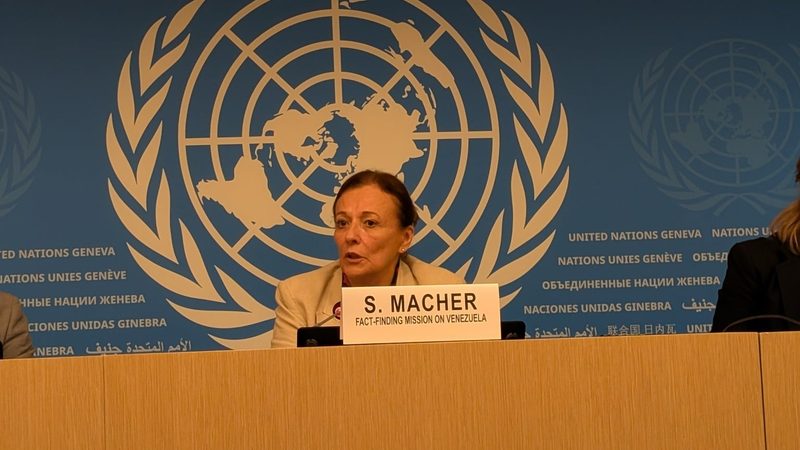
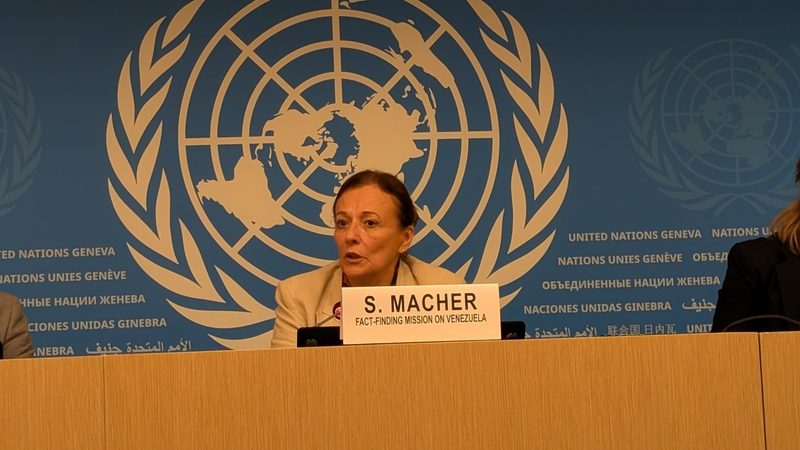
“The reduction in some of the most severe forms of repression is significant, but in no way constitutes a transformation of the system that made them possible,” summarized the mission’s new chair, Peruvian expert Sofía Macher, during the presentation of the report.
Laws used to criminalize dissent remain in force, intelligence services and security forces retain the same structures, and no measures have been taken to disarm or dismantle the “colectivos,” a persistent source of intimidation and violence, the three-member expert mission warned.
Journalists and other members of civil society continue to face obstacles in their daily work, and at least 19 officials whom the mission identified in previous reports as responsible for serious human rights violations continue to hold key positions in the regime.
On the positive side, the mission observed a significant decline this year in long-term detentions and enforced disappearances, as well as the release of hundreds of people detained for political reasons and “somewhat greater space” for protests, public gatherings, and civil society activities.
Torture Persists
The mission, however, has continued to document patterns of torture and ill-treatment of people detained for political reasons, citing cases of forced intubation and prolonged confinement in underground water tanks—a method nicknamed “the time machine”—at the El Rodeo 1 maximum-security prison in Miranda State.
At Fuerte Guaicaipuro, a military facility, the mission reported that people were confined in cells resembling underground pits, as well as subjected to food deprivation, exposure to cold, and other degrading conditions.
In total, the mission received information on 64 new cases of torture since January 3, while hundreds of people remain subjected to “deplorable detention conditions,” which in some cases have resulted in prisoners dying in custody due to mistreatment or lack of medical care.
Despite the reduction in the number of political prisoners as a result of releases, the mission noted that between 300 and 500 people remain detained for ideological reasons, according to data from nongovernmental organizations.
Although around 200 of the 214 arbitrary detentions for political reasons reported over the past 12 months occurred before Maduro’s capture, since January 3 the mission has identified a recurring pattern of short-term arrests intended to intimidate activists, opposition figures, journalists, and others.
“As long as the repressive structures are not dismantled, judicial independence is not guaranteed, and those responsible for human rights violations are not properly investigated and punished, any opening will remain fragile and reversible,” the mission’s chair warned.
Canadian Alex Neve, who along with Macher and Mexican-Argentine María Eloísa Quintero completes the mission, called in light of the report for the United States and other “influential actors” to intensify their efforts to promote genuine changes in human rights conditions in Venezuela.
However, those actors must ensure that their actions “do not contribute to further human rights violations or facilitate the commission of international crimes,” he added.
In-Depth Study of the “Colectivos”
Alongside its report on 2026, the mission will present another report this Friday before the UN Human Rights Council focusing on the operation of the armed civilian groups known as “colectivos.” It concludes that they are not marginal or peripheral organizations but rather “a central part of the state’s repressive apparatus.”
Their consolidation and expansion during the governments of Hugo Chavez and Maduro “was not accidental, but rather reflected a political strategy aimed at strengthening the bases of support for their political project, including through violence and coercion,” the report stated.
The report adds that their relationship with state institutions is demonstrated by the incorporation of members of these colectivos into the Bolivarian National Police or, conversely, by the entry into these civilian groups of retired or active members of the armed forces and security forces.
First published in Spanish by Efecto Cocuyo and translated and posted in English by Havana Times.
Read more news here on Havana Times.