
A Photo in the Garden
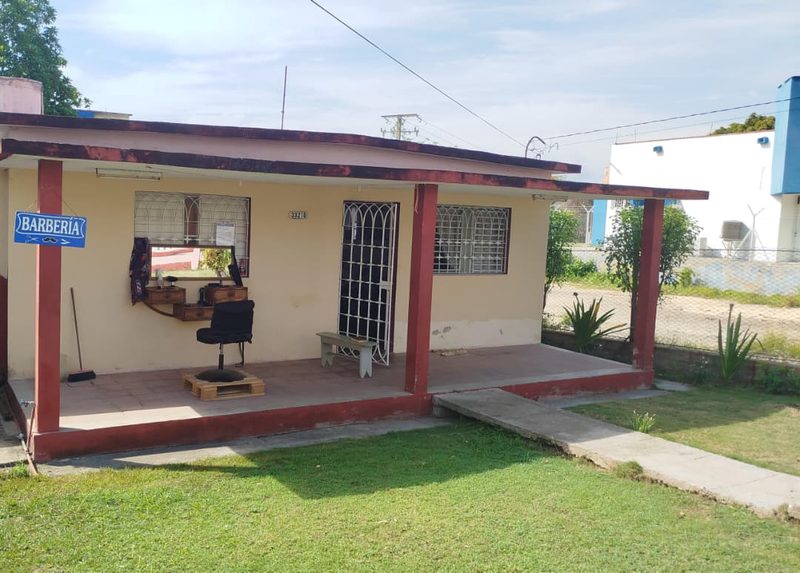
HAVANA TIMES – One afternoon, just as I was about to close up, one of those people who seem like lifelong neighbors, even though you’re not quite sure where they live, walked into my barbershop. I don’t know his name, but I know he has mental health problems and spends a lot of time on the street. Sometimes he dresses the way we imagine a university professor might look: small rectangular glasses, a short-sleeved shirt tucked into his pants, and a briefcase in his hand. He almost always talks to himself, muttering incoherently, and never seems agitated.
He asked me to shave his head. It was the first time I was going to do it, and I was afraid I might cut him, but I agreed. I never thought about charging him, but he assured me he would pay as soon as his monthly allowance was deposited on his card. I have no idea who is supposed to put that money there.
“Tomorrow I’m going to the hospital, and I don’t want to go in with all this hair,” he told me, and I wondered whether there wasn’t someone at the clinic who could cut his hair.
His hair was already very short, so shaving it wasn’t difficult. Every so often he would mutter something or bring his hand up near his face and shake it as though some insect were bothering him. When we finished, he shook my hand and walked out without another word, as if pondering important matters.
When referring to him, and to other people in the same situation, the word “crazy” sounds too harsh to me, besides the fact that its meaning is actually somewhat ambiguous. The truth is that he isn’t the only one in the area. Over the next few days, I saw him around the neighborhood and couldn’t help smiling: the story about being admitted to the hospital wasn’t true. He greeted me several times, but later, apparently, he forgot me. He has never come into the barbershop again, although I have noticed that he still shaves his head.
There is another young man who also spends his days wandering around cafés and resting on curbs. They say he used to be a rock fan and was part of the city’s entire “freaky” scene. The owner of one of the nearby businesses looks after him because they have been friends since childhood. He bathes him, feeds him, and even bought a set of hair clippers that he uses only on him. Sometimes he asks for vitamins or other kinds of medication because he also makes sure the young man doesn’t get sick.
Once, while I was cutting this business owner’s hair, he told me about the rock scene and the rumors about why the young man had ended up this way, but repeating rumors about rumors leads nowhere. He also showed me a picture of him from before mental illness consumed him. It was a group photo, with the young man circled using a digital marker: a happy kid, shirtless, with hair down to his shoulders.
I know all of them by now, because they spend their days around me and because I, too, am in the same place every day. They are the neighborhood’s true inhabitants. While we spend most of our time behind closed doors, they look after their patch of sidewalk, their , an curb and the pieces of cardboard they sleep on. Some of them periodically get better, during which time they disappear from the streets and can even be seen working. But that isn’t the norm. More often, they ask for money, like the young woman who stops motorcycles to ask for cash because she needs something to eat. It may be true, or it may not.
There is no significant number of people with mental illness who actively reintegrate into society. It is clear that because of their condition they lose many social skills, but the healthcare system also fails to guarantee empathetic and respectful treatment or a stable supply of medication. And sometimes their own families abandon them.
I see them every morning, troubled, unpredictable, each with their own particular ways. There is one woman, a cimarrona who brandishes an invisible machete in people’s faces. It could almost pass for performance art. Everyone crosses to the other side of the street to avoid her.
Those are the ones around where I work, but there are others where I live whom I also know. Every part of the city has its wanderers, people who don’t have so much as a cousin or a nephew, or anywhere to go. Not everyone who wanders the streets suffers from an illness: some are perfectly lucid; they simply don’t have enough to eat every day or a roof to return to. Sometimes someone posts a photo of one of them on Facebook to see if they can find their family, but most of the time the family already knows.
In any case, more and more people are living on the streets. And what is worse, as didactic as this may sound, we haven’t learned to see them as people who are suffering, who didn’t choose this—men and women who once went to school and had classmates they shared a desk with, friends and sweethearts, an ordinary life that at some point went off course. We fail to make room for empathy, to stop seeing them as nuisances.
There is another young woman who is often near my home and also near my workplace. She walks quickly, looking overheated and out of breath. She is blonde and thin. She almost always carries a bag over her shoulder. A couple of weeks ago, she came into the barbershop. There were no customers; I was sitting in the barber chair talking to someone else. She came over to us and greeted us, agitated.
“Good morning, could you take a picture of me here, with that showing in the background?” she said, using the word “image,” and pointed toward the shrubs and the palm tree in the garden.
I quickly considered the situation and thought there was no way for her to have the photo once it was taken. Besides, what if she didn’t like it and we had to take it again, and then found ourselves caught in a vicious circle? So I told her our cell phones were out of battery.
She didn’t hear me clearly, and I had to repeat myself. Then she said, “Oh, okay,” and left. Once she was out of earshot, I said, “Poor thing.” I did say it, it’s true, but only after I could no longer do what she had asked. Maybe what she wanted wasn’t to have the photo at all, but simply for that image to exist period—for her to appear on someone’s phone, surrounded by the green shades of the garden.
Read more from the diary of Erick Hernandez here on Havana Times.