Alma Mater: A Havana Bookstore Frozen in Time
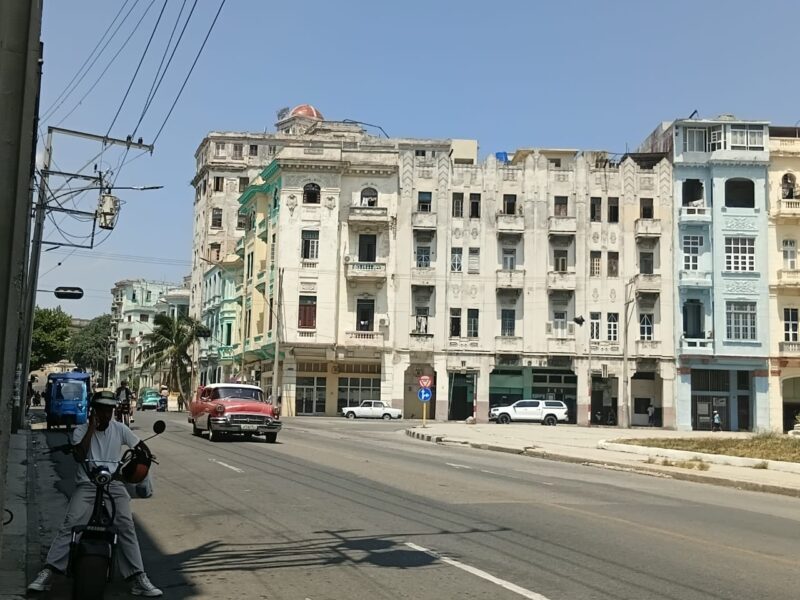
HAVANA TIMES – On a corner at Infanta and San Lazaro in Havana stands a closed door that, for years, was meant to open many others.
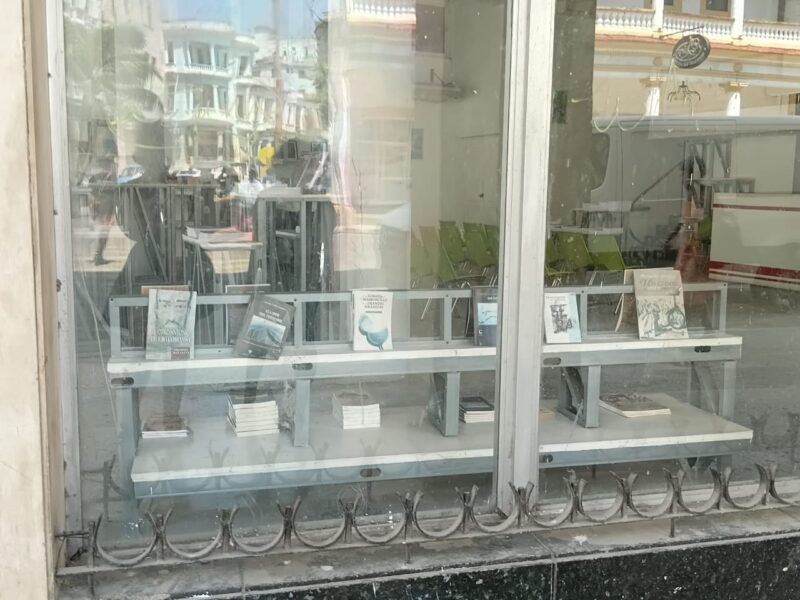
Behind the windows of the Alma Mater Bookstore, a few books can still be seen resting on the shelves. There aren’t many. Dust has settled over the surfaces and over the silence that has gradually taken over a place once meant for movement.
A bookstore is not measured solely by the number of books it holds. Its true life unfolds when someone walks in, searches for a title, talks about a book they have read, or discovers one they never knew they needed.
Today, at Alma Mater, the books remain.
What is missing is everything that once surrounded them.
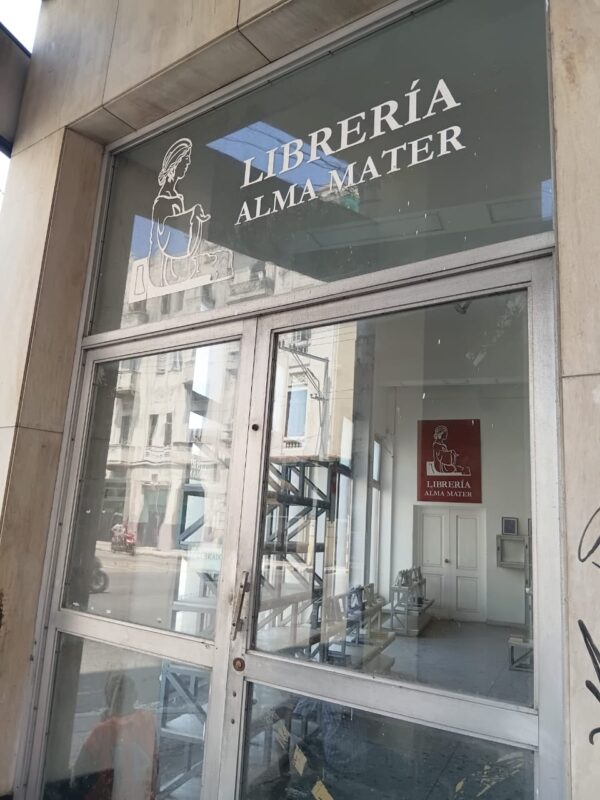
The bookstore’s name is no coincidence. Alma Mater is also a way of referring to the university—the institution that nurtures, imparts knowledge, and helps shape generations. That is why it is especially striking to see this space frozen in time, one so closely tied to the circulation of ideas and learning.
For years, the bookstore was closely connected to university life and to the promotion of academic and cultural publications. Its relationship with Editorial UH (Havana University) made it a gathering place for those seeking books on research, literature, and critical thought.
Yet its own history seems to preserve more traces of its interruptions than of its beginnings. It is easier to determine when it closed and when it reopened than the exact moment it first became part of the city’s landscape.
In 2013, it reopened after being closed for about a decade. The reopening was presented as the recovery of a cultural space intended to reconnect readers with books.
In 2021, it was forced to close again because of structural problems with the building. After repairs, it reopened once more in 2022.
But restoring a doorway does not always mean restoring everything that once happened behind it.
Today, what remains are a few books, silent shelves, and a fine layer of dust that seems to measure the passage of time. The scene speaks not only of a closed bookstore; it speaks of an encounter that no longer takes place.
Books can wait for years on a shelf, but their true destination lies elsewhere: in the hands of someone who opens them, in the conversations they begin, in the ideas they inspire.
Perhaps that is the question still hanging over the Alma Mater bookstore: what happens when a place created to nourish curiosity becomes a place where questions themselves are left waiting?
Meanwhile, on the corner of Infanta and San Lazaro, the books are still there.
Not as forgotten objects, but as an interrupted conversation.