
Curitiba’s Harsh Climate and Those Who Live on the Streets
HAVANA TIMES – In Curitiba, approximately 4,500 people are living on the streets. The vast majority are working-age men.
They are concentrated in the city center and, according to the Unified Registry (Cadastro Único), more than 80% of those surveyed identify unemployment and family problems as the main reasons that led them to the streets.
No one talks about drugs, but they are there, and they are one of the main causes, if not the main one. Drugs can be the origin of the situation, or an intermediate step between a troubled life and escaping through substance use.
The figures I mentioned place the capital of Paraná, despite its high standard of living, among the ten cities in the country with the largest number of people living on the streets.
In Cuba, the government used to say there were no “beggars.” They said it during the first 30 years of that experimental monstrosity called the “Revolution,” and for a long time we believed them despite the evidence to the contrary.
They said it to bolster the supposed superiority of socialism, until that “superiority” became so inflated that it blew up in their faces.
Here there is no totalitarian system trying to cover up reality. There are simply political campaigns, and during those campaigns there are handouts for the people. Afterward, everything goes back to normal.
But getting back to the moradores de rua — those “street dwellers” whom I point out to my six-year-old daughter so she knows “what you shouldn’t do because you could end up like them.”
I don’t buy the unemployment story. There are plenty of jobs in this city. There are more jobs than people willing to work. The problem is that they pay very little, and Brazilians find it hard to devote 44 hours a week to earning 1,600 reals (around 300 USD) when more than half of that goes toward rent.
And drugs are gostosas — pleasurable — because at first they come with parties and sex, but later they take those things away, along with much more. I’m not here to judge, nor do I claim to have all the answers, but I am here to tell the truth.
An immigrant is the most vulnerable person in this society, and everyone who wants to work finds a job. Anyone who comes from a worse reality, like Cubans and Venezuelans, learns to appreciate what they have. Those who don’t end up on the streets.
I see them when I go to work. Some wear good clothes because they are only beginning to get into drug use; others are the ones selling the drugs, but most are already physically and mentally destroyed. You can barely understand what they are saying because they have already reached a point of no return.
Over time, I have come to recognize certain faces. Faces that one day I suddenly stop seeing, and I already know why. I feel sorry, then keep pedaling to work.
When I return, tired after a long day’s work, I see them lying beneath makeshift tents, at the foot of a tree, leaning against a wall, or developing techniques for asking for money outside private businesses.
At times, I envy their carefree attitude a little. That lack of ties and responsibilities. At times, that life seems easy.
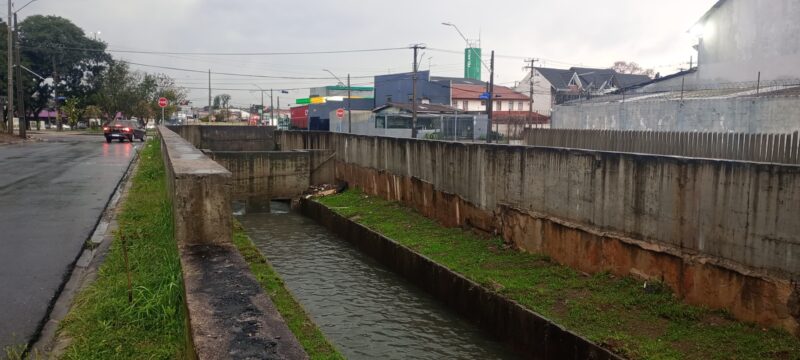
Curitiba, however, is a wet and cold city. It has a long, six-month winter, and that makes living on the streets much harder. Most hiding places flood. There aren’t many covered entryways like there are in Cuba.
At first, I wondered: Where do they shelter from the rain? I worried about them. But they have developed their own techniques for this as well. They take shelter under bridges. Some have carts for collecting recyclable materials that have been adapted so they can sleep in them and shelter from the rain.
Others simply reinforce their makeshift shelters beneath the trees and remain there until the Federal Police come to drive them away. They take refuge in supermarkets, gas stations, under pharmacy awnings, or wherever the storm happens to catch them.
Curitiba has the advantage of being a city with greater purchasing power than much of Brazil. That may make it easier to receive handouts, whether money or food, but its climate turns the experience of living on the streets into a small hell. Even so, I had never seen so many people living their lives out in the open.
Read more from the diary of Osmel Almaguer aquí en Havana Times.