
Dumping Grounds for Memories
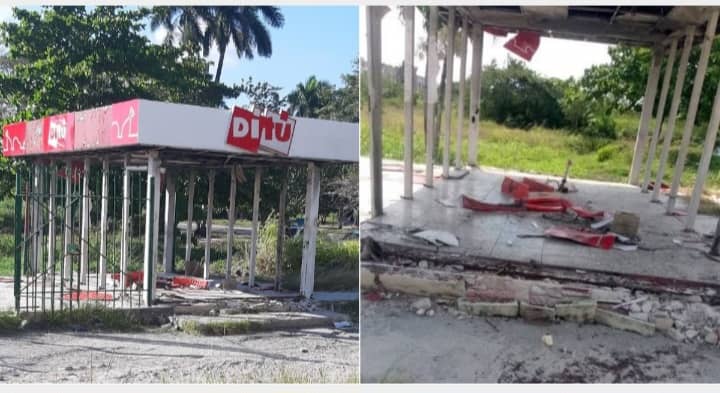
HAVANA TIMES – There are places in Havana that don’t disappear overnight. First they lose their shine, then their color; later, they cease to serve the purpose for which they were built. Finally, someone begins dumping anything there: a piece of rubble, a bag of garbage, a broken door, or any object that needs to be removed from somewhere else.
That is how Havana’s ruins begin. They are not always old buildings or mansions that once belonged to wealthy families. Sometimes they are much more modest spaces. Places that, for a time, were important simply because you could eat a pizza there, have a soft drink, buy a sandwich, or sit and talk.
Many Cubans will remember the famous Rápidos and Di Tú, which were among the fast-food chains that appeared and expanded in the 1990s, amid the economic transformation of the Special Period crisis. A study on the inequalities of that era specifically mentions these establishments, as well as Di Mar, Pizza Dinos, Doña Yuya, and Doña Nelly, as chains that broadened the options for affordable food.
They appeared in a Havana, and a country, struggling to survive the 1990s. A Havana where even a hamburger could become a small event; where not everyone had access to the restaurants that were beginning to offer their services in hard currency, and a simple soft drink, pizza, or sandwich could seem like a luxury. That is why those establishments became so popular.
They were not large restaurants, nor did they pretend to be. They were something else: places within reach of many people, places to stop in passing that eventually became meeting points. For years, they were part of the urban landscape. People incorporated them into their routines, their dates, their conversations, and their small celebrations. Some stayed because these were convenient places to meet. Others stopped for a break. Many came because they were hungry and ended up staying for the company.
For me, the Rapido at 23rd and 14th has a special significance, and today it is difficult to look at it without a certain sadness. You can pass by a deteriorated place and simply think that it is run-down. But when something from your own life happened there, your perception changes. For me, this Rapido was a meeting place. I often waited there for a friend.
I don’t remember all our conversations. I probably don’t remember exactly what coffee we drank, how much it cost, or how long we sat there. Memory is fickle: it erases details that once seemed important and instead preserves a light, a street corner, a feeling.
I remember waiting for her, and I remember the view. That corner looked different then. Or perhaps it was I who saw it differently. It may also be that both are true. Havana changes, but we change along with it, and often we don’t know which of those two transformations hurts us more.
My friend no longer lives in Cuba, so when I look at that place, I don’t see only a deteriorating business. I also see two women sitting there, drinking coffee and talking about anything and everything while the city carried on outside. It is strange how memory works. You think you are preserving an afternoon and, without realizing it, you are preserving an entire era.
Today, many of those places seem to have been abandoned by the city that once made them necessary. Some have lost their colors. Others remain closed. In some, practically nothing remains of what they once were. And where people once waited for a hamburger or a pizza, there may now be piles of rubble.
As if the city, too, had its dumping grounds for memories.
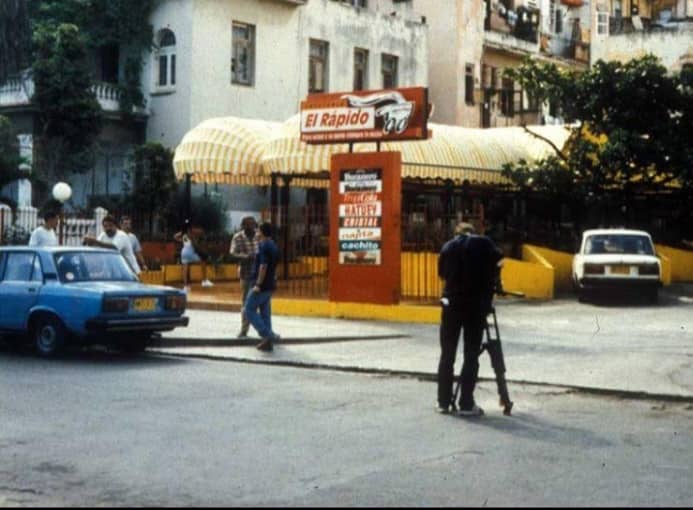
The saddest thing is not that a Rapido closes. Cities change. Businesses disappear. Generations find other places to gather. What is sad is the way we allow certain places to die. Without saying goodbye. Without even acknowledging that they were once important.
Perhaps that is why it is so difficult for me to look at the one at 23rd and 14th, because I know that it is not only a cafeteria that has deteriorated. A part of my memory has deteriorated with it.
And even if I could sit again on that same corner, looking at the same view, order a coffee, and wait for my friend, I know something would be missing. Her, the Havana of those days, and the woman I was then.
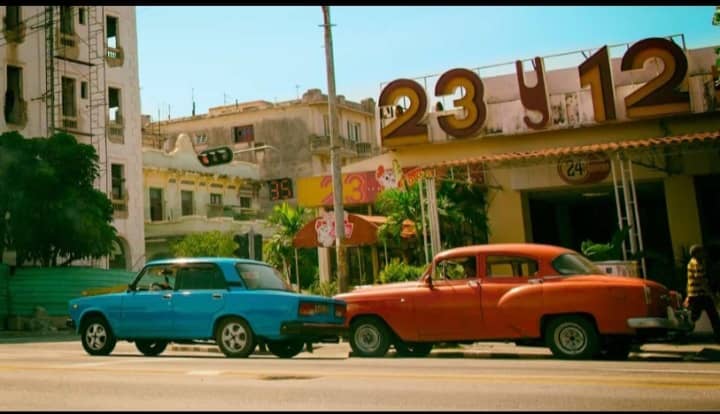
Perhaps that is why some places make us sad, even though they were never beautiful. Because we are not mourning their walls. We are mourning who we ceased to be while they were still standing.
SO SAD SO SAD