
Havana: The City That Became an Improvised Office
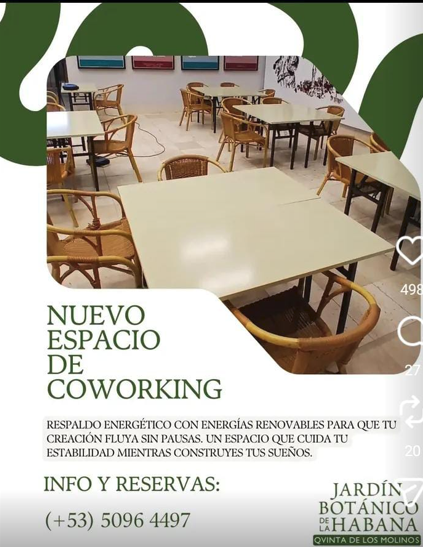
HAVANA TIMES – It is ten in the morning, and the sun is already scorching the sidewalks of Central Havana. On the fifth floor of a building with no elevator, Yamilka opens her laptop with a mechanical gesture. The battery reads 67 percent. Enough, she thinks, if the power doesn’t go out before noon.
Behind her, life in the house goes on. A pressure cooker whistles in the kitchen. Someone argues over the bathroom. The neighbor’s dog barks for no apparent reason. She needs quiet for a Zoom meeting with a client in Barcelona. She won’t get it. But she has learned to work with background noise, like so many others in this city.
Yamilka is part of a generation that earns dollars from an island where the average monthly salary is less than thirty dollars. Programmers, designers, writers, virtual assistants. Professionals who have found in platforms such as Upwork or Freelancer a gateway to the global market.
The problem is that the home, in Havana, can no longer handle it.
To understand the phenomenon: coworking refers to a shared workspace where different professionals rent a desk to work independently but in a communal environment. A freelancer is a professional who provides services to various clients without a permanent contract, a form of work that has grown in Cuba as a way to earn income in foreign currency.
When Home Stops Being a Refuge
Until not long ago, the word “coworking” sounded like something from another world. An English term that evoked San Francisco or Berlin but never quite fit in a city where, for most people, work still meant a government office or self-employment in the living room at home.
That is changing. And fast.
Remote work arrived on the island propelled by the pandemic, and it stayed. Not because it was fashionable, but out of necessity. For many, it is the only way to earn foreign currency without having to emigrate. But the country’s homes were not prepared for it. The housing shortage turns every corner into a multipurpose space: the living room becomes an office, the bedroom a recording studio, and the kitchen, at times, an improvised conference room.
When the blackout comes—and in 2026, it comes frequently—everything stops. Yamilka has learned to read the signs: if she sees clouds, she knows the wind may bring power outages; if the temperature rises, hotel air conditioners overload the grid. Every day is a gamble.
The Improvised Geography of Work
Faced with a shortage of affordable spaces, many have turned to public libraries. There, amid the smell of aging paper and the creaking of wooden chairs, they find something no luxury space can sell: silence. But these places have limited hours and cannot always guarantee an available electrical outlet.
Some can afford the luxury of going to a café. Not just any café, but one of those that have proliferated in Old Havana, with pastel-colored walls and stable Wi-Fi. They order a café con leche. It costs two dollars. As they wait, they do the calculation in their heads: that coffee is three days’ worth of breakfast for a family member. They feel a knot in their throat but force themselves to think of it as an investment.
At the next table, a German digital nomad types with one hand while holding a smoothie in the other. He does not look at the price. The distance between them—sitting at neighboring tables yet inhabiting two completely different worlds—is the perfect snapshot of the divide running through Havana’s coworking phenomenon.
Spaces Trying to Meet the Need
Despite the difficulties, alternatives are beginning to emerge.
At 115 Galiano Street, a building renovated with funding from Italian development cooperation has become a hub for collaborative work. There, a café offers tables, Wi-Fi, and an environment designed to connect entrepreneurs. The employees are young people from the Colón neighborhood. The menu combines Cuban coffee with Italian dishes.
In another part of the city, a collective of young people has renovated an old space and turned it into a place for exchanging knowledge. There is no charge, but people contribute whatever they can: a cable, a mouse, or simply companionship. It is makeshift, the roof leaks, and the router looks as though it dates from their parents’ generation, but the atmosphere is one of cooperation.
At the other end of the spectrum are paid spaces. According to guides for digital nomads, renting a desk in a Havana coworking space can cost between $100 and $200 a month. That figure is beyond the reach of the average Cuban, but for a freelancer paid in euros or dollars, it may make sense.
A Phenomenon That Can No Longer Be Ignored
Coworking in Havana is not a passing fad. It is a symptom of a deeper transformation: the way Cubans earn a living is changing, while physical spaces have yet to fully adapt.
The legal framework is evolving. In August 2026, a decree took effect, updating the list of activities not authorized for the private sector. There are currently thousands of self-employment licenses in the country. Remote work has also begun to receive its own regulations, representing a step forward in its formalization.
But the fine print and practical implementation are still taking shape. Digital infrastructure remains uneven: Vedado has the best connectivity, while in Old Havana, photogenic terraces are more important than bandwidth.
And the freelancer profile is as diverse as the city itself. There are experienced programmers earning substantial sums from international projects, as well as young people starting out with basic writing assignments for ten dollars an hour. What unites them is the search for a place where they can work without interruptions.
Yamilka’s Respite
A few months ago, someone in a WhatsApp group shared the location of a community space where people could work for free. Yamilka arrived early with her laptop and thermos of water. She found a table near an electrical outlet. For four hours, she was able to concentrate without interruptions. Someone offered her coffee. Someone else asked for her help with a design. She felt part of something bigger.
That feeling—not being alone in the struggle—is perhaps the most valuable thing these spaces offer. Not just a table and an electrical outlet. A community as well.
At the end of the afternoon, as she packed away her laptop, Yamilka realized she had not thought about the blackout or the noise at home for hours. That small victory, so ordinary yet so meaningful, was the real luxury.
The Future Is Already Here
Havana is undergoing a quiet but profound transformation in the way people think about work. Coworking, which five years ago was a rarity, is beginning to become a real alternative. Not for everyone, but for a growing segment of the population.
The challenge, as always in this city, will be to ensure that this alternative is not a privilege, but a possibility. That a young person starting out in data entry can have access to a decent workspace without having to pay the equivalent of three months’ salary.
Meanwhile, in renovated cafés, dusty libraries, and makeshift spaces on front porches, thousands of Havana residents continue searching for a corner of their own where they can work.
The battle for workspace in Havana has only just begun. And like almost everything in this city, it is fought day by day, with ingenuity, patience, and the certainty that, although the blackout always comes, community can be the best power source.
Read more from the diary of Safie M. Gonzalez here on Havana Times.