
Having Another Child as Cuban Migrants in Brazil?
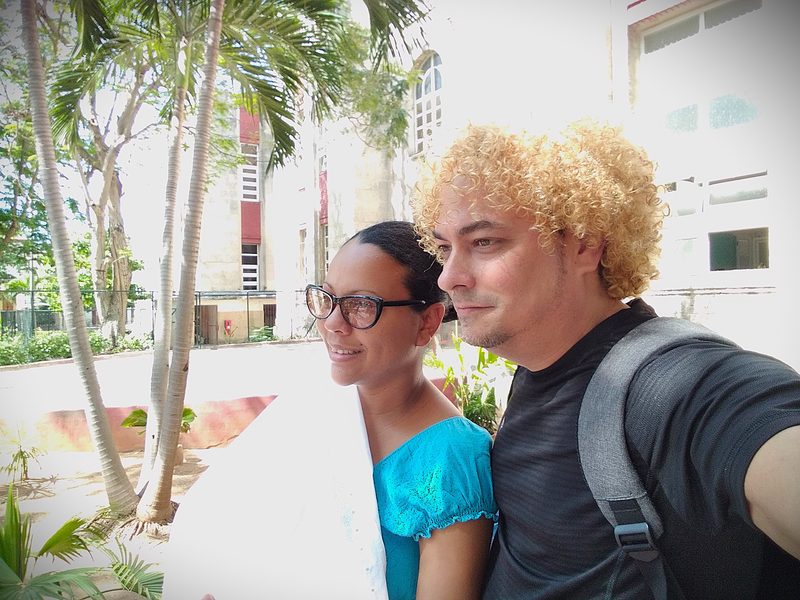
HAVANA TIMES – When someone asks us whether we want to have another child, the short answer is “yes, but no.” Yes, because we would love to, because we wouldn’t like to end up being a small family, and because it would be good for our daughter to grow up with a sibling in a foreign country. And no, because my wife refuses to go through the experience of childbirth again.
Our daughter was born in Havana, at the America Arias Hospital (better known as Maternidad de Linea), amid the upheaval caused by the arrival of the coronavirus.
“I felt very mistreated during labor. I think they were extremely inconsiderate toward me given the situation I was facing,” she says. “I have a flat pelvis (platypelloid), a condition that generally results in a C-section, but the doctors insisted that the baby could fit through the birth canal.”
When my wife recalls that moment, her face darkens. She spent several hours in the delivery room. The obstetrician left her alone for so long that another doctor, who was already on his way out, saw her abandoned on the stretcher and suggested that she squat to help the baby descend.
“That really helped because, fortunately, after taking some X-rays, they confirmed that the baby was small enough to pass through the birth canal and was in the only position in which she could be born naturally with that condition. But she still had to descend,” she explains.
“She finally descended, but she still wouldn’t come out. They told me I didn’t know how to push. They wondered how it was possible that a woman my size couldn’t manage to give birth, and they compared me to the gynecologist herself, who was short and had given birth to a 10-pound baby.”
The humiliation soon turned into physical aggression: “They climbed on top of my belly and pressed down with their forearms, first the woman and then the man. I felt like I was going to burst. It was one of the worst moments of my life.”
The use of the Kristeller maneuver is strictly prohibited in most countries because of the serious risks it poses. The World Health Organization classifies it as a form of obstetric violence, as it can cause uterine rupture and head trauma in the baby.
In the case of pregnant women with a flat pelvis, the danger increases critically. The pressure threatens to crush the baby against the rigid bone, exponentially increasing the risk of fetal death or uterine rupture.
In the end, our daughter was born with the help of forceps, a practice that, although still accepted by the scientific community as a measure of last resort in extreme emergencies, is not recommended in the presence of a platypelloid pelvis, with an emergency C-section being the only recommended option in such a case.
“I remember the doctor who was helping examined me again and spoke quietly to the other doctor, but I managed to hear him: ‘This can’t go on any longer. The cord is wrapped around her.’ They quickly took me to another room, where they finally prepared to deliver the baby, confirming that forceps would be used.”
“The baby had defecated,” she recalls, running her hand over her head. “They tied my legs down. Later, talking with other mothers, I discovered that none of them had undergone that procedure.”
On the card where they record the duration of labor and any complications, they did not report the use of forceps and reduced the length of the labor to just five hours.
As a father, I didn’t exactly have a great experience either. The conditions while waiting for my daughter to be born were terrible. I sat on a hard, slippery metal chair for nearly 24 hours, eating extremely expensive, poor-quality food from the privately run cafeterias nearby, with virtually no right to accompany my family at such an important moment.
They wouldn’t let me go up to the delivery ward or even wait in the lobby. They wouldn’t even allow me onto the same floor.
After she was born, managing to spend time with my daughter was an ordeal. They make you feel as though your family doesn’t belong to you, but to them. As though you were an impostor there rather than a vital part of the birth.
Even so, my wife’s experience was much worse, and I understand her. I never insist that she should overcome her fear. I never tell her that we now live in a country where people aren’t mistreated, where inaccuracies and mistakes may occur, but where labor and childbirth do not turn into an assault on someone’s life.
Cuba 30 years ago had much better health care than today. The total lack of resources and terrible pay for health care workers is so bad now . Only if Cuban people get international help and a change in gov leadership and making deals with countries like Canada and Holland and some Asian countries can it become safe again