
My Little Privileges
HAVANA TIMES – I am 54 years old and a telecommunications engineer. Unfortunately, a little over three years ago, an oncohematological illness—which I will talk about in future diary entries—led to my retirement at just 51, at a time when I was feeling better than ever professionally. I was involved in the development of some very interesting projects that helped me grow considerably as an engineer and, of course, as a person as well.
Now, three years later, because of the progression of the illness, my mobility is quite limited. I can barely leave the house and can only go a few blocks. To help me survive amid the dystopian adversity that we Cubans are living through, I give private classes on various computer programming topics to university students. But what really sustains me materially is the help I receive from my cousins and aunts who live in South Florida.. If it were not for them, and for the care my mother gives me, I don’t think I would still be alive.
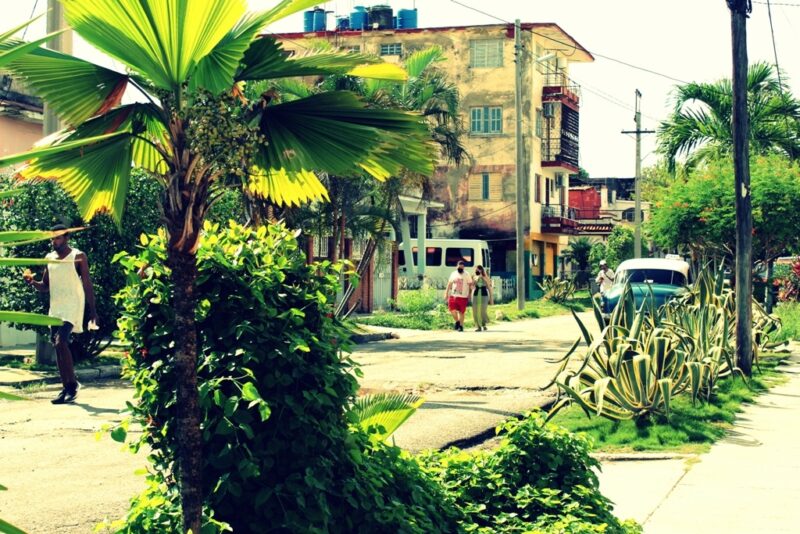
I want to tell you about the little “privileges” I enjoy. I live in Havana, specifically in the Sevillano neighborhood in the southern part of the city, on an electrical circuit where we have the privilege of receiving electricity between six and nine hours a day. Quite a “privilege” in a city where some circuits go without power for more than 24 hours, sometimes as long as 30 consecutive hours, and when service is finally restored, they get electricity for only five or six hours at most.
So having nine hours of electricity a day is indeed a “privilege.” Another privilege I enjoy is what we call piped gas, which fortunately is fairly reliable. Meanwhile, hundreds of thousands of people who, under normal circumstances, cooked with electricity or bottled gas now must use all their imagination and creativity to cook with charcoal, firewood, or God knows what. We don’t have that problem.
As for water, another basic service indispensable to life, in my area it comes approximately every four days. “We are privileged,” since in other parts of the city people sometimes go nine or ten days without water.
I can also say that when the water has not arrived by the fourth or fifth day, the neighborhood delegate arranges for a water tanker truck so residents can at least get a little water into their cisterns. Since the tanker does not carry enough water to meet everyone’s needs, fights and arguments break out among neighbors and those distributing the water. Crises sometimes bring out the worst in people. Nevertheless, because everyone knows that I am ill, none of my neighbors object to having my cistern filled and my home given priority.
As you can see, dear reader, amid the extremely difficult, traumatic, and dystopian situation we have been forced to live through, my mother and I can consider ourselves “privileged.” In future diary entries, I will continue writing about how we are managing to survive.
Read more from Ernesto González Díaz’s diary here at Havana Times.