
The Unimaginable List of Those Who Said Yes
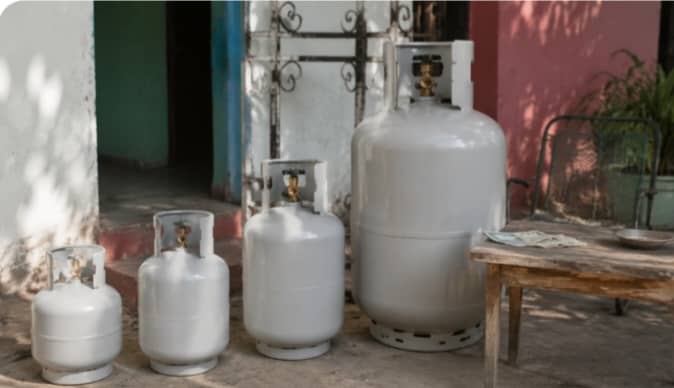
HAVANA TIMES – There are things you never imagined you would have to buy in dollars, such as a cylinder of cooking gas. For a long time, that was simply what it was: a gas cylinder. A tank that arrived at your home, was connected to the stove, and allowed you to cook rice and beans and make your morning coffee. No one wondered how much it actually cost to produce, how far it had traveled before reaching the local store, or what currency had been needed to obtain it. It was fuel, plain and simple.
Now we have to think about it differently. A few days ago, at a workplace in Havana, one of the managers had an idea that seemed reasonable: offer employees a 10-kilogram gas cylinder for $20.85 (USD).
It does not appear to have been a figure chosen at random, nor is it a small amount. “Twenty dollars and eighty-five cents.” For someone paid a monthly salary in Cuban pesos (far less than the price of the gas cylinder) that is not money you casually pull out of your pocket. It is money you have to find, save, exchange, borrow or, in many cases, come up with by going without something else.
Perhaps that is why those who made the offer expected few people to be interested. Maybe they imagined a list with five names… ten… twenty. But the list began to grow and kept growing until it reached approximately 600 workers. No more and no less than six hundred said yes.
They did not hand over the money. No payment has been made yet. Nor was a date set for receiving the cylinders. They simply put down their names. They said they were interested. That, if the time came, they would try to come up with the $20.85.
And then the situation took on a different meaning. The problem no longer seemed to lie with the workers. The company had miscalculated. It had assumed that the price would be a barrier. What it had failed to calculate was the magnitude of the need. Because perhaps a gas cylinder is no longer being bought simply for cooking. It is being bought so people can cook when there is no electricity—which, in our Cuba, is most of the time.
So they can put a pot on the stove when the power goes out for hours and the food cannot wait as long as people can. In a Cuban household, the question is no longer simply, “How much does it cost?” Now it is also, “What do I do if I don’t have it?”
And when the options begin disappearing one after another, price takes on a different meaning. The cylinder being offered to these workers for $20.85 is also the same type that was already being sold to the general public for around $29.
The difference may seem significant, but something stands out. If the retail price was around $29, how much does that cylinder actually cost before it reaches the consumer?
That is a question for which we have no answer. We do not know exactly how much the company pays for each cylinder. We do not know its profit margin or what costs are involved in the operation. But we do know something much simpler: $20.85 is still $20.85.
And even so, around 600 people said they would pay it. That is the part of the story that should concern us most. Not that six hundred workers may have that amount of money available, but that they are willing to find it. Because that says far more about the situation of a Cuban family than any statistic could.
It tells us that there are people willing to sacrifice other things for a cylinder of gas; that perhaps the money already had another purpose. That someone will probably have to choose between one necessity and another. That somewhere, someone has a few dollars tucked away for an emergency and, suddenly, the emergency will take the form of a gas cylinder.
The curious thing is that the company may have thought it was making an offer, but it ended up asking a question: How many people can pay $20.85?
The answer came written on a list of nearly 600 names. And that list may be one of the clearest images of Cuba today. Because when someone has to choose between saving money for transportation, buying food, or obtaining fuel for cooking, any price stops being simply a price and becomes a decision.
One of those decisions made in silence, doing the math at the kitchen table, checking how much is left in your pocket and wondering what can wait until tomorrow. The electricity goes out, gas is scarce, and dollars become indispensable.
Meanwhile, somewhere in a workplace, there is a list with hundreds of names of people who said yes. A list that may have begun with the certainty that almost no one would be able to pay and ended up demonstrating exactly the opposite: that when necessity becomes pressing enough, people find money where there seemed to be none. Even if afterward, they have no idea where they will find the money for the next necessity.
Read more from the diary of Kamil Kenders here on Havana Times.
Young women from 18 to 40 years old are offering to send pictures to men overseas or to what tourists remain in Cuba because their family is desperate for foreign currency. I am not in cuba nor have been in the past 3 years but nonprofit group i talk to tell me that the level of food and medicine and clean water in rural parts of holguin shortage s for people who do not have access to $ is so bad that some people systems are breaking down
I am hearing that married women have offered to date a foreign man should he come to visit so her family can get maybe $50 U S ?