
Inflation Takes Center Stage in Cuba’s Economic Crisis
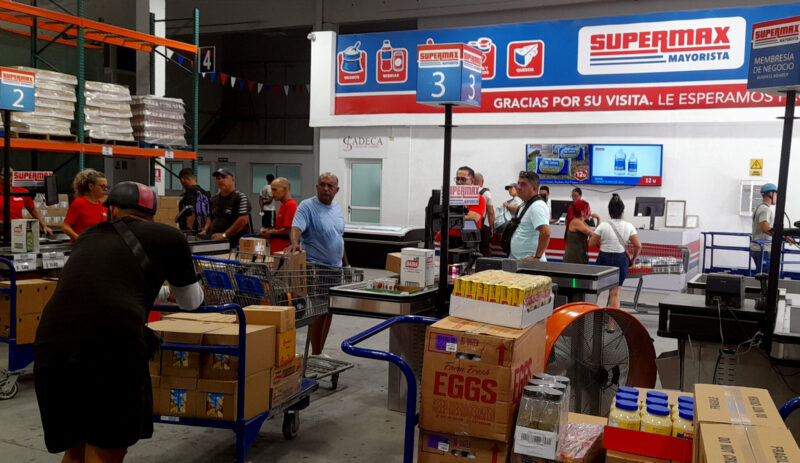
HAVANA TIMES – Inflation in Cuba, which had been slowing in recent years, is now showing a significant resurgence following the US oil blockade and financial sanctions. The cost of living on the island has already increased greatly and is expected to accelerate further toward the end of 2026.
“Food is incredibly expensive: fruits, vegetables, rice, cooking oil, meat—the price of everything just keeps going up and up. I wish I had bought everything earlier,” Jennifer Capote, a 34-year-old cook who works at a private restaurant in Havana, told IPS.
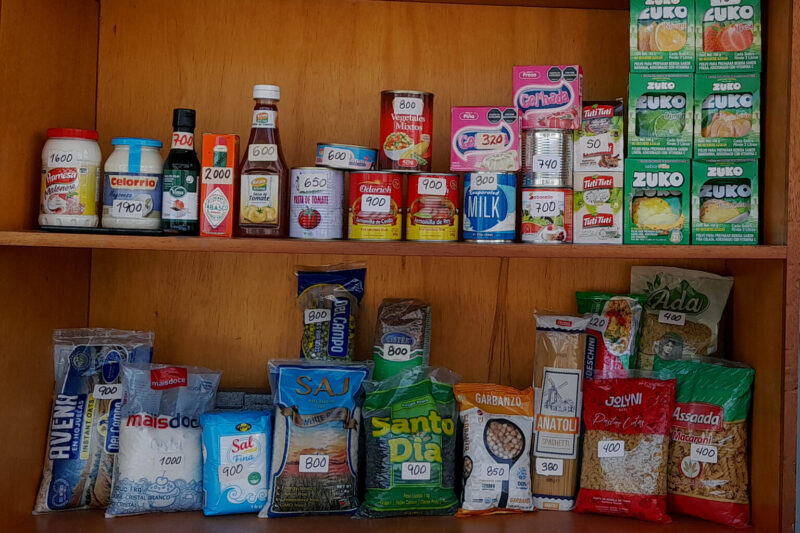
In the capital, the price of essential goods continue to rise week after week. Rice—the main source of carbohydrates in the Cuban diet—has risen by 50% over the past three months, while a liter of sunflower or soybean oil has also doubled in price.
The price of cooking oil and other basic food products had been subject to government price caps since 2024, although in practice vendors routinely ignored the regulations, or simply stopped selling the affected goods.
However, in the second week of June 2026, Cuba’s National Assembly approved a package of 176 economic reforms, essentially embracing an unprecedented level of market-oriented policies within Cuba’s socialist system. As part of this, the former price controls were replaced by regulation via supply and demand.
Carla García, a 43-year-old Havana homemaker, fears that with the shortages of some products seen in recent months, deregulation will trigger excessive price increases.
“I wonder whether removing the price caps will really solve the problem. They say it will in the long run, but what we urgently need is cheaper food now—not in a few months or years,” she told IPS.
Amid recurring blackouts lasting more than 20 hours a day, problems with water supplies, and limited access to basic services such as healthcare, the new surge in prices is making life even harder for Cubans.
“Inflation is one of the most worrisome economic problems for the Cuban population today… The coming months are likely to be marked by inflationary pressures greater than those seen so far in Cuba,”
Cuban economist Ricardo Gonzalez wrote in a recent IPS article: “Inflation in 2026: Is Cuba Entering a New Phase?”
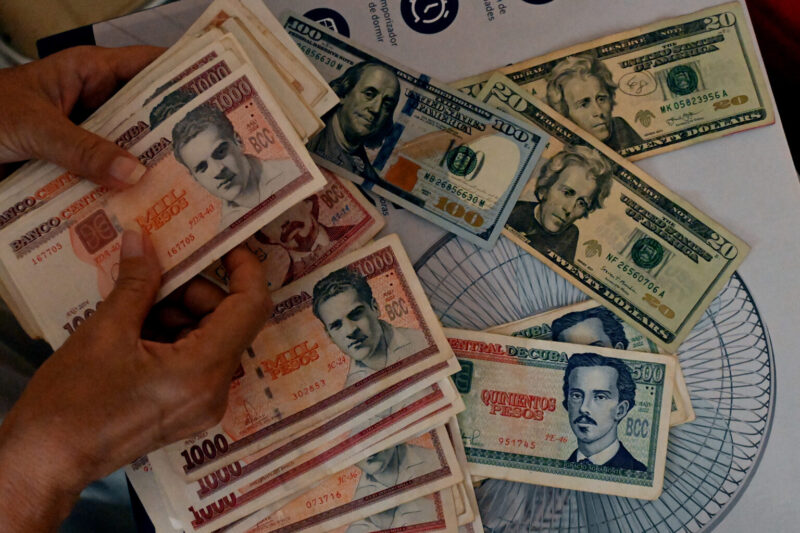
Inflation has reached such alarming levels that the Central Bank of Cuba has introduced two higher- denomination banknotes—2,000 and 5,000 Cuban pesos, worth roughly $3 and $8 respectively—to meet the growing demand for large sums of cash.
Another economist, Omar Everleny Perez, told local media that maintaining an average two-person household in Cuba with basics now costs 61,710 Cuban pesos (about US $95) per month, not including leisure expenses or unforeseen family events. That figure is 36 percent higher than same expert’s estimated cost of living at the beginning of 2025.
It also stands in stark contrast to the average monthly state salary, equivalent to just US $11, while many earn even less. The state sector employs 68.5% of Cuba’s 4.1 million workers, out of a total population of 9.7 million.
Cost of living rising at an ever-faster pace
“Before 2026 even began, Cuba was already an economy with high inflation,” Gonzalez wrote, adding that Cubans have lived in an inflationary economy since January 2021, when a currency and exchange-rate adjustment program known as Monetary Ordering was implemented.
By the end of 2025, the Consumer Price Index (CPI), calculated by Cuba’s National Office of Statistics and Information, reflected price hikes of about 15 percent compared with the previous year. The CPI is the official indicator, but because Cuba has multiple segmented markets and widespread informal pricing, some economists dismiss it or calculate their own inflation estimates. Cuban economist Pavel Vidal, for example, estimated inflation at 70 percent in 2025.
According to Ricardo Gonzalez, inflation in the Caribbean nation is mainly due to “accumulated monetary imbalances, persistent high fiscal deficits, the financial system’s difficulty regaining public trust following the Monetary Ordering, and insufficient reforms that failed to accelerate economic growth.”
Even so, inflation had been slowing since 2021—at least until 2026. Two executive orders signed by US President Donald Trump on January 29 and May 1—aimed at blocking fuel imports and threatening foreign investors, respectively—introduced new factors affecting inflation in Cuba, compounded by uncertainty around a possible US military incursion.
As a result, major shipping companies such as Hapag-Lloyd and CMA CGM suspended operations in May. Visa and MasterCard withdrew from Cuba in June; foreign investors pulled out of tourism, mining, and energy projects; and several international airlines reduced their flight routes.
Fuel shortages have limited transportation and production. Reduced external financing has curtailed imports and increased pressure on Cuba’s foreign exchange market. Difficulties in making international payments have also made commercial operations more expensive, Gonzalez detailed.
“An environment of growing uncertainty tends to influence the decisions of consumers, businesses, and investors. The combination of these factors puts upward pressure on domestic prices,” he added.
According to González, even if the 2026 sanctions had not been imposed, prices would probably have continued to rise, though at a slower pace. His own forecast had projected inflation of 11.8 percent by December 2026 if the conditions prevailing in 2025 had continued.
The most recent CPI figures showed that through May 2026, cumulative inflation had reached 9.16 percent—higher than the 7.45 percent recorded during the same period in 2025, and above Gonzalez’s projected 6.2 percent had the slowing trend from past years continued.
Prices “rose faster than expected,” economist Gonzales confirmed, adding: “some of the inflationary pressures currently affecting the economy have not yet been fully reflected in prices.”
The second half of this year will be crucial.
Signs of Stagflation
Economist Pedro Monreal warned on his blog that Cuba’s gross domestic product could contract by 15 percent in 2026. Combined with the consumer price index increases recorded through May, this “would point to uncontrollable stagflation” [combination of high inflation, stagnant economic growth, and elevated unemployment].
“A short-term macroeconomic stabilization in Cuba—for which reducing inflation is a key indicator—is unfeasible without redesigning the country’s international economic integration, and that requires negotiations with the United States,” he stated.
The economic pressure exerted by the United States in 2026 may not yet have fully impacted inflation.
“This could be only the beginning of a spiral that will become much more evident during the second half of the year,” Gonzalez said.
According to the economist, several causes of inflation are unfolding simultaneously. One is the depreciation of the Cuban peso on the informal market—20 percent between May and June—which will continue to affect domestic prices in the coming months.
At the same time, production and distribution costs have continued rising because of “energy disruptions, logistical difficulties, higher transportation costs, increased financing costs, and restrictions on access to imported inputs.” It may take time before the full impact of these factors is fully reflected in consumer prices.
Meanwhile, experts anticipate “a sharp decline in public revenues and, consequently, a significant widening of the fiscal deficit,” along with “high uncertainty” driven by the possibility of additional US sanctions.
Furthermore, the economic reforms approved by the Cuban parliament in June—largely centered on deregulating prices and costs in the state sector and transitioning toward market mechanisms—could have short-term effects that are “economically and politically destabilizing.”
“Price liberalization processes usually generate significant macroeconomic and distributional tensions during the initial stages of implementation. The magnitude of their impact on inflation will naturally depend on the speed and depth with which the program advances,” Gonzalez concluded.
First published in Spanish by IPS and translated and posted in English by Havana Times.