
Safe & Freely Chosen Motherhood, A Distant Reality in Peru
for thousands of girls
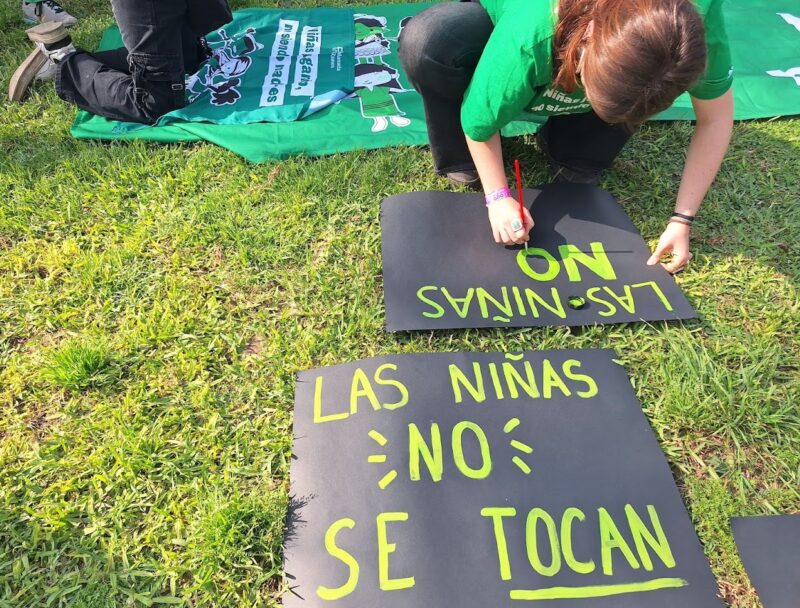
HAVANA TIMES – Pregnancies among girls and adolescents continue in Peru, violating the human rights of this population. So far in 2026, 784 girls under the age of 14 have been forced into motherhood at an age more appropriate for play, and educational development.
According to data from the Peruvian Ministry of Health’s online Live Birth Certificate Registration System, 992 girls of that age gave birth in 2025, and 1,075 in 2024, bringing the total to 2,851 cases over the past two years.
All of these cases are considered the result of rape. Peruvian law protects the sexual integrity of minors up to age 14, safeguarding the right of such children to keep their intimate sphere untouched so as not to interfere with the free development of their personality. Therefore, any sexual act involving them is considered a crime, even when “consent” is alleged.
Last year, 63% of the more than 13,000 reports of sexual violence involved girls and teens.
Victims have the right to receive comprehensive healthcare, access emergency kits that include emergency contraception, and, in cases of pregnancy, receive information about therapeutic abortion, which is legal in Peru. However, these provisions are often not implemented, and girls continue to give birth.
International human rights bodies have urged the Peruvian state to correct this situation. One notable case occurred in 2023, when the United Nations Committee on the Rights of the Child held Peru responsible for violating the rights of “Camila,” a girl from the Amazonian department of Loreto who became pregnant after being raped by her own father.
The request by Camila’s mother to terminate the pregnancy was denied despite the serious state of her daughter’s physical and mental health. At 13 weeks, Camila suffered a miscarriage and was subsequently criminalized. Following international complaints, the Committee urged Peru to decriminalize abortion in all cases involving pregnancies in girls and to guarantee access to safe services.
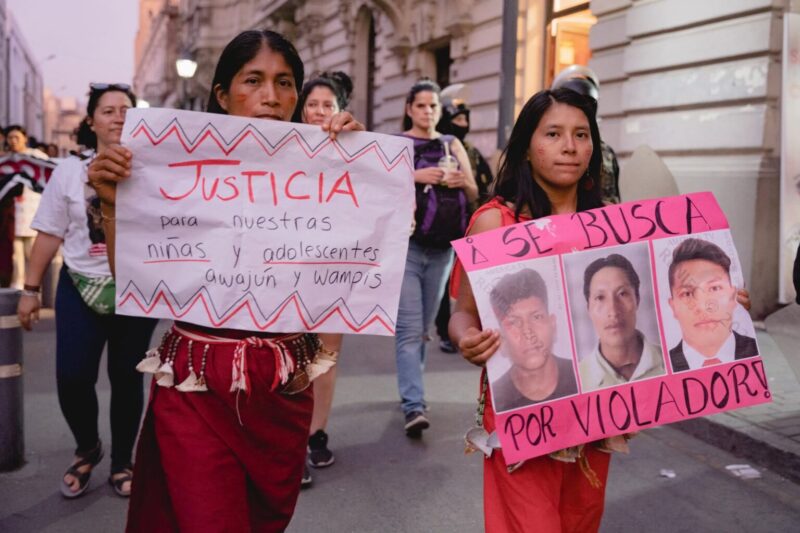
The latest National Health Survey 2025, released on June 19, found that 2.3% of children and adolescents aged 12 to 17 had been pregnant at least once. The figure rises to 7.4% among those aged 15 to 19. The most affected are girls and adolescents living in poverty in rural areas and those from the Amazonian regions.
“The problem is inequality. There are regions like Lima where the prevalence of adolescent pregnancy ranges from 4% – 5%, while in others, such as Amazonas in the country’s northeast, it reaches 18% – 20%,” Guillermo Atencio, a Sexual and Reproductive Health specialist with the United Nations Population Fund (UNFPA) in Peru, told IPS.
He added that the state must implement effective and culturally specific interventions that take into account the characteristics of different populations when addressing broad-based issues such as sexual violence or exposure to illegal economies. To do so, he said, technical teams must advance in their territorial approaches.
Peru is a middle-income country with deep social and gender inequalities. Its population exceeds 34 million people, of which 25%—one in four —live in poverty. In rural areas, the poverty rate rises to 35%.
Atencio, a gyneco-obstetric surgeon with extensive experience in public health and university teaching, highlighted that Peru’s Multisectoral Plan for the Prevention of Adolescent Pregnancy (2012–2021) incorporated sex education, the issue of sexual violence, and the distinction between adolescent and child pregnancy.
However, he noted that this important public policy tool failed to account for territorial and population diversity, as well as structural gender inequalities, and therefore did not include targeted interventions.
“A new plan is underway, and from UNFPA we are proposing that it include a strong territorial component that considers the different vulnerabilities that affect populations in an intersectional manner, in order to achieve more effective interventions,” he explained.
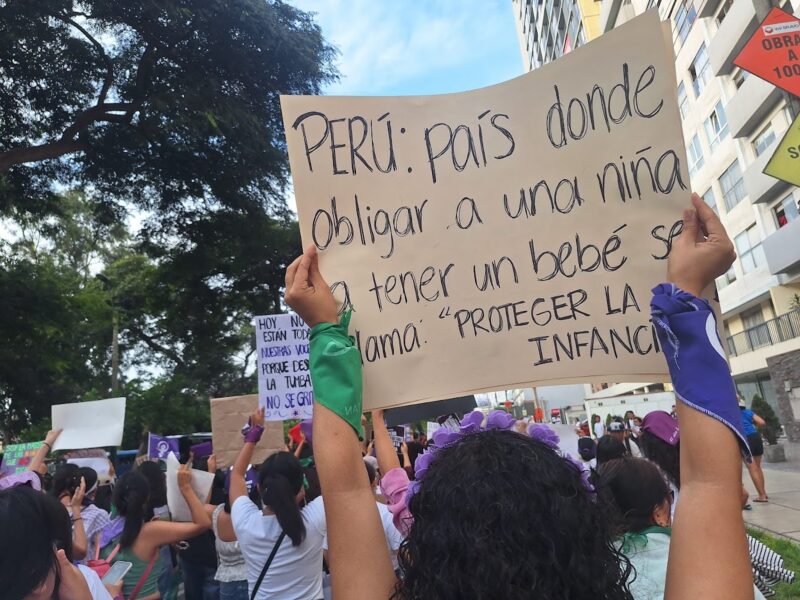
A Latin American Problem
In Peru, the fertility rate fell from 3.5 children per woman aged 15 to 49 in 1996 to 1.7 in 2025. However, this sharp downward trend has not occurred in pregnancies among girls and adolescents, a pattern seen throughout Latin America and the Caribbean, where more than half of the region’s 660 million inhabitants are female and where gender violence and unwanted pregnancies remain widespread.
Currently, the region remains the second highest in the world for adolescent pregnancies, after Africa, due to the lack of comprehensive sex education and socioeconomic inequalities, among other factors, according to data from the Economic Commission for Latin America and the Caribbean (ECLAC).
According to a review of gender indicators for the 2030 Sustainable Development Agenda and the Regional Gender Agenda, published by ECLAC and UN Women in 2025, the adolescent fertility rate stood at 50.6 births per 1,000 women aged 15 to 19.
A study published by the UN Population Fund (UNFPA) estimates that 1.6 million adolescents in the region are mothers, generating an economic impact of US $15.3 billion annually due to lost educational and employment opportunities for women and the healthcare costs borne by governments.
Nicaragua and Honduras exceed the regional average of 50.6, with rates of 93 and 81 respectively, followed by Venezuela with 73; Guatemala, Guyana, and Haiti with 68; Bolivia with 64; Mexico with 59; Colombia with 58; Panama and Belize with 56; Ecuador with 54; El Salvador with 53; the Dominican Republic with 50.
Among countries with moderately high rates are Suriname[s1] (47), Peru (43), and Brazil (41). Countries with lower rates include Jamaica and Trinidad and Tobago (36), Argentina (26), Costa Rica and Uruguay (25), and Chile (6).
“Peru’s rate is lower than that of many countries, but compared to Chile or Argentina, we are doing poorly. As I said, we need to overcome inequality because the most affected are the poorest girls, with less education,” specialist Guillermo Atencio stated.
He added: “We must empower them through sexual education, including knowing how to protect against situations of sexual violence, and promote the use of contraceptive methods among adolescents who become sexually active, encouraging active community participation.”
“In advancing public policy, it is essential to address violence as a structural issue. Previously, the ministry approached it from a mental health perspective, but sexual violence does not occur because there are unbalanced individuals; it occurs because of how society is structured. The response therefore requires social change to reduce tolerance for gender-based violence,” he said.
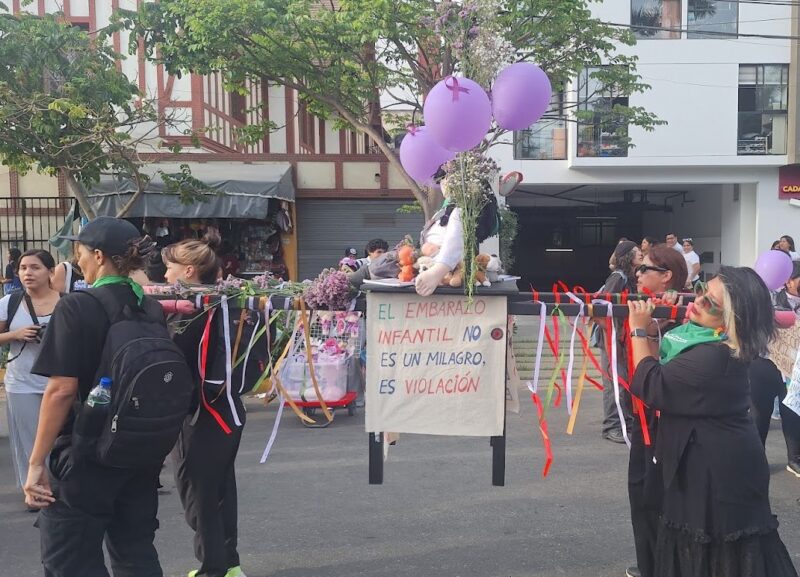
“The Abuses Don’t Stop”
Machismo remains deeply rooted in Peru. The National Survey on Social Relations, published in 2025, found that 56% of men justify sexual violence.
Rosemary Pioc, president of the regional women’s council of the Awajun, Wampis and Umukay Yawy Indigenous communities, spoke with IPS from the province of Condorcanqui in the department of Amazonas, a region known for its rich biodiversity. With a total population of over 430,000, poverty among Indigenous Amazonian communities far exceeds the national average of 25%.
Her organization has been denouncing the systematic sexual abuse of girls and adolescents by teachers from the public educational institutions and the state’s failure to respond. The situation has become so severe that they have had to travel to Lima to demand a Specialized Family Prosecutor capable of handling these complaints.
The victims, Indigenous girls from the Awajún and Wampis peoples, live in student residences during the school year to facilitate access to public education because their communities are remote with a glaring lack of state services.
According to Indigenous women leaders from the group, more than 500 girls have been victims of rape in recent years, and not all perpetrators have been dismissed from their positions.
“Legal proceedings move very slowly, and impunity continues. Meanwhile, the rapes don’t stop; they keep happening. Right now we have 80 pregnant adolescents infected with HIV/AIDS,” Pioc declared. In Amazonas, acceptance of sexual violence reaches 69%.
The Indigenous leader of the Awajún people—one of Peru’s 51 officially recognized Amazonian Indigenous groups—lamented the state’s failure to prioritize the situation of girls and adolescents in Condorcanqui and other provinces of the department.
“There is a great deal of machismo and violence. We accompany victims and raise awareness among families, but many don’t even want to report the crimes because they do not trust the state,” she said.
She added that in her territory, “everything is lacking” given the magnitude of the poverty, malnutrition, and neglect. “This will not end until the perpetrators are captured and punished and justice is done for the girls.
“We will continue fighting,” she resolved.
First published in Spanish by IPS and translated and posted in English by Havana Times.
Read more feature articles here on Havana Times.