
What’s Offered for Children this Summer in Camaguey, Cuba?
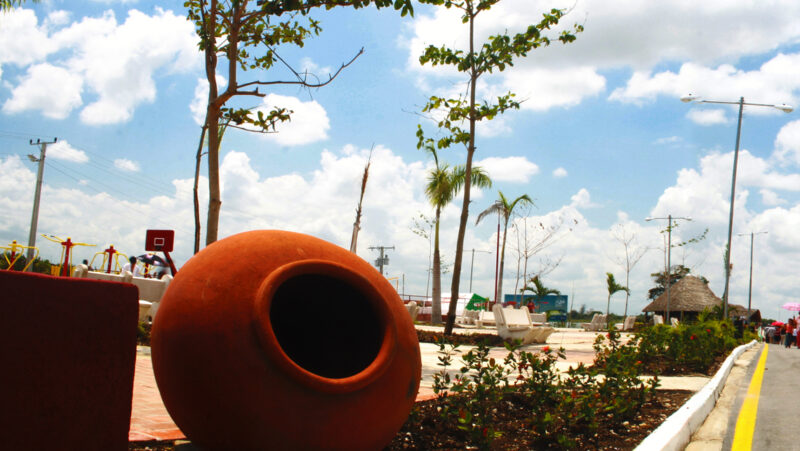
HAVANA TIMES – This third Sunday of July, Cuba will once again celebrate Children’s Day. But whatever festivities do take place will bear little resemblance to those of the past. Unlike the 1970s and 1980s—or even the years before the pandemic—this time there will likely be little more than a few magic shows, clowns, and perhaps some sports exhibitions.
Three recreational activities that Cuban children eagerly look forward to during summer vacation—the beach, swimming pools, and ice cream—are essentially off the table. Beaches are out because there is not enough fuel for transportation; swimming pools because of the shortage of water and chlorine needed to fill them. And ice cream has become a virtually unattainable luxury due to the blackouts and the inability to transport milk from the countryside to processing plants.
“It is very difficult to be a child in Cuba today. With so few alternatives, they don’t even have the chance to watch television the way we did when I was a kid to pass the time. I don’t think even the Special Period of the 1990s crisis was this terrible,” said Michel Otazua, the father of two children who lives in the central province of Ciego de Ávila.
Children’s Day was established by Fidel Castro in 1974, perhaps as an alternative to Three Kings’ Day, celebrated every January 6 on the Catholic calendar. On Three Kings’ Day, children traditionally received gifts as a reward for good behavior during the previous year. But the religious nature of the holiday displeased the communist authorities, who quickly banned it in practice and replaced it with their own celebration. They argued that the new holiday made more sense because it took place during school vacation, when children had more opportunities to enjoy organized festivities.
The nature of Children’s Day was also different. Instead of individual gifts and family celebrations, the emphasis was placed on community activities. For many years, collective birthday parties were common throughout Cuba, and any child could join if they wished. Even toy sales were regulated to ensure that no child went without receiving one.
Hungry and Bored
“I’m bored. I’m hungry. Those are our children’s most common phrases during vacation,” Havana resident Yaima Castro joked a few days ago while commenting on a Facebook post by the digital magazine Cibercuba. The article highlighted the difficult reality Cuba has faced during its summer seasons for years. In 2026, however, the situation reached dramatic extremes.
Even the state newspaper Juventud Rebelde acknowledged as much in a commentary published at the beginning of July that, rather than reflecting on the summer season, read more like an inventory of social problems.
“Vacations now require cooperation and responsibility. This is the time to pay attention to the vulnerable elderly person, the neighbor facing hardship, the young person searching for purpose amid so many shortages, and likewise to ensure our children can enjoy healthy recreation,” the article stated, placing its greatest hopes on the so-called Community Youth Network.
That social activism project appears to be little more than the government’s latest propaganda initiative designed to project concern about the country’s multiple crises. In June, during a meeting with national leaders of the Network, President Miguel Díaz-Canel urged them to “make themselves felt,” without specifying exactly what he meant or what resources they would have to accomplish that.
Good intentions alone, however, make it virtually impossible to solve problems such as shortages of food, medicine, and recreational opportunities, issues that hit children and young people especially hard.
A couple of weeks ago, Yunielkis Naranjo, coordinator of the project Golpe a golpe, a performance group made up of young amateur artists that has spent years bringing shows to the most remote and impoverished communities in Camagüey, lamented that they would not be able to return to those places this summer because of the lack of transportation.
“Current conditions force us to limit our reach to the provincial capital, to neighborhoods we can get to on our own,” he explained.
Many of the communities visited by Golpe a golpe had no other opportunity for entertainment during the summer months.
Neglect, No Matter the Distance
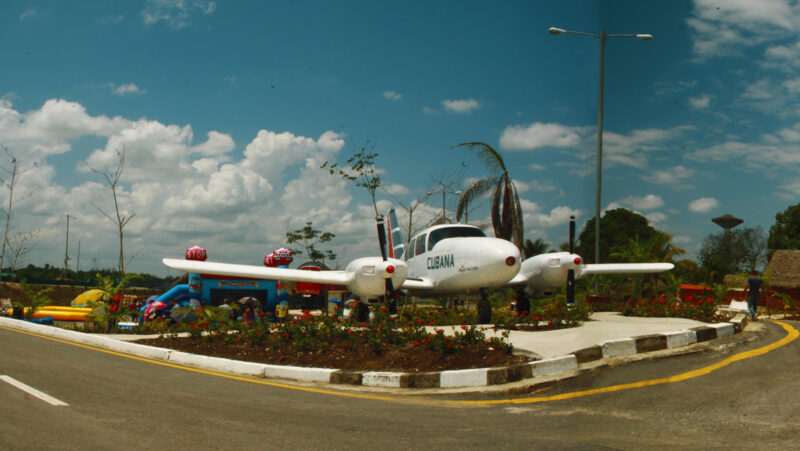
Southeast of the city of Camagüey lies Lago de los Sueños (Lake of Dreams), a recreational complex inaugurated in February 2014 with the goal to become “a privileged recreational space for new generations of Camagüey residents.” That was the promise made by Adelante, the provincial Communist Party newspaper.
Twelve years later, large portions of the reservoir beside which it was built are choked with mud and aquatic plants, while most of its parks and restaurants lie in ruins. The most striking examples are the ice cream parlor and snack bar housed inside an old airplane and a locomotive, both of which are now occupied by families who have improvised homes inside them.
“The Lake of Dreams has become so commercially abandoned that the state Commerce Company has spent quite some time trying to attract private entrepreneurs to take over what’s left of the facilities, but no one has wanted to ‘step into that fire,'” noted one of the few security guards still assigned to the site.
There are only three guards per shift to watch over a complex covering more than five hectares and that should have at least three times as many.
“In its heyday, the Lake of Dreams was always bustling. There were birthday parties and company events during the day, concerts at night. Neighborhood children spent their days playing in the playground and the outdoor fitness park. No one understands how everything was allowed to fall apart when it’s just a stone’s throw from the Montecarlo neighborhood, where so many people need places to relax,” he added.
Nearly 120 kilometers away, Santa Lucía Beach tells a similar story of abandonment.
At what was once one of Cuba’s best-known beach resorts, mountains of sargassum seaweed now block access to many stretches of shoreline. A resident of the neighborhood, established on the grounds of a former youth camp, said that “the government hasn’t bothered to remove it for about a year. They used to come through with a tractor almost every day, but even before the fuel crisis started, the cleanups became less frequent until they stopped altogether. Now anyone who wants to swim has to climb over the sargassum just to reach the water.”
The fuel shortage affects not only beach maintenance but also the arrival of vacationers, who traditionally provided the community’s main source of income during the summer.
According to him, since May he has only managed to rent out for one week the two air-conditioned rooms with private bathrooms that he operates as a vacation rental.
“July is already almost a total loss, and August doesn’t look any better. I can’t imagine what’s going to happen to us. With gasoline costing 3,500 pesos a liter (almost US $5) very few people can afford to drive more than a hundred kilometers to spend a day at the beach,” he said.
His home occupies half of one of the dormitories in the former Pioneer camp, a vacation complex that until the late 2000s hosted thousands of children each year selected for their academic achievements. Children living in orphanages and others with physical or intellectual disabilities also spent one-or-two-week stays there, accompanied by their parents. All expenses were covered by the state.
But beginning in 2009, Raul Castro launched a program of subsidy cuts under the euphemistic label of “eliminating undue gratuities.” Among its earliest casualties were the Pioneer camps and the large-scale Children’s Day celebrations.
More recently, the government announced additional budget cuts, justifying them as necessary to “concentrate resources on defending the achievements of the Revolution”, namely, the already severely deteriorated health care and education systems.
Beyond that, there is very little the country can still offer its children and teenagers. Especially during the summer vacation.