
Seismic Activity Persists in Post-Earthquakes Venezuela
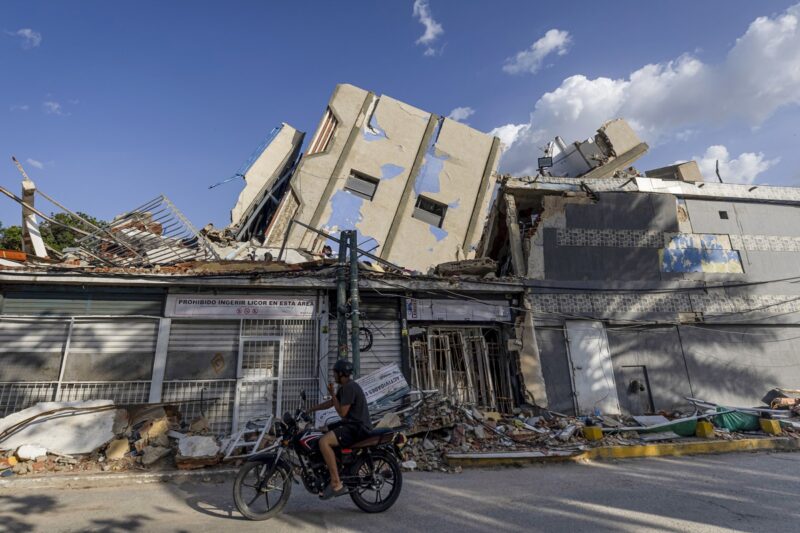
A geology expert says this is normal behavior following a major earthquake.
HAVANA TIMES – Three weeks after the devastating double earthquake that struck Venezuela on June 24, the country continues to experience seismic activity, although it has been dominated mainly by low-magnitude events. Geologist Luiraima Salazar, an engineer graduated from the Central University of Venezuela who has been independently monitoring the phenomenon, published a consolidated report updated through July 16 detailing the evolution of seismic activity across different regions of the country.
According to Salazar’s analysis, based on data from the Fundacion Venezolana de Investigaciones Sismologicas) (FUNVISIS), the Colombian Geological Service (SGC), and other international sources, western Venezuela has experienced magnitude 3.0 earthquakes west of Machiques and magnitude 3.1 earthquakes southeast of Villa del Rosario during the weeks following the major quakes. These events are consistent with the Perija fault system and structures associated with the Maracaibo Block.
Likewise, in the central-western and central regions, earthquakes averaging magnitude 3.0 have occurred near Boca de Aroa, Acarigua, and Maracay. Low-magnitude aftershocks (2.1–2.8) continue around San Felipe, El Tocuyo, Los Teques, Guarenas, La Victoria, La Guaira, and Naiguata.
In eastern Venezuela, notable events include a magnitude 4.4 earthquake on July 13 and a magnitude 4.2 quake near Irapa, along with additional tremors near Macuro, Güiria, Pedernales, and Barcelona. These are associated primarily with the Urica fault system and the complex eastern transpressional zone, including the El Pilar fault and related structures.
The expert noted that these events are part of the seismic sequence following the severe double earthquake of June 24 (with magnitudes of approximately 7.2 and 7.5), triggered by the interaction of faults such as Bocono, Moron, San Sebastian, and others. However, she emphasized that there is no evidence of a continuous rupture and that the activity does not allow scientists to predict a larger earthquake.
“The occurrence of small earthquakes does not allow us to predict a larger one, nor does it mean that all the tectonic energy and stress have been released,” Salazar warned.
In previous reports, the expert stated that more than 1,200 low-magnitude aftershocks have occurred since the June 24 double earthquake.
Recommendations for the Public
The geologist stressed several preventive measures: secure heavy furniture and objects, have structural cracks inspected by specialists, and practice the “Drop, Cover, and Hold On” earthquake safety procedure. She also urged citizens who monitor seismic activity to always verify information with official sources before sharing it, in order to avoid confusion between aftershocks or duplicated reports of the same event.
The initial earthquakes left thousands dead (official figures now exceed 4,000 according to recent updates), tens of thousands injured, and triggered a severe humanitarian crisis with thousands of people displaced. The continuing residual seismic activity has kept authorities and residents on alert, particularly in La Guaira, one of the hardest-hit areas.
Engineer Luiraima Salazar’s report, widely shared on X, has helped keep the public informed with verified technical data during the ongoing emergency. Authorities and agencies such as FUNVISIS continue to monitor the situation.
Sources: Luiraima Salazar seismic report (@lui_regresa), FUNVISIS, USGS, and international media.
First published in Spanish by Efecto Cocuyo and translated and posted in English by Havana Times.