
Can Economic Reform Work in Cuba Without Political Reform?
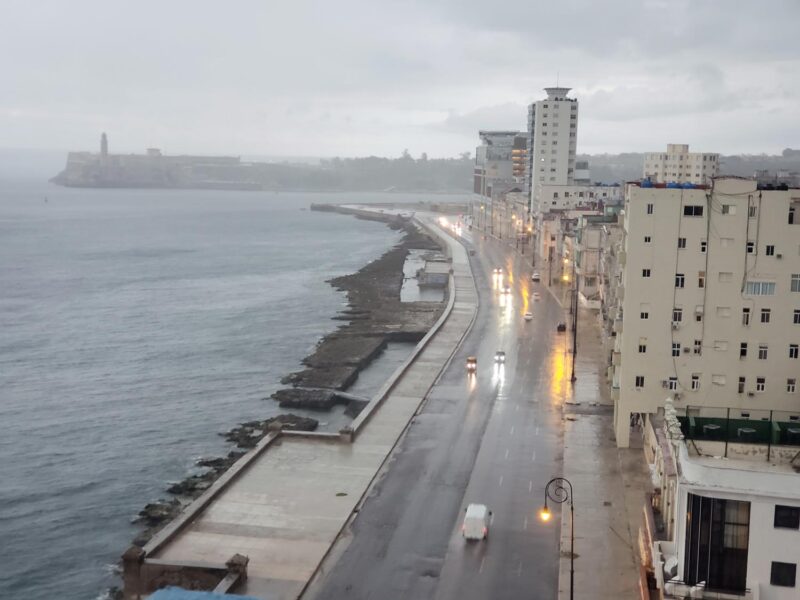
HAVANA TIMES – The Communist Party of Cuba’s Central Committee meeting on June 17, 2026, was significant less for introducing new ideas than for openly consolidating economic reforms that would have been politically unthinkable just a few years ago. Cuba’s fundamental challenge is no longer whether reform is desirable. It is whether meaningful economic reform can endure within a political system structurally designed to constrain it.
For decades, Cuban policy debates rested on a comforting assumption: if the leadership endorsed reform, results would follow. That assumption has weakened. The deeper issue today is not policy intent, but institutional compatibility.
Reform Under Constraint
The measures now under discussion in Havana reflect a belated but crucial acknowledgment of economic reality. Expanding private enterprise, encouraging foreign and diaspora investment, increasing agricultural productivity, and easing regulatory bottlenecks aim to restore basic functionality to an economy plagued by chronic shortages, energy instability, and declining productivity.
Yet these adjustments unfold within an institutional framework that remains largely unchanged. State-owned enterprises and the military-linked conglomerate GAESA still dominate tourism, imports, and foreign exchange—the very sectors reform aims to liberalize. Access to capital, foreign exchange, land, and markets is mediated through administrative discretion rather than transparent, predictable rules.
The result is a familiar pattern: reforms that are partial, reversible, and calibrated to preserve political control—even when doing so limits economic efficiency and dynamism.
Constrained External Environment
Unlike China’s opening in 1978 or Vietnam’s Đổi Mới in 1986, Cuba today operates in a far more constrained external environment. Those earlier reforms benefited from expanding global trade, favorable geopolitical shifts, and broader access to external capital.
Cuba faces tighter structural limits. Traditional partners offer limited, conditional support. Russia is preoccupied elsewhere. China remains engaged but cautious. Latin American governments are focused on their own challenges.
This narrowing space restricts policy experimentation, limits financing, and reduces room for the iterative learning that successful transitions require.
The Diaspora Test
One of Cuba’s most important yet underutilized assets is its diaspora. Millions of Cubans abroad represent not only a source of remittances, but also a channel for investment, skills transfer, and entrepreneurial networks.
Transforming this potential into sustained development depends on trust. Trust requires predictable rules, secure property rights, credible contract enforcement, and policy continuity beyond short-term political cycles.
Without these conditions, diaspora engagement remains fragmented and cautious—focused on remittances and small-scale initiatives rather than large-scale, long-term productive investment. Reform then remains transactional rather than transformative.
Governance, Not Just Growth
The central question is not whether Cuba should shift toward a market-oriented model or preserve its socialist identity. It is whether the current governance structure can accommodate the institutional requirements of a more complex, open economy.
Economic systems are embedded in political frameworks that shape how decisions are made, implemented, and sustained. Expanding private activity while maintaining rigid political control creates inherent tensions: between efficiency and authority, decentralization and centralization, formal rules and informal power.
These tensions rarely produce immediate rupture, but they often generate hybrid outcomes—pockets of growth alongside persistent inefficiencies, cronyism, and public frustration.
An Open Transition
Cuba has reached a point where serious reform is increasingly unavoidable. The erosion of oil inflows from Venezuela, collapsing energy infrastructure, and President Trump’s renewed embargo pressure—amplified by Senator Rubio’s hardline stance—have intensified the urgency of adjustment.
The June 17 Central Committee meeting reflects this recognition. Yet recognition alone does not guarantee success.
The decisive factor is whether the state can recalibrate its relationship with society—shifting from managing scarcity through administrative control toward building confidence through predictability and institutional credibility.
If economic reform remains severed from broader institutional adaptation, short-term stabilization may come at the expense of deeper long-term contradictions. Cuba cannot simply replicate China or Vietnam, nor escape its own institutional legacy.
The real test is whether this moment marks the beginning of a durable transition—or another cycle of partial adjustments within an increasingly narrow window of time.
—–
*Khanh Vu Duc is a professor at the, University of Ottawa, Canada, Faculty of Law
The regime already has people lined up ready to help. John Giotis is already ready to help with education modernization and multiple businesspeople are ready to help the economy.
And all are helping WITHOUT regime changes.
China of the Caribbean is going to be built.
I could not agree more completely with this article and have written about it earlier. The problem goes even deeper. AT the seventh party congress Raul complained about government cadres who were hampering reforms. Years ago one Cuban entrepreneur observed to me that even when the government eliminated some restrictions on business the local authorities issued their own paperwork because if they did not they would have nothing to do. Without major political reform economic reform will be very limited.