
Cuba: When Time Itself Also Makes You Sick
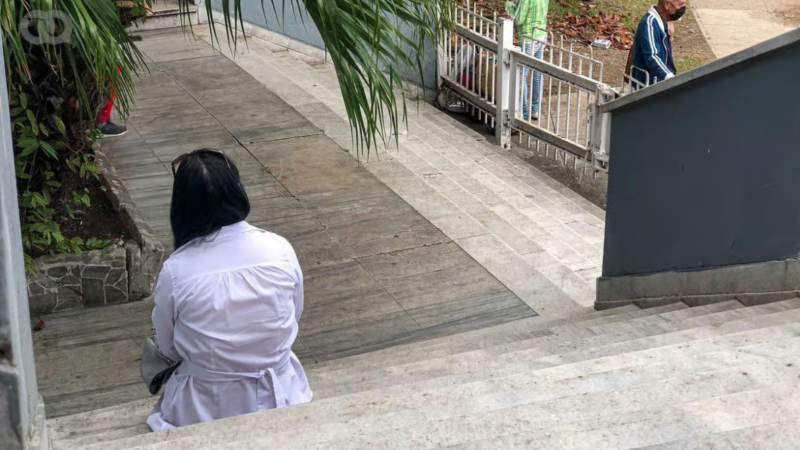
A Cuban family’s testimony from a Havana hospital, facing an illness that does not wait.
HAVANA TIMES – For years, I heard Cuban medicine described as a medical powerhouse. Like many people, I associated that phrase with the training, dedication, and commitment of its professionals.
I never imagined that my family would have to experience the difference between the human capabilities of many healthcare workers and the difficulties of a system in coordinating those capabilities when they are needed most.
I write these lines not as a doctor or a specialist. I write them as a son. As someone who has accompanied his mother through an illness that arrived unexpectedly and forced us to learn, to ask questions, to search for answers and to fight to ensure that what we believed needed to be done was actually done.
My mother is 59 years old. Before this situation, she had no significant medical history, except for a hysterectomy performed approximately 20 years ago. We never imagined that an apparently common symptom could end up being the beginning of such a complex process.
What hurts me most about this entire ordeal is not only the diagnosis. It is the feeling that valuable time was lost that could have been used for timely intervention.
The Beginning: When a Warning Sign Seemed Minor
It all began in early March, when my mother started experiencing bleeding during bowel movements. At first, we associated it with constipation, looking for a simple explanation for something that seemed common.
When we went to the polyclinic, we were instructed to go to Miguel Enriquez Hospital, where there was a Coloproctology clinic. After the initial examination, it was concluded that she had an acute anal fissure. Sitz baths, dietary changes, vegetables, and ointments were prescribed, along with weekly follow-up visits.
For four consecutive Tuesdays, we went to the clinic. The instructions remained practically the same, and there was no improvement.
Meanwhile, my mother began to develop a fear of eating. In her mind, eating solid food meant more pain and more bleeding during bowel movements. Little by little, she reduced her food intake until she was living almost entirely on broth. Within a few weeks, she lost a great deal of weight, and her nutritional condition deteriorated considerably.
During that period, no additional tests were performed to rule out other causes. There was no biopsy or imaging; only continued clinical evaluations and the treatment prescribed for an anal fissure.
When the Illness Showed Another Face
In mid-April, swelling appeared in the groin area. It was diagnosed as an abscess, and treatment with metronidazole was prescribed. After beginning that treatment, my mother experienced a significant worsening during bowel movements, with increased pain and bleeding. When we reported this, we were told that the medication could contribute to constipation.
The situation continued until late May, when a hard lump was detected during a rectal examination at a medical appointment. An attempt was made to take a biopsy sample, but the anal canal was too narrow to perform the procedure properly, so arrangements were made to have it done at another hospital.
On May 27, after an enormous physical effort on my mother’s part, by then she was already so weak and fatigued that she had to stop every few steps to rest, the sample was finally taken. We were told the results would be available in approximately 15 days.
But those days passed. And kept passing.
The Diagnosis Came After a Long Wait
When I began personally investigating what had happened with the results, I discovered that there had been delays in the delivery and analysis of the sample. Finally, the biopsy report, dated July 1, reached my hands on July 9, more than a month after the sample had been taken. The result stated: “Moderately to poorly differentiated squamous cell carcinoma, with no other alterations able to be determined.”
The reality had changed completely. We were no longer dealing with an anal fissure. We were dealing with cancer.
By that time, the disease had progressed: the tumor had infiltrated the vagina, and an abscess had formed in the gluteal area, accompanied by intense pain that barely responded to the available medications.
Hospital Admission: A New Struggle Begins
On Thursday, July 9, we arrived at the hospital. The on-call Surgery team attended to my mother, drained the abscess, and decided to admit her. Intravenous antibiotics were prescribed: metronidazole and Trifamox every eight hours, gentamicin once a day, along with hydration using sodium chloride solution.
During the first few days, the treatment was administered correctly. However, difficulties began to arise.
At one point, the notation AOS (Oral Feeding Suspended) appeared on my mother’s bedside orders, contradicting the soft diet we had been told she should follow after the drainage procedure. No one had informed us of any change in her treatment plan. When we asked, we were told it was probably a transcription error and would be corrected. But the same situation appeared again shortly afterward.
Later, problems began with the availability of medications. There were times when not all the prescribed treatments were administered because the medications had not arrived in full at the ward. Concerned that my mother was not receiving what had been prescribed, I asked whether I could obtain them myself. I was given permission, and I bought nine bags of intravenous metronidazole on the informal market, enough for three days of treatment. I did not do this for convenience or by choice, but because I saw my mother was sick and wanted to guarantee something as basic as her receiving the treatment that had been prescribed.
During those days, with the surgery ward almost completely lacking in resources—of seven rooms, only one was somewhat adequately equipped, there was no running water, and rodents and insects were a constant presence—I also began to feel that keeping my mother’s treatment going depended more on my own personal efforts than on the functioning of the service itself.
One Illness, Several Departments, and the Need for Coordination
During her hospitalization, I also observed changes in some treatments. The administration of gentamicin was modified: first one dose daily, later a different regimen, and then it was discontinued. As a family member, these changes cause concern, although I understand that treatment decisions are the responsibility of the specialists.
My greatest concern was something else: while the abscess was being treated, there was still no clear path for addressing the cancer. The Surgery team explained that its responsibility was to resolve the abscess, which was the reason for her hospitalization, and that the decision about a possible colostomy had to be coordinated between Surgery and Coloproctology. I understood that explanation.
However, the Coloproctology specialist who had been following the case from the beginning, months earlier, did not come to see her even once during the 15 days she had been hospitalized. During the first few days, I was assured that the specialist would come up to see her, but something different always came up that prevented it, and the visit never took place. In practice, the coordination everyone talked about depended on someone who was not there.
But while the departments coordinated, time kept moving forward. And cancer does not wait.
Anemia and Yet Another Wait
My mother was admitted with an extremely low hemoglobin level, approximately 4.29 g/dL according to an assessment based on her hematocrit. A transfusion had been indicated from the beginning of her hospitalization, but there was no blood available at the hospital. I had to find a donor. The donation was made the day after she was admitted, but the blood did not arrive until approximately a week later. The transfusion was finally performed on Friday, July 17. Afterward, her hemoglobin rose to approximately 6.6 g/dL, a level that was still low.
Meanwhile, my mother remained weak, with a very limited diet, waiting for the necessary obstacles to be overcome so that her care could move forward.
Waiting for a Path Toward Cancer Treatment
After the biopsy diagnosis, no Oncology specialist had directly evaluated my mother. Finally, thanks to the personal efforts of a Surgery specialist, an oncologist was able to see her on Monday, July 20. The first thing she requested was the CT scan report. But the study, performed on July 14, still did not have a definitive report.
After waiting the indicated amount of time, I received a note that did not constitute a complete CT report, but instead instructed that an abdominal ultrasound and a new evaluation be performed. In addition, the document had neither a signature nor an official stamp that would clearly identify who was responsible for it.
Faced with this situation, I decided to go to the hospital administration on Wednesday, July 22. I was told that an ultrasound would be performed on Friday, July 24, and that, together with Radiology, they would try to move forward with interpreting the CT scan.
Meanwhile, we continue to wait.
Not Everything Is Negative: There Are Also People Trying to Help
I want to make something important clear. Throughout this process, I have also encountered committed people. The nursing staff has been one of the positive aspects of this experience: they have followed the doctors’ orders and administered the available medications at the scheduled times. I also recognize the professionals who, within their means, have tried to find solutions.
My criticism is not directed at every healthcare worker. My reflection concerns something broader: the need for better coordination.
Final Reflection
I am aware of the shortages that exist. I know that many limitations do not depend directly on the professionals caring for patients. But I also believe there are problems of organization, communication, and coordination that are not caused by the embargo or by a lack of resources.
A complex illness requires more than medical knowledge. It requires departments to work together, information to flow, and the patient to have a clear path forward.
My intention in telling this story is not to single out individuals. It is to put on record a lived experience. It is a call for other patients not to have to become, together with their families, the primary managers of their own healthcare while facing a serious illness.
My mother is still waiting. Waiting for answers. Waiting for a plan. Waiting to move forward with treatment.
And while we wait, time keeps passing. Because with illnesses like this, time itself also makes you sick.
I hope your Mother will receive the treatment she needs and I wish her a speedy recovery.