
The Castro Family’s Generous Crab
HAVANA TIMES – There are few things more beautiful than giving someone a gift, especially when it comes from the heart and the person giving it isn’t handing over something they have to spare, but sharing what they have.
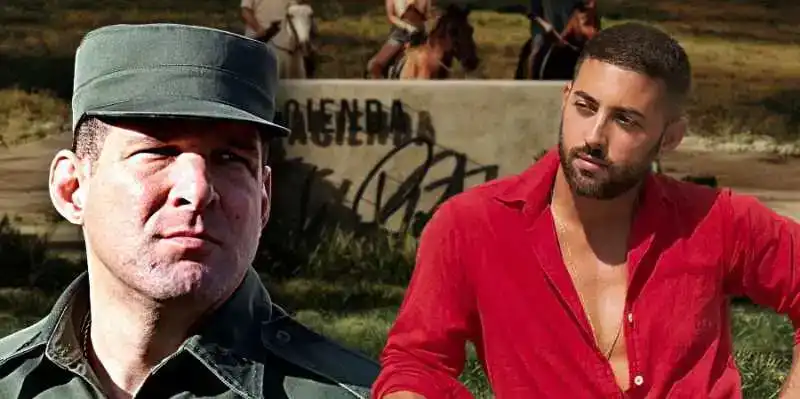
This week, news went viral in Cuba that the supposed heir to the throne, Raul Guillermo Castro, popularly known as “El Cangrejo” (The Crab), gave a farm to a friend, specifically Roberto Carlos Chamizo Gonzalez.
We should start by putting things into context, because it is perfectly normal for a businessperson anywhere in the world to do whatever he/she pleases with their resources, whether to profit from them, set up a nonprofit organization, or simply give them directly to whomever they choose.
There is, however, a fundamental difference here, and that is how this particular person acquired his fortune, because in the case of Raul Guillermo Castro, it certainly wasn’t by the sweat of his brow.
In a country where birthday gifts usually consist of a handkerchief, a bottle of rum or, if you’re lucky, a cheap appliance, our friend decided to raise the bar on friendship in spectacular fashion, because apparently such trinkets no longer adequately express the affection between comrades.
Giving away public assets as if they were yours
More than surprise, the news caused outrage, because we all know that the gentleman in question is disposing of assets that do not belong to him.
According to rumors, the farm came with all the accessories included: extensive grounds, leafy trees, dusty roads, a country house and possibly a secret or two buried beneath the chicken coop. Maybe there was even a card saying: “To my dear friend and accomplice: with affection, gratitude, and the assurance that nobody will look too closely at the paperwork. Sincerely, El Cangrejo.”
What became known is that Raul Castro’s grandson pressured officials into handing over 30 hectares of state-owned land to a friend, where a luxury complex called Hacienda El Patrón was built and marketed in dollars by the state-run Business Administration Group (GAESA) for sale to foreigners.
According to the investigation, the former Havana Ministry of Agriculture delegate, Esmeregildo Martínez Gamez, was the person behind this fraud, acting under pressure from State Security.
In his own words, in 2021 he received a call from a first colonel with the Technical Investigations Department (DTI), the national investigative arm of State Security, instructing him to transfer 6.27 hectares in the Havana municipality of Habana del Este into Chamizo Gonzalez’s name.
Martinez Gamez himself said the land belonged to the state and was intended for food production, but because he was pressured as though it were a “matter of national security,” he signed a Resolution on August 15, 2021, granting the land in usufruct for 20 years.
According to the former official, Chamizo then wanted more land for cattle ranching, particularly for raising buffalo belonging to the Bacuranao Agricultural Enterprise.
Prominent officials, including Deputy Prime Minister Jorge Luis Tapia and Agriculture Minister Ydael Perez Brito, visited the site, seemingly lending their backing to the shady dealings, and shortly afterward, on April 12, 2023, another 21.71 hectares were handed over to him. Five times what any beginning farmer receives — and those farmers also have to jump through a thousand bureaucratic hoops.
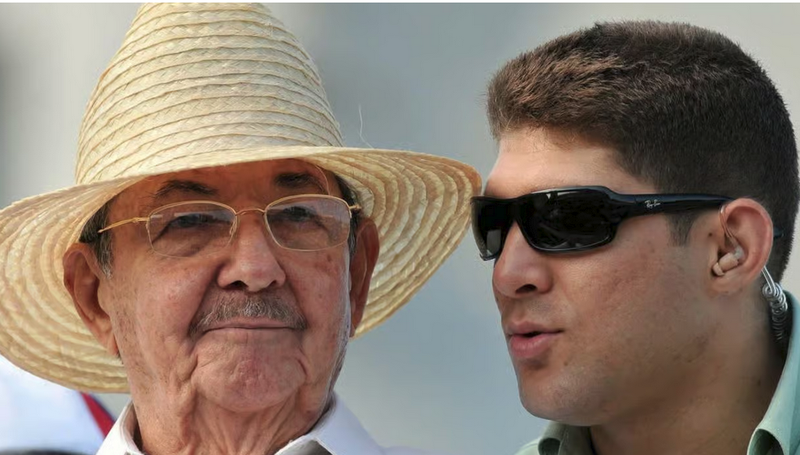
What became of the gift
The place ended up with a restaurant, pedigree horses, kayaking, massages, yoga, and mini-villas with private swimming pools.
How lovely. True friendship knows no bounds, especially when public assets can be deeded away and disposed of at will. While some friends lend each other money to pay for a pizza, others transfer entire properties. There are first-class friendships, and then there is El Cangrejo’s kind, which comes complete with land registry records, property boundaries, and perhaps a smiling notary.
Naturally, the most uncomfortable question is: where did the farm come from? Because giving someone a watch is one thing; handing over entire hectares as though you were passing out bags of candy at a children’s party is something else entirely.
In the ordinary world, buying property means saving for decades, applying for loans, and then discovering that the bank still requires insurance against earthquakes or hurricanes. But for certain characters on this island, farms seem to sprout like ripe mangoes.
The official version, if one ever emerges, will surely be impeccable. There will be talk of a legal transaction and a relationship of trust with a revolutionary through and through. Everything perfectly in order, except for one tiny detail: the friendship between benefactor and beneficiary may contain more shadows than a forest at midday, because this is not simply a gift. It is a gift to a friend and accomplice, and the word “accomplice” adds a little spice to the affair.
A friend shares happiness and beers; an accomplice shares information, strategies and, in some cases, responsibilities best left unmentioned aloud. A friend goes to the movies with you; an accomplice might accompany you to sign documents that later mysteriously disappear from a folder.
The farm, then, could be seen as a token of affection or perhaps as a kind of loyalty rewards program: “Accumulate ten favors and receive one hectare free.”
If that is how the system works, it would hardly be surprising if promotions soon appeared: one plot for every dubious contract; one house for every well-timed silence; one parcel with panoramic views for every conveniently ambiguous statement.
It is also possible that the gift will be presented as a completely selfless act. Generosity, they say, is a virtue, and who knows, perhaps our “Sebastian” is simply a misunderstood philanthropist, a real-estate Robin Hood distributing property among those who need it most.
The problem is that Robin Hood stole from the rich to give to the poor. Here, apparently, property is given to friends — a considerably more exclusive arrangement, and one much less likely to end with a statue being erected in your honor.
The public, of course, watches with a mixture of humor, outrage and resignation. Humor, because the situation seems to have been written by a political comedy screenwriter; outrage, because giving highly valuable assets to people connected with possible irregularities raises legitimate questions; and resignation, because in many places transparency is treated like an unwelcome visitor: everyone knows it ought to show up, but nobody wants to open the door.
Don’t hold your breath waiting for an investigation
The authorities in this case are never going to investigate. On the contrary, they would face the fascinating task of reconstructing the farm’s history: who bought it, how much it cost, how it was paid for, when it was transferred, and why it ended up in the hands of the friend and accomplice.
We will never know whether there were taxes, asset declarations, conflicts of interest and, above all, whether the gift really was a gift or merely an elegant way of saying, “Thank you for services rendered.”
In everyday language, “I’m giving you a farm” sounds generous. In the language of an investigation, it might translate as: “Follow the money.” And when property changes hands so easily, the first place to look is the public registry, especially when we are talking about state-owned land.
The imaginary scene is almost cinematic. El Cangrejo watches from the far end of the room. His friend excitedly receives the documents. In the background, roosters crow as though announcing the dawn of a new era. A notary confirms that everything is in order while a camera focuses on the paperwork and someone whispers, “Don’t ask too many questions.” Finally, the two raise a toast with the enemy’s whisky.
The greatest irony is that those who receive such gifts often present themselves as austere, self-sacrificing people concerned about the collective welfare. Yet here nobody really knows who the beneficiary is beyond his name.
The lesson is clear: in times of crisis, some people count coins to buy food; others count hectares to hand out favors.
I wonder if anyone can explain to me how that’s any different than Trump giving land in Yosemite (land that belongs to NATIVES) to a public commercial developer.
That’s only 1 of many many many instances within the USA that happen this way.
Doubt the author, or any reader, of this article can articulate the difference.