
The Dilemmas of Mexican President Claudia Sheinbaum
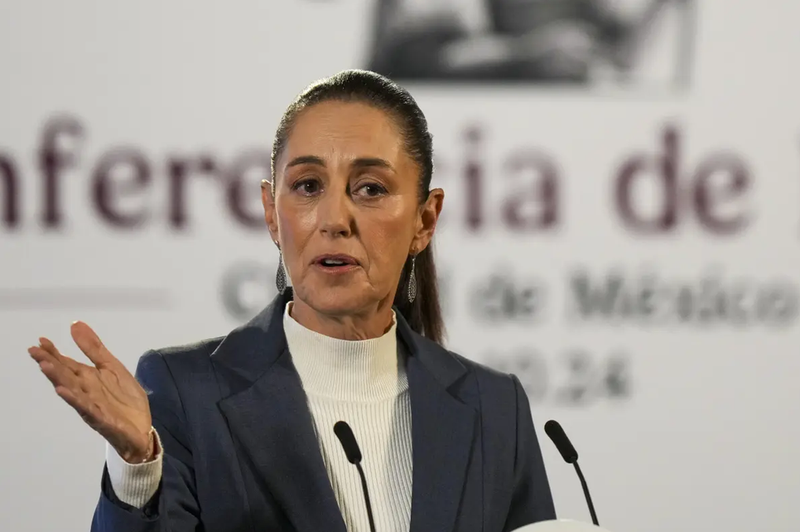
HAVANA TIMES – There are two questions that have always seemed to me journalistically appropriate and easy for anyone who considers themselves a democrat to answer: Is Cuba a dictatorship? Do you consider Fidel Castro, Raúl Castro, and Miguel Díaz-Canel to have been dictators?
The answers are yes and yes.
One need not look far into history to know that since 1959, Cuba has been a brutal dictatorship, characterized by political prisoners, the killing of opponents, ironclad press censorship, frequent human rights violations, and a ban on multi-party elections. If we want to know how a people can be repressed for decades, we need only look at the island.
Yet something happens to many leftist Latin American politicians that prevents them from publicly criticizing Cuba. It is as if their tongues were tied in knots. They argue that there is a US embargo—which is true—and leave it at that. They cannot—or will not—speak the truth: that the embargo neither justifies nor explains the tyranny.
President Claudia Sheinbaum, of course, won the last election in Mexico legitimately. Yet, she does not dare call for the Cuban people to have the same democratic rights that we Mexicans enjoy. It is impossible to get her to admit—even during her morning press conferences—that Cuba is a dictatorship and Díaz-Canel is a tyrant.
And when Nicaraguan dictator Daniel Ortega recently declared that “there will never be elections here again,” Sheinbaum did not dare criticize him either. On the contrary, her government abstained from voting on an OAS resolution that would have condemned the Managua regime. Incidentally, Sheinbaum also refrained from labeling Nicolas Maduro’s tyranny in Venezuela a dictatorship.
In my view, democrats (of any political stripe) lose a great deal when they refuse to acknowledge what we all know: that Cuba, Nicaragua, and Venezuela are brutal dictatorships. Denouncing any dictatorship—regardless of its political stripe—should not be a complicated moral dilemma. Yet, Sheinbaum has already sided with the oppressors.
Another dilemma facing the Mexican president concerns drug trafficking and accusations leveled against members of her own party. What should she do when Morena members are accused or suspected of collaborating with organized crime? From a moral standpoint, setting aside political considerations, the answer is simple: denounce the crimes, remove the accused from their posts, and hand them over to the authorities for investigation and prosecution, provided there is evidence.
It sounds easy, but in practice, these individuals often include people who worked with her or on her campaign and who have long-standing ties to former President Andres Manuel López Obrador, the leader of a reformist movement in Mexico. This is the case with Ruben Rocha Moya, the governor of Sinaloa (currently on leave), who is one of ten Mexican officials sought for extradition from Mexico by the US Department of Justice.
“We don’t protect anyone,” Sheinbaum told the press. “But to arrest someone, Mexican law must be followed.” The problem is that Mexican law had effectively gone AWOL until the United States issued the extradition request. “If [Mexico] isn’t going to do the job,” Donald Trump has threatened, “we will.”
Indeed, matters become complicated when the accusations come from the US government. In recent months, Claudia Sheinbaum’s security cabinet has touted a significant reduction in high-impact crimes and intentional homicides in Mexico. Yet for Trump, the issue is fundamental: “We have a problem because the cartels run Mexico.”
Consequently, Sheinbaum has framed the issue as a matter of sovereignty. Her argument is that the United States cannot dictate what Mexico should do—not even when some of its politicians might be linked to drug cartels.
It is a complicated dilemma. It is not just a matter of keeping Trump at arm’s length and preventing him from launching a unilateral military operation on Mexican soil; it is also about distancing herself from figures within the party who may be compromised by organized crime.
The point is clear: despite internal pressures, the president cannot afford to appear complicit in protecting party members linked to organized crime. From the outside—my vantage point—this looks like a pivotal moment: either she asserts her independence and charts her own course, or she will become mired in petty politics and backroom deals.
One of the president’s two dilemmas was resolved long ago. Despite viewing herself—and being perceived—as a democrat, she is not going to turn her back on the myths of the Cuban Revolution or other authoritarian leftist regimes. She has devoted so much passion, time, and effort to them that it would be impossible for her to change course at this stage of her life.
The other dilemma is the one that remains unresolved. Will she govern independently, or will she protect her allies and supporters, even if they are tainted by corruption? Her decision will define the remainder of her presidency.
Read more opinion here on Havana Times.