
Why I Wrote “The Moonlit Vine”
HAVANA TIMES – When I was growing up, my mother often said, “Nosotros somos indios, africanos y españoles.” We are Indigenous, African, and Spanish. She said it so matter-of-factly that I never questioned it. In our family, being descended from the Taíno wasn’t something to debate. It was simply who we were. Then I went to school.
Like many Puerto Rican children educated in the United States, I learned a very different story. History books told me the Taíno had disappeared shortly after Christopher Columbus arrived in the Caribbean. With disease, violence, forced labor, they had been wiped out. The message was clear: the Taíno belonged to the past.
I found myself caught between two truths. My family spoke about our Taíno ancestors as if they had never left. Academic history spoke about them as if they no longer existed.
As I grew older, curiosity became research. I visited Taíno petroglyphs in Puerto Rico. I talked with elders in the town where my parents were raised. I read historians, anthropologists, archaeologists, and novelists. The more I learned, the more I realized how much history depends on who gets to tell it. The dominant narrative about the Caribbean had been written almost entirely by colonizers. The people themselves had preserved their history through oral tradition, through customs, through memory passed from one generation to the next.
Then, while finishing my doctorate, I read about a DNA study that analyzed the remains of a person who lived in the Caribbean long before Columbus arrived. The researchers found what many Puerto Rican families had known all along: present-day Puerto Ricans carry significant Indigenous Taíno ancestry.
I remember reading the article and thinking, my mother was right. Science wasn’t revealing something new. It was finally catching up to what generations of Puerto Ricans had already been saying.
That discovery changed me. I began asking different questions. If our ancestors survived, how did they survive? What choices did they make? What did they have to sacrifice? How much of who we are today was shaped not only by their suffering, but by their resilience, ingenuity, and love for their families?
I searched for books that explored those questions, especially for young readers. I found wonderful scholarship and important historical works, but I couldn’t find the novel I wanted to read, a story that imagined the Taíno not simply as victims of history but as active participants in their own survival. So, I wrote one.
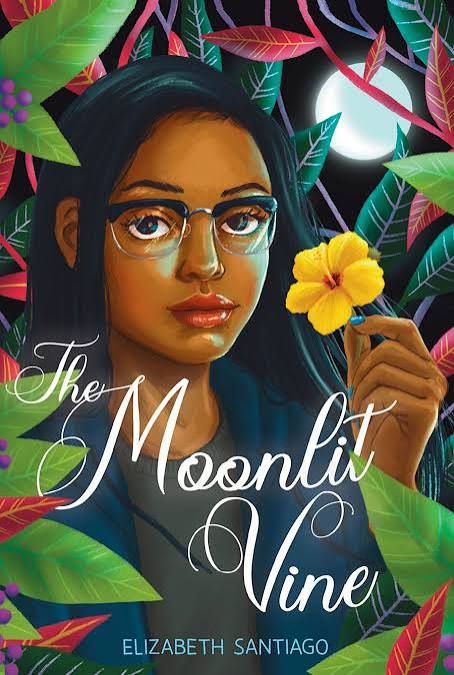
The Moonlit Vine became my way of exploring the history I had inherited but rarely saw reflected in literature. Through both historical and contemporary characters, I wanted to show that colonialism is not just something that happened five hundred years ago. Its effects continue to shape identity, education, family, and belonging today.
Writing the novel also surprised me in another way. I expected to learn history. I didn’t expect to heal. As I wrote, I realized I wasn’t only recovering the story of my ancestors. I was recovering my own voice as a creative writer after years spent in academia and educational leadership. The deeper I dug into Taíno history, the more I understood that survival is not only about staying alive. It is also about protecting culture, memory, language, and hope. For me, writing The Moonlit Vine was an act of remembrance. It was my way of honoring the generations who kept telling their stories, even when the world highlighted and elevated other narratives.